 HEADSHOTLAB
The Bathroom Mirror and the Boardroom: How to Turn a Selfie Into a Professional Headshot Without Ever Booking a Studio
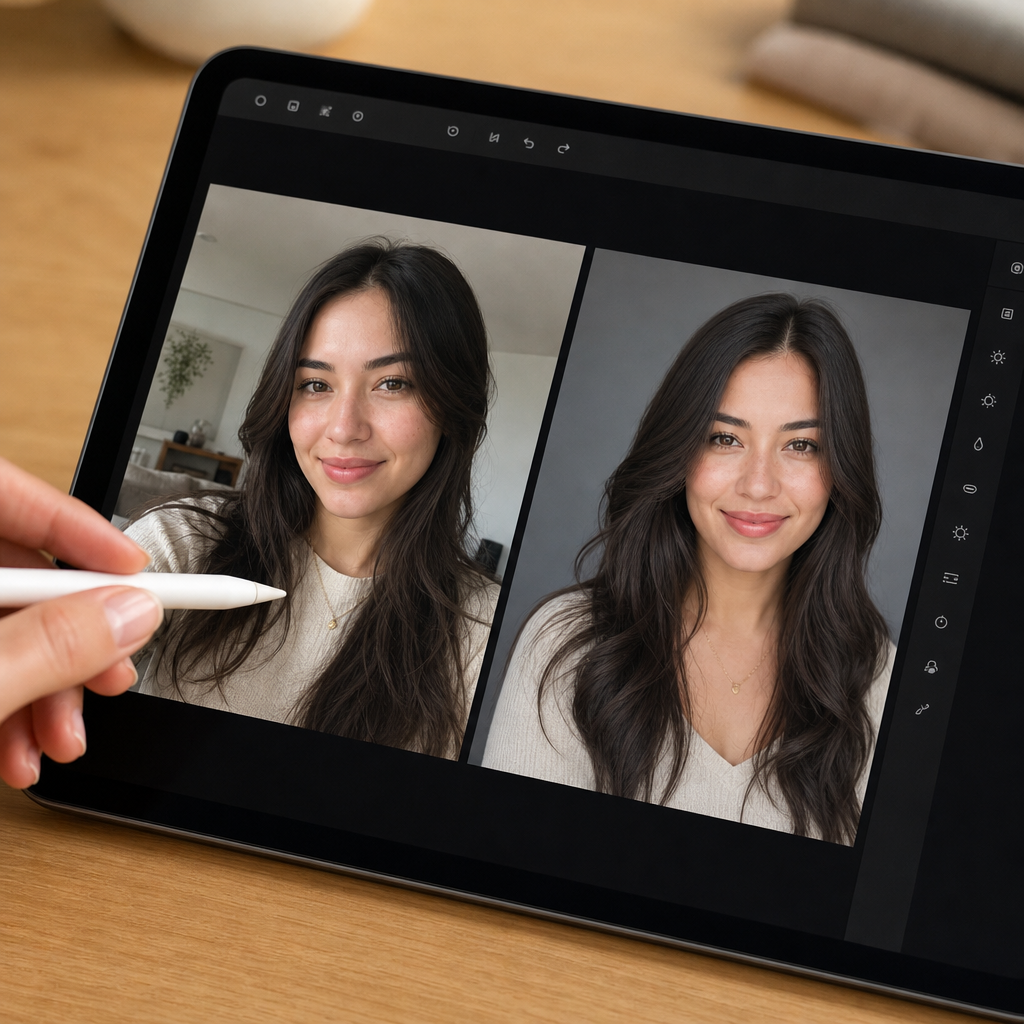
There is a particular kind of light that falls across a bathroom at 7:42 on a Tuesday morning — flat, slightly blue, unkind to pores but oddly democratic in what it reveals. It is in this light that a great many professional headshots now begin their lives, phone held at arm's length, collar straightened with one hand, the other thumb already hovering over the shutter. Nobody intends for this to be the origin story of their LinkedIn photo. And yet, increasingly, it is. The selfie, once the preserve of holidays and nightclub bathrooms, has quietly become the raw material of corporate self-presentation — and the distance between that raw material and the burnished, boardroom-lit image a hiring manager eventually sees has collapsed into something that takes minutes, not weeks.
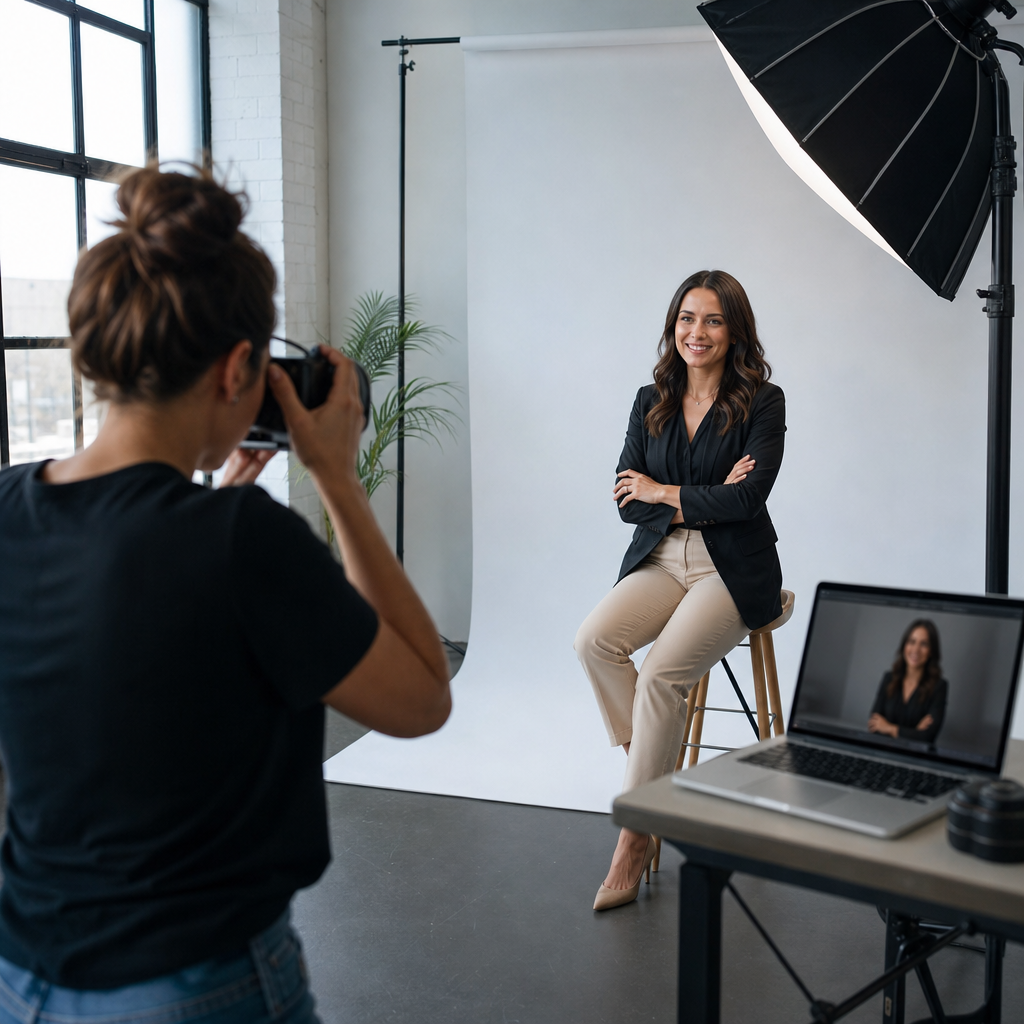
This is not a small cultural shift, even if it arrives disguised as a convenience. For most of the twentieth century, and a good chunk of this one, a "proper" headshot required a studio, a photographer with a client list and an accent of authority, a rack of lighting umbrellas, and an afternoon you didn't really have. The photographer Annie Leibovitz built a career on the idea that a portrait could reveal character through careful staging; the corporate headshot borrowed her seriousness without her budget, and so it became expensive in its own smaller way — not Vanity Fair money, but enough that freelancers, job seekers between contracts, and entire departments of mid-sized companies quietly deferred the expense. The photo on the "About" page stayed five years out of date. The LinkedIn avatar remained a cropped wedding photo, the groom or the best man inexpertly sliced from the frame. It was never a crisis. It was just a low hum of unfinished business that everyone recognised and nobody fixed.
What has changed is not vanity. It's infrastructure. The tools that let a single selfie become a full set of polished, varied, studio-grade images — different jackets, different backgrounds, different expressions — have matured from novelty into something closer to standard professional equipment, the way a decent webcam or a tidy email signature became standard somewhere in the last decade without anyone declaring it so.
The Studio That Fits in a Phone
Photography has always had an uneasy relationship with democratization. When Kodak put the Brownie camera into ordinary hands in 1900, professional photographers worried, not unreasonably, that their craft would be devalued. It wasn't, quite — it just moved. The same tension is visible now, at a different altitude. A professional headshot has historically functioned as a kind of credential: it announced that someone had taken the sitter seriously enough to invest in how they'd be seen. Partners at law firms had headshots. Junior associates, improvising with a cropped group photo from a conference, did not. The headshot was shorthand for seniority, or at least for a travel-and-expenses budget.
AI-based tools have detonated that shorthand. A service like Headshot Lab takes a handful of ordinary selfies — the kind anyone can produce in existing light, with existing clothes, without a single studio appointment — and uses them to generate a full set of options: different jackets, different backdrops, different postures, each rendered with the kind of lighting a photographer would once have spent an hour arranging with softboxes and reflector cards. The user doesn't need to understand aperture or colour temperature. They choose a mood — corporate, creative, approachable, executive — and the system does the technical thinking that used to require a professional behind the camera.
It is worth pausing on how strange this actually is, even as it becomes unremarkable. A photograph, for most of its history, was evidence that a moment existed — that light bounced off a real jacket, in a real room, at a real hour. These new headshots are something else: a synthesis, built from the data of a person's actual face but dressed and lit by inference rather than by a stylist standing in the room. The Pew Research Center has tracked the public's deep ambivalence about AI-generated imagery broadly — a 2023 survey found most Americans more concerned than excited about AI's growing role in daily life — and yet the headshot seems to have slipped past that unease, perhaps because its ambition is so modest. Nobody is claiming the person in the photo did something they didn't do. They are simply better lit than their bathroom mirror ever allowed.
The Economics of Looking Competent
There's a reason this particular use of AI found such fast, frictionless adoption where others have stalled on suspicion: the headshot has always been an economic instrument as much as an aesthetic one. Harvard Business Review has published research for years on the "halo effect" of professional appearance in hiring and client trust — the uncomfortable but well-documented truth that competence is often inferred, rightly or wrongly, from polish. A 2021 piece in the same publication noted that recruiters spend a matter of seconds on an initial resume and profile scan, and that visual cues do measurable work in that window, for better or worse. The headshot, in other words, was never neutral. It was always doing quiet persuasive labour.
For decades, that labour had a price tag attached — often several hundred dollars for an hour with a photographer, plus the wardrobe, plus the half-day taken from a working life to sit for it. That price excluded people unevenly. Job seekers between roles, graduate students on stipends, freelancers in their first lean year, nonprofit workers whose organisations couldn't justify the line item — all of them were, functionally, priced out of looking as "finished" as their more resourced peers. LinkedIn's own data has long suggested that profiles with professional photos receive dramatically more views and connection requests than those without, which means the absence of a decent headshot wasn't merely cosmetic. It had a measurable cost in opportunity, compounding quietly over a career.
What's changed with the arrival of AI headshot generation is that the cost of looking "put together" has fallen to something closer to the cost of a casual lunch, and the time required has fallen from an afternoon to the time it takes to answer a few emails. A platform such as Headshot Lab charges a one-time fee and returns dozens of finished images — different attire, different settings, different expressions — rather than the single negotiated print a traditional sitting might yield. The economics have shifted from scarcity (one photographer, one afternoon, one look) to abundance (many options, instantly, at a fraction of the price), and abundance changes behaviour in ways scarcity never could. People now treat the headshot the way they treat a wardrobe choice — something to be refreshed seasonally, adjusted for a new role, matched to a new industry, rather than commissioned once and endured for a decade.
What the Machine Actually Sees
It's tempting, in writing about this shift, to treat the technology as a black box of pure magic — selfie in, executive in out. But the more interesting story is in what the underlying models are actually doing, because it says something about how we've come to define "professional" as a visual category in the first place. These generative systems are trained on enormous datasets of real photographic portraiture — studio lighting setups, corporate backdrops, the particular grammar of a navy blazer against a grey seamless paper backdrop — and they've effectively learned the visual vocabulary of credibility the way a student of semiotics might learn the visual vocabulary of a particular era's propaganda posters. The model isn't inventing competence from nothing. It is distilling thousands of examples of what human culture has already agreed looks competent, and applying that distilled judgment to an individual's actual features.
This is why the results, at their best, don't look like obvious fabrications — they look like a very good photographer's idea of the sitter on their most rested, best-lit day. The MIT Media Lab has published extensively on generative image models and the subtle ways they encode cultural assumptions, a reminder that these tools are never neutral mirrors; they reflect the aesthetic conventions baked into their training data, which is its own quiet editorial statement about what a "professional" is supposed to look like in 2026. Reputable services address this partly through choice — letting users select among many attire and background combinations rather than forcing a single template — and partly through human oversight in retouching, which is why companies like Headshot Lab build in retouch credits and a satisfaction guarantee rather than treating the first output as final. The technology does the heavy lifting; a layer of human judgment, whether the user's own eye or a support team's review, does the finishing.
There's also something worth noting about accuracy versus flattery, a tension as old as portraiture itself. The Flemish masters flattered their merchant patrons gently — a slimmer jaw here, a more confident gaze there — while still producing something recognisably that person. The modern AI headshot operates in the same tradition, not fabricating an unrecognisable ideal but smoothing the gap between how someone looks on their best day and how a phone camera, in bad bathroom light, usually catches them. The best outputs still look like the person. Colleagues recognise them instantly in the hallway. That recognisability is, in fact, the entire point — a headshot that looks impressive but unrecognisable has failed at its one essential job.
The Office That Learned to Match Its Outfits
There is a second, less personal story unfolding alongside the individual one, and it belongs to organisations rather than individuals. Any company with more than a handful of employees has, at some point, confronted the small but persistent embarrassment of a team page where no two photos share a background, a lighting style, or even an aspect ratio. One person's photo was taken at a conference three years ago against a pipe-and-drape backdrop; another used their passport photo, cropped; a third has no photo at all, just a grey silhouette that reads, unintentionally, as absence. Design-conscious studios — the kind that would never tolerate mismatched fonts on their own website — have historically tolerated exactly this kind of visual chaos on their "Our Team" page, simply because fixing it meant coordinating a dozen or more people's calendars around a single photographer's availability, which is its own special category of administrative dread.
Team packages built around AI headshot generation solve a problem that was never really about photography at all — it was about coordination. When Headshot Lab's team offering lets an organisation specify a shared background and a consistent dress code across every employee's generated set, it's effectively doing what a brand guideline document does for a company's typography or colour palette: enforcing a visual consistency that signals coherence without anyone needing to physically stand in the same room on the same day. A distributed team — the designer in Lisbon, the account manager in Austin, the new hire who's never once visited headquarters — can appear, visually, as though they all stepped out of the same studio on the same overcast Tuesday, lit by the same gentle key light. The Society for Human Resource Management has written about the broader challenge of building culture and cohesion across remote and hybrid teams; a shared visual identity, however small a gesture it seems, turns out to be one of the more efficient tools available for that larger, harder problem.

The Face Before the First Sentence
What's easy to miss, amid the practical conveniences — the saved afternoon, the saved few hundred dollars, the matched team photos — is what the headshot has always actually been doing in the architecture of a career. It arrives before the cover letter is read, before the portfolio is clicked open, before a single word of the pitch deck. In a remote-first working world, where a great many professional relationships now begin and sometimes end entirely within a video call and a profile photo, the headshot has taken on more of the communicative weight that used to be distributed across a handshake, a tailored suit, the quality of someone's handwriting on a note card. The Pew Research Center's work on remote work adoption since 2020 suggests the shift toward distributed teams is not a temporary pandemic artifact but a durable feature of how a large share of knowledge work now operates — which means the image on a profile page is doing more introductory labour than it has ever done before, precisely because it so often stands in for every other form of first impression.
Seen that way, the migration from the awkward bathroom selfie to the polished, AI-finished headshot isn't really a story about photography software at all. It's a story about what happens when a once-expensive, once-exclusive form of self-presentation becomes available to nearly everyone, instantly, at the cost of a modest dinner out. The graduate student applying for her first research fellowship can now present herself with the same visual authority as the managing partner who's had three studio sittings over the course of his career. The remote customer success rep in a mid-sized SaaS company can appear, on the company directory, as considered and deliberate as the CEO. This is not nothing. Visual parity has never been a guaranteed feature of professional life, and its sudden, quiet arrival — via an upload button rather than an appointment book — deserves to be noticed rather than simply used.
There is, admittedly, a slight vertigo in all of this, the same vertigo that probably accompanied the Brownie camera, or the first affordable word processor that let anyone's letter look typeset. Each time a tool collapses the distance between amateur and professional output, something is gained in access and something is quietly renegotiated in meaning — what "professional" signifies shifts slightly when its visual markers become available to everyone rather than reserved for those who could afford the sitting. But renegotiation is not loss. It is simply the ordinary churn of culture adjusting to a new tool, the way it always eventually does.
On an ordinary Tuesday in November of 2026, somewhere between the bathroom mirror and the eventual LinkedIn upload, a selfie still has to be taken — badly lit, a little self-conscious, entirely human. What happens to it after that, in the minutes that follow on a site like Headshot Lab, is less a trick than a translation: the same face, rendered in the visual language that offices have used to signal seriousness for a hundred years, now available to the person who took the photo rather than only to the person who could once afford to commission it.
Article written by FrontRank