 HEADSHOTLAB
A Studio Quality Headshot From Photo Now Lives Inside Your Phone
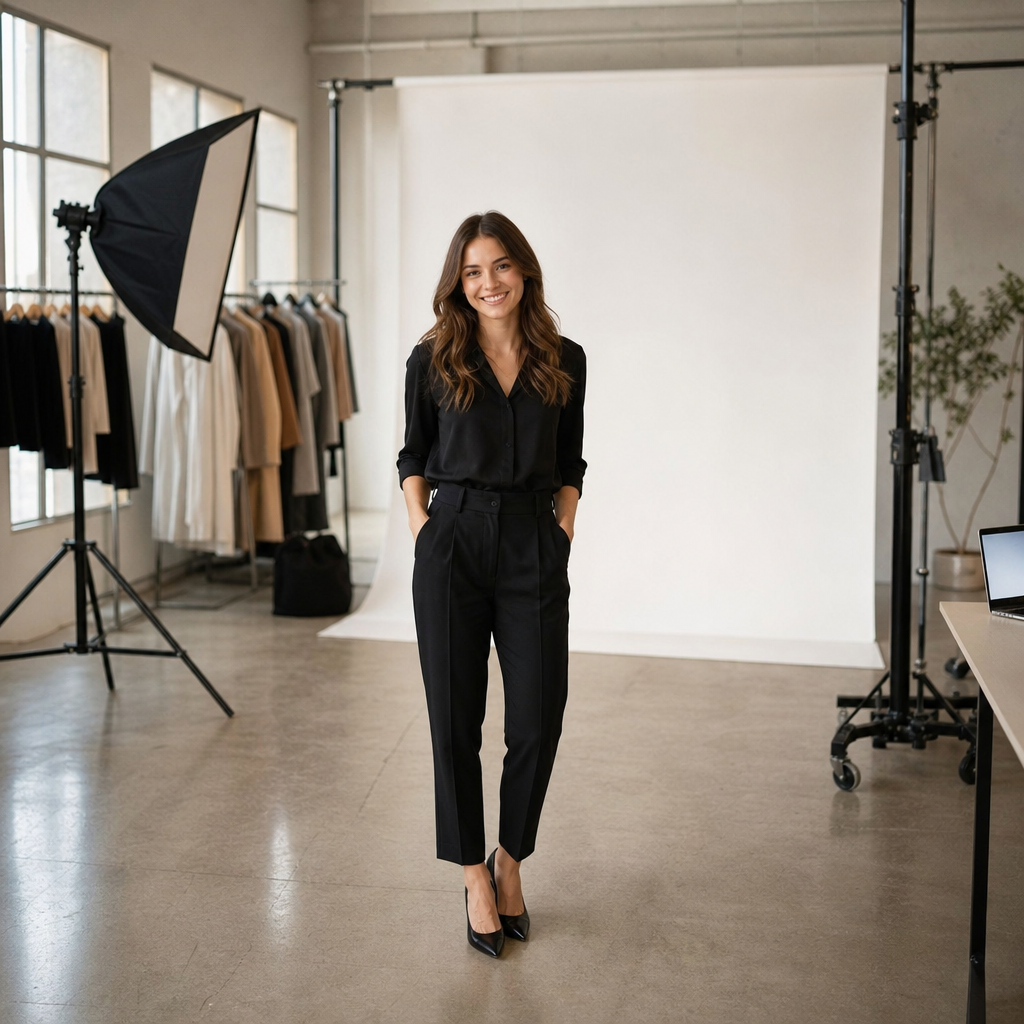
There is a particular kind of fluorescent light that used to define professional ambition. It lived in corporate photo studios wedged between dry cleaners and dentists' offices, the kind of place with a muslin backdrop on a retractable roller and a photographer who had shot forty insurance adjusters that week alone. You sat on a stool. Someone clipped a black fabric triangle to your collar to hide the fact that your shirt didn't fit the frame. You were told to relax your shoulders by a man who had said the same sentence four hundred times that month. And somewhere in that transaction — part vanity, part necessity — a headshot was born: stiff, overlit, unmistakably "done."
That image, the fluorescent one, is receding fast. In its place is something stranger and more democratic: a studio quality headshot from photo, generated not in a studio at all but from a single selfie taken in a kitchen, a parked car, or the back booth of a coffee shop with decent window light. The transformation happens not over a scheduled hour but in the time it takes to make lunch. And the tool responsible for this shift isn't a camera. It's an algorithm trained on the visual grammar of professionalism itself — the lighting ratios, the lens compression, the exact blur of a background that says competent, approachable, hireable without a single word being spoken.
This is the story of how that transformation became not a novelty but a norm, and what it reveals about the way we now perform professionalism in a world where the first impression is almost never made in person.
The Vanishing Appointment
There was a time, not long ago — 2019, say, or even deep into the pandemic years that followed — when "getting headshots done" was a sentence that implied a calendar entry, a wardrobe decision made the night before, and often a modest financial outlay that freelancers in particular dreaded. Harvard Business Review has written at length about the outsized role a profile photo plays in hiring decisions and professional credibility, noting that recruiters form snap judgments from a thumbnail before they've read a single line of a résumé. The stakes, in other words, were always higher than the format suggested. A headshot was a two-inch square doing the work of a cover letter.
And yet the infrastructure for producing a good one remained stubbornly analog. You needed a studio, or at least a photographer with a speedlight and a plain wall. You needed to pick a date that didn't coincide with a bad skin week or a haircut gone wrong. For a solo consultant in Tulsa or a nonprofit employee in Leeds, the maths rarely worked out — the cost of a professional sitting, sometimes several hundred dollars, sat awkwardly against the actual frequency of need. Most people update a LinkedIn photo once every few years. Paying studio rates for that cadence always felt like renting a tuxedo to attend your own kitchen.
What's changed is not the standard — the bar for what looks "professional" has, if anything, risen, thanks in part to the sheer visual literacy a decade of Instagram and LinkedIn have instilled in all of us — but the mechanism for clearing it. Services like Headshot Lab now take the raw material people already have in abundance, the selfie, and route it through systems trained to recognise and replicate the visual cues of studio photography: the catchlight in the eye, the soft gradient of a seamless backdrop, the particular falloff of light across a jawline that a Rembrandt-trained portrait photographer would recognise as deliberate. The result isn't a filter smeared over a casual photo. It's closer to a reconstruction — the same face, rebuilt inside the visual language of a studio it never physically entered.
The Grammar of Looking Hireable
There is an entire unspoken syntax to a good headshot, and most of us absorb it without ever being taught it explicitly, the way we absorb the rules of a firm handshake. Chin slightly forward, not back. Shoulders angled, not square. A background with enough depth to suggest a real room but blurred enough to suggest nothing of actual bureaucratic consequence happens there. The New York Times has covered the strange emotional terrain of professional photography during the remote-work years, when so many people suddenly needed a fresh image for a Zoom square or a company directory and discovered, often uncomfortably, how little control they had over how they appeared on camera.
What the newer AI-driven tools do well is encode that grammar and apply it with a consistency no single human photographer could match across a thousand different faces. A photographer has good days and bad days, favourite angles, unconscious biases about which clients get the extra five minutes of careful lighting adjustment. A trained model, by contrast, applies the same exacting standard of lighting, framing, and background rendering to the architect in Lagos and the junior analyst in Toronto alike. There's something almost egalitarian about that consistency, even if it emerged from something as unglamorous as a neural network ingesting hundreds of thousands of professional portraits.
The process itself has become almost unnervingly simple. A user uploads a handful of selfies — ideally varied in angle and expression, nothing posed or especially considered — and selects preferences: a charcoal blazer or a soft denim shirt, a backdrop of warm grey or cool studio blue, an expression register somewhere between approachable and authoritative. Within minutes, dozens of options return, each one a different interpretation of the same underlying face rendered in the idiom of professional portraiture. Fast Company has tracked this broader shift toward AI-generated professional imagery as part of a wider recalibration of what "work-appropriate" visual content even means in an era when so much hiring, networking, and client acquisition happens entirely on-screen.
It is worth pausing on how counterintuitive this would have sounded even five years ago. The entire value proposition of a professional photographer was presence — a trained eye in the room, adjusting a reflector, noticing a stray hair, coaxing a genuine smile out of someone stiff with self-consciousness. That a person could now receive something indistinguishable from that outcome without anyone else in the room at all feels less like a convenience and more like a small philosophical shift in what we think image-making requires.
The Office That Looks Like One Place
If the individual use case is about convenience, the organisational use case is about something closer to coherence. Walk through the "About" page of almost any mid-sized company founded before 2015 and you'll likely find a visual patchwork: one employee photographed against a brick wall by a enthusiastic colleague with a decent camera, another using a passport-style photo taken at a pharmacy kiosk, a third with a backdrop of a potted plant that has clearly moved desks twice since the picture was taken. It is a small thing, but it registers. A company's "About" page is often a client's first encounter with the humans behind the business, and a mismatched grid of photography styles can quietly undercut an otherwise polished brand.
Assembling forty employees in one city, let alone across three continents, for a synchronised photo shoot has always been a logistical headache bordering on the absurd — flights, studio hire, a photographer's day rate multiplied by the number of locations, and the inevitable handful of people who are on leave, in a client meeting, or simply unreachable the week the shoot is scheduled. Fast Company and Forbes have both, in different pieces over the past two years, pointed to this exact friction as a quiet but persistent drain on marketing and HR budgets at distributed companies.
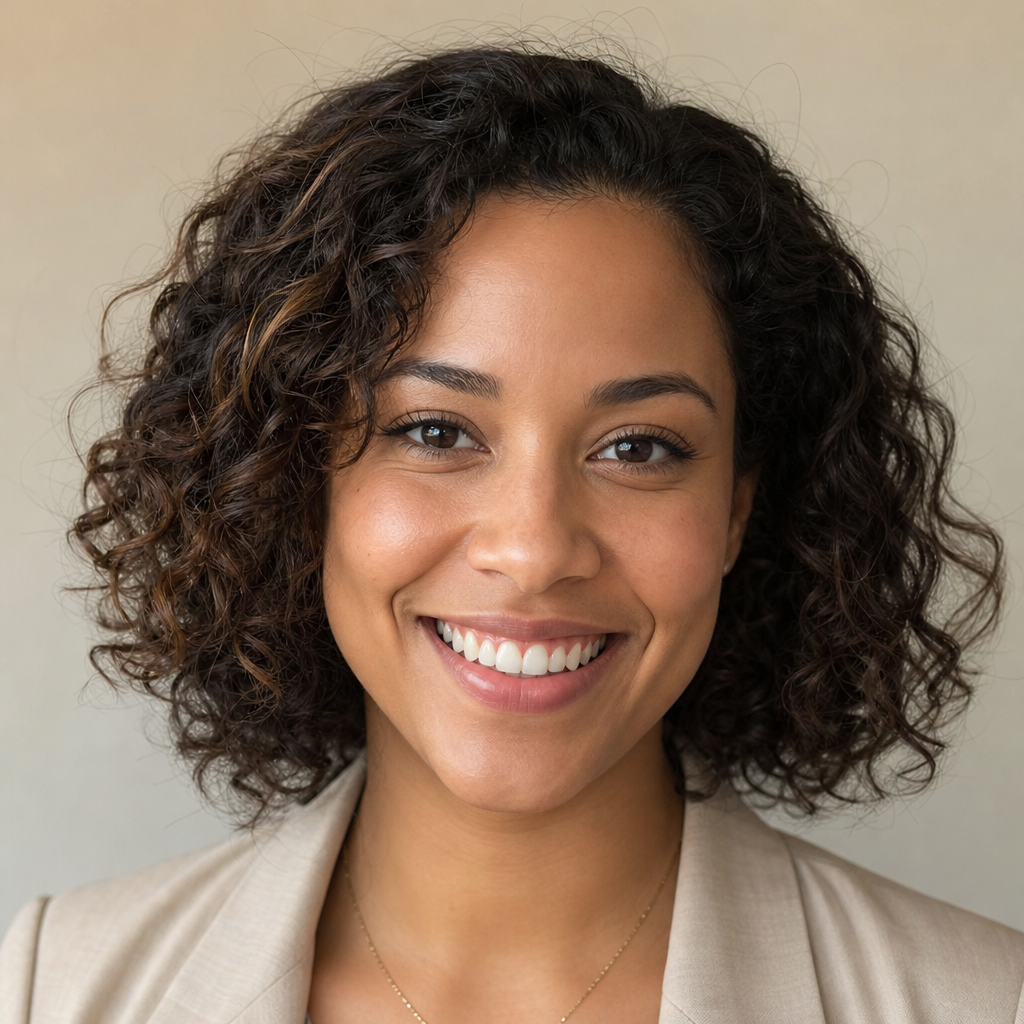
Team packages built around this same AI-driven process solve the problem by removing geography from the equation entirely. Every employee submits their own selfies from wherever they happen to be — a kitchen in Austin, a co-working space in Singapore — and receives back a headshot matched in background tone, lighting style, and attire direction to everyone else's. The org chart, for the first time in many companies' histories, looks like it was shot in a single afternoon, even though it was assembled from forty separate afternoons scattered across forty separate lives. Headshot Lab's team offering was built around precisely this insight: that consistency, not individual photographic perfection, is what makes a company's people pages feel credible.
There's a cultural dimension here too, one that touches on how distributed, borderless work has become normalised since the shifts of the early 2020s. The Guardian has reported extensively on the rise of fully remote companies with no central office at all — teams who may never occupy the same room, let alone the same studio. For such organisations, a uniform set of headshots isn't a vanity project. It's one of the only visual threads tying together a workforce that otherwise exists entirely as names in a Slack channel and cursors in a shared document.
The Honest Uncanny Valley
None of this is to say the technology is without its tensions, and a magazine feature that pretended otherwise would be doing its readers a disservice. There is a particular, well-documented discomfort that surfaces when people first see their AI-rendered headshot — a sense that the face is theirs but somehow smoothed past the point of recognition, the skin rendered with a plasticity no pore ever possessed, the eyes just fractionally too symmetrical. Wired has written about this uncanny valley effect in AI portraiture more broadly, the way our perceptual systems are exquisitely tuned to detect the subtle tells of synthetic imagery even when we can't consciously articulate what's wrong.
The better services in this space have become notably attentive to this problem, building in retouch credits and multiple generation passes specifically because the first output isn't always the right one — sometimes the jaw is a touch too sharp, sometimes an expression reads as performed rather than natural, and the fix isn't a technical overhaul but a simple regeneration with adjusted parameters. Headshot Lab structures its offering around exactly this iterative expectation: dozens of options per session, because the first glance rarely produces the one photo that feels both polished and recognisably, comfortably you. The money-back guarantees that have become standard across this category exist for the same reason — an acknowledgment that photographic likeness is a deeply personal judgment call, not a pass-fail technical spec.
There is also a quieter ethical conversation happening alongside the convenience, about authenticity and disclosure. Is it dishonest to present an AI-enhanced image as one's professional likeness? Most observers, including the BBC in its coverage of AI image tools entering mainstream professional use, have landed on a fairly settled answer: a studio headshot was never a documentary photograph to begin with. Professional retouching, selective lighting, and even posed expressions have always constituted a kind of agreed-upon fiction — a version of a person optimised for a specific context, not a forensic record. The AI version simply makes that optimisation faster and more accessible, rather than introducing deception where none previously existed.

What remains non-negotiable, across every serious version of this technology, is that the underlying face has to be the user's own — their bone structure, their actual features, rendered in better light rather than replaced with someone else's. The moment a tool starts generating a face that isn't recognisably the subject, it has stopped being a headshot and started being something closer to an avatar, a different product entirely with a different set of ethical questions attached.
The New Default Handshake
What's striking, sitting here in late 2026, is how quickly the AI-generated headshot has moved from curiosity to default — not a workaround for people who couldn't afford the traditional route, but increasingly the first option people reach for, full stop. Job seekers update their LinkedIn photo the evening before an interview round rather than scheduling a sitting weeks in advance. Freelancers refresh their professional image seasonally, the way they might update a portfolio, because the cost of doing so no longer carries the weight of a real financial decision. Press kits, speaker bios, author pages — all the small bureaucratic corners of professional life that once required either an old photo recycled for the fifth consecutive year or an awkward, expensive new sitting — now simply get refreshed.
There's a generational texture to this too. Younger professionals entering the workforce now have never known a world where a studio visit was the only route to a credible headshot, in much the same way they've never known a world without a smartphone camera in every pocket. For them, the AI-generated route isn't a compromise on the traditional method. It simply is the method, the way digital photography simply is photography for anyone born after about 1995, the darkroom a historical curiosity rather than a lived memory.
And perhaps that's the real story here — not a tool replacing a profession, but a format quietly dissolving the distance between an ordinary moment and a professional one. The studio, for decades, served as a kind of threshold you had to cross to be seen a certain way: composed, credible, camera-ready. What's happened instead is that the threshold has come to you, folded into the processing power of a phone and the training data of a model, available at whatever hour you happen to need it — a Tuesday evening before a job application deadline, a Sunday afternoon before a conference bio is due. The fluorescent-lit studio with the muslin backdrop hasn't vanished so much as become optional, one route among several, no longer the toll booth standing between an ordinary face and a professional one. Somewhere in that quiet shift, the handshake got easier to extend, and a good many more people, it turns out, had a steady grip all along — Headshot Lab simply gave them a mirror that finally agreed.
Article written by FrontRank