 HEADSHOTLAB
Is It Time to Rethink How Your Remote Team Gets Its Headshots?

There is a particular kind of grid that gives a company away before anyone reads a word of copy. It appears on the "Our Team" page, usually below a mission statement written in the present continuous tense — we're building, we're reimagining — and it is where the illusion quietly falls apart. One founder is lit by a window in Lisbon, slightly blown out, squinting into a Tuesday afternoon. Beside her, a product lead sits in the blue-grey pallor of a laptop camera in Minneapolis, taken, it seems, during a pause in a call he'd rather have been muted on. Someone else has used what is unmistakably a passport photo. Someone else hasn't updated their picture since the team was a third of its current size, and still wears the lanyard of a conference that no longer exists.
None of this is anyone's fault, exactly. It is simply what happens when a company stops being a building and becomes a time zone map. The traditional team headshot — that reassuring ritual of a photographer visiting the office with a grey seamless backdrop and a softbox kit, working through the staff list over the course of an afternoon while a stack of sandwiches goes soft in the break room — assumes a shared floor plan. Remote and hybrid organisations don't have one. They have Lagos and Lisbon, Austin and Auckland, a founding team that has never all been in the same postcode at once. And so the headshots, like so much else about distributed work, end up improvised, mismatched, and a little embarrassing in a way nobody quite says out loud.
The Tyranny of the Mismatched Grid
It is worth pausing on why this matters more than it might seem to. A headshot grid is not merely decorative. It is the visual proof that an organisation is, in fact, an organisation — a coherent thing with a shared identity, rather than a loose confederation of freelancers who happen to share a Slack workspace. Visitors to a company's About page, researchers at Gartner compiling vendor shortlists, journalists on deadline hunting for an executive photo, prospective hires scrolling LinkedIn before an interview — all of them register the headshot wall at a glance, and all of them draw conclusions from it, whether they mean to or not.
Harvard Business Review has written at length about the subtle authority that consistent visual branding confers on a company, the way uniformity reads as competence even when nobody can articulate why. The inverse is just as true. A ragged assortment of selfies, moody low-light portraits, and photos clearly cropped from a group shot at an old all-hands reads, instantly, as disorganisation — even to viewers who would never put a name to the feeling. It is the LinkedIn-era equivalent of a restaurant with a wobbly table: nothing to do with the food, and yet it colours the whole meal.
Remote companies have known this tension for years without quite solving it. The fix, historically, involved flying a photographer to wherever the annual retreat happened to land — Lisbon one year, Tulum the next — and attempting to herd forty employees through a makeshift studio set up in a hotel conference room between strategy sessions and team-building exercises. It worked, after a fashion, but it was expensive, logistically fragile, and entirely dependent on everyone's calendar aligning for one single week a year. Anyone hired in the ten months after the retreat simply went without, their square in the grid filled with whatever selfie they'd submitted to HR during onboarding.
What the Studio Visit Used to Solve, and What It Couldn't
There was something genuinely valuable in the old studio ritual, and it would be dishonest not to name it. A good photographer does more than operate a camera; they direct a subject through the particular discomfort of being looked at, coaxing a natural expression out of someone who has gone rigid with self-consciousness. The lighting is considered. The backdrop is chosen with intent. The result, at its best, is a photograph that looks like the person on their most confident day — which is, after all, the entire point of a headshot.
What the studio model never solved was distribution. It solved the problem for whoever happened to be in the room on the day the photographer came, which in a remote company is an ever-shrinking fraction of the actual team. A business with employees across a dozen countries cannot practically fly a photographer to each of them, nor can it ask new hires in Jakarta or Johannesburg to wait eleven months for the next in-person gathering before their profile picture stops looking like a passport scan. The old solution was excellent and narrow. The new problem is diffuse and ongoing. Something had to give.
This is roughly the gap that AI-generated headshot services have moved into, and it is worth being precise about what they actually do, because the category has earned a certain amount of skepticism — not unfairly, given how much of the early AI image generation web was given over to uncanny, overly smoothed faces and backgrounds with the telltale warp of a diffusion model that hadn't quite understood how ears work. The Verge and other technology outlets covered this first wave with appropriate caution, and some of that caution has rightly stuck around in the public imagination.
The more recent tools — among them Headshot Lab, which has built specifically toward the team-portrait use case — work differently from those early experiments, and the distinction matters for anyone evaluating whether to trust a distributed team's professional image to one. Rather than generating a face from a prompt, the process starts with a real person: a handful of ordinary selfies, uploaded from whatever phone the employee already owns. The system is trained on that specific person's features, then produces studio-style portraits of them, not of a plausible stranger who resembles them. The employee chooses attire — a blazer, a button-down, something closer to smart-casual — and a background, and the service returns dozens of polished options within minutes, refined using retouch credits if the first pass needs adjusting. For an operations lead trying to standardise forty profile photos across nine countries without asking anyone to fly anywhere, the appeal is less about novelty than about logistics quietly solved.
The Aesthetics of Belonging
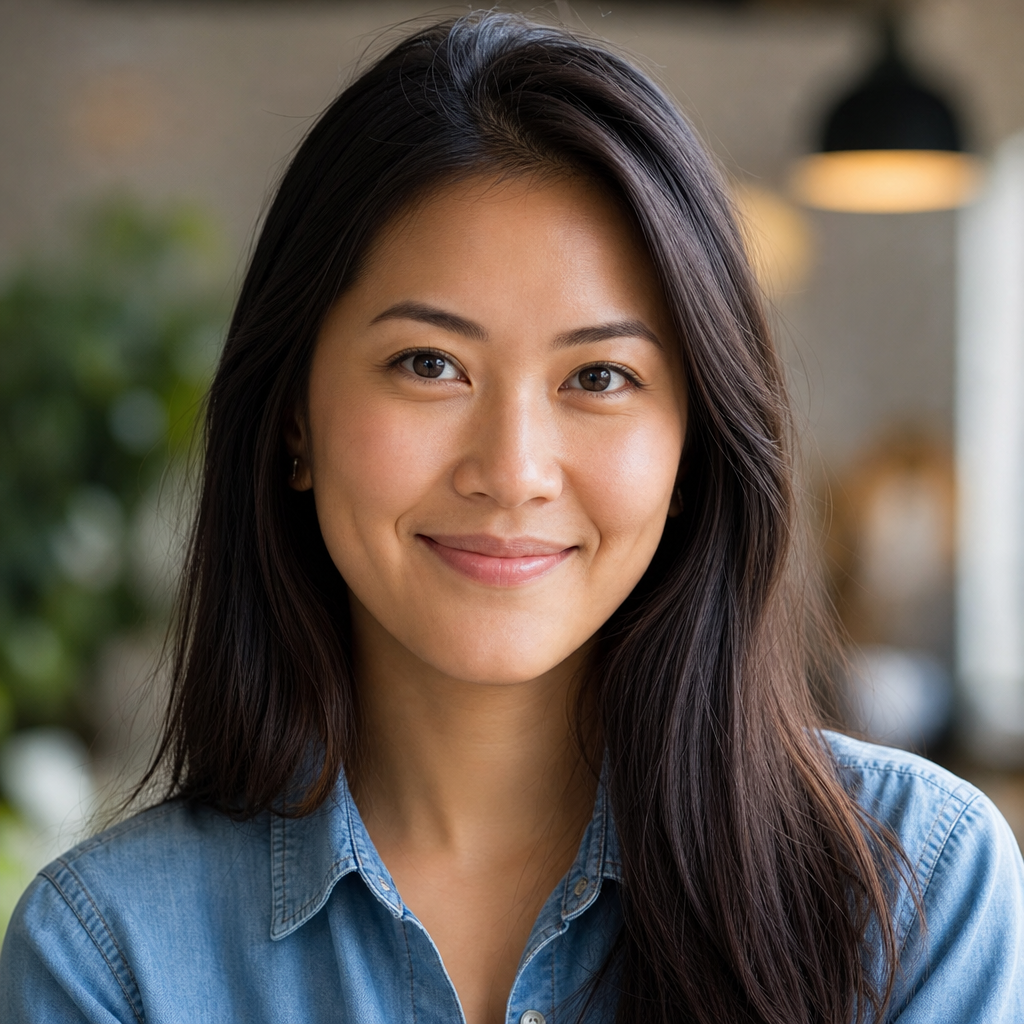
There is a reason interior designers obsess over sightlines and colour continuity in open-plan offices, and a reason fashion editors talk about a "uniform" the way others might talk about a philosophy: consistency is not the enemy of individuality, properly done. It is the frame that lets individuality register as such. A team page where every photo shares the same background tone, the same loose dress code, the same quality of light, doesn't erase each person's particular face and expression — it sets them off. The viewer's eye isn't busy adjusting for wildly different lighting conditions and can instead simply look at each person.
This is, in essence, what the team-package model behind services like Headshot Lab is built to deliver at scale: a shared visual language across a roster that may never be in the same room. Everyone selects from the same curated set of backgrounds and attire options, which means the finance director in Manila and the engineering manager in Kraków end up with portraits that feel like they belong to the same institution, despite having been generated an ocean and several time zones apart, likely on different days, from different phones, in different light.
Fashion history is full of examples of institutions understanding this instinctively long before AI entered the conversation. Flight crews, orchestras, even religious orders have long used a shared visual code — not to suppress the individual, but to signal collective purpose at a glance. Vogue Business has written about the corporate adoption of "quiet uniforms" in recent years, the soft tailoring and muted palettes that have become shorthand for competence in sectors from finance to design. A matched headshot grid is a small, often overlooked extension of the same instinct: a visual handshake that says, before any bio is read, we are one thing, made of many people.
The Selfie, Rehabilitated
It is tempting to be snobbish about the selfie as a cultural form — to treat it as the opposite of the considered portrait, all vanity and bad angles. But the selfie, done honestly, has its own kind of truth to it. It is a person looking at themselves without an intermediary, choosing the moment, the light, the expression. What it has historically lacked is not authenticity but craft — the lighting knowledge, the background control, the retouching sensibility that a professional photographer brings to the same raw material.
What's happened over the past two or three years, and accelerated notably through 2026, is a kind of rehabilitation of the selfie as raw input rather than finished product. The phone camera, after all, is extraordinarily good now — DPReview has tracked the steady convergence of smartphone image quality with that of dedicated cameras for years, to the point where sensor limitations are rarely the bottleneck in an ordinary portrait anymore. What a selfie has never offered is the studio treatment: the backdrop, the wardrobe styling, the retouching eye. AI headshot tools essentially insert that missing layer of craft between the casual photo and the professional outcome, without requiring the subject to ever leave their kitchen.
There's a reason job seekers have been early and enthusiastic adopters of this approach, well before companies caught on to the team use case. A LinkedIn profile with a genuinely professional photo has long been shown, in the platform's own research, to receive meaningfully more profile views and connection requests than one without — and in a job market where recruiters often scroll fast and judge faster, that photo is doing more persuasive work than most candidates realise. A freelancer updating their LinkedIn before a job search, or a consultant assembling a press kit ahead of a product launch, doesn't have the luxury of scheduling a studio session for a single photo. What they have is a laptop, decent light from a nearby window, and twenty minutes to spare — which turns out to be enough.
Consistency as a Quiet Form of Respect
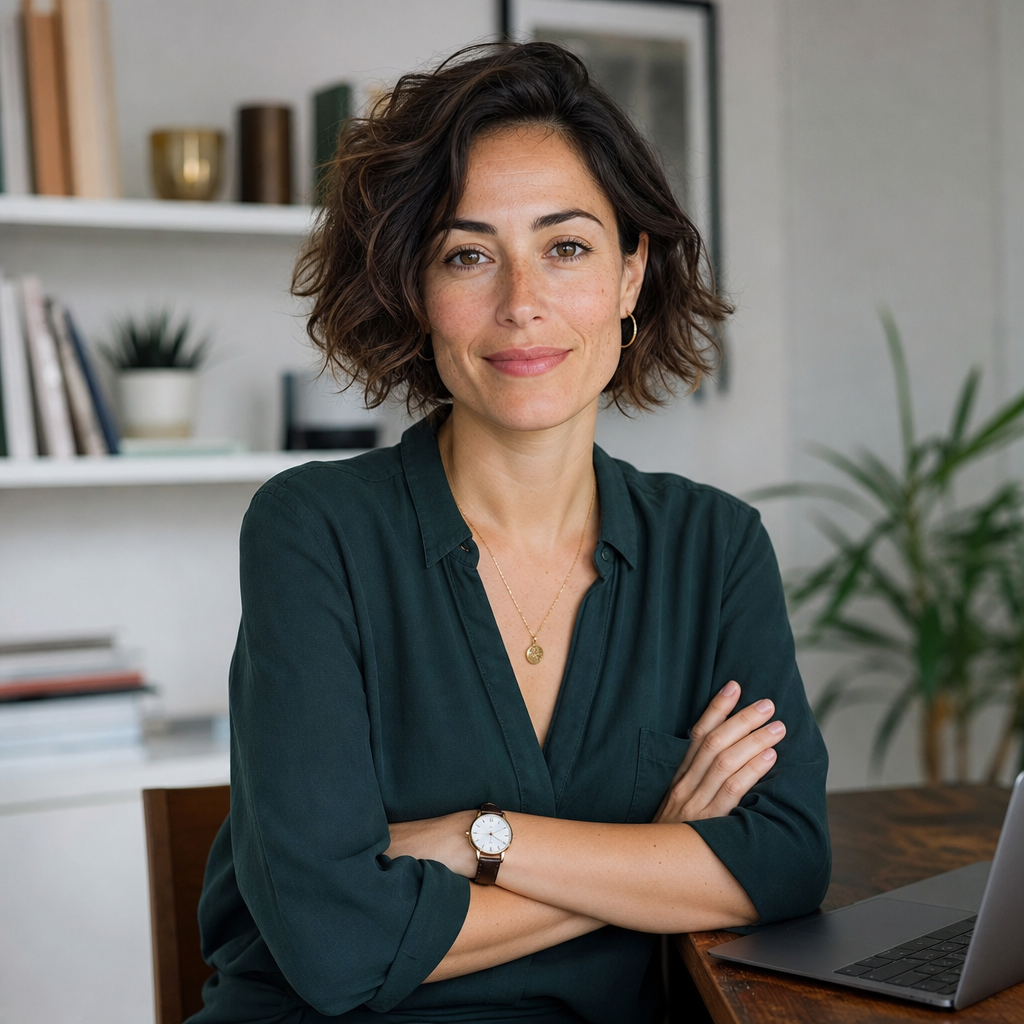
There's a version of this conversation that risks sounding purely cosmetic, as though the whole exercise is vanity dressed up as strategy. But talk to anyone who has managed a distributed team through a period of rapid hiring, and the stakes reveal themselves to be more human than aesthetic. New hires, particularly those joining fully remote companies, often report a specific kind of disorientation in their first weeks — the sense of working alongside people they may never meet in person, whose faces exist to them only as small circles in a company directory or a Slack sidebar. A current, well-lit, professionally consistent headshot is a small thing, but it does real work in that context. It says: you are visible here, you were worth the same care as everyone else on this page, your photo was not an afterthought squeezed in during onboarding week.
There is also a fairness dimension that's easy to overlook. In the old studio-visit model, headshot quality often correlated, uncomfortably, with seniority and tenure — the founders who'd been present for the original photo shoot looked polished, while newer or more junior staff, hired after the photographer had gone home, made do with webcam captures or asked a colleague to snap something on a phone during lunch. A tool that gives every employee — regardless of when they joined, where they live, or what equipment they own — equal access to the same studio-quality outcome quietly levels that field. The intern in their first month and the VP of a decade's standing end up with portraits built from the same process, to the same standard, at the same cost to the company.
Forbes has covered the broader rise of AI-assisted professional tools as part of a wider story about remote work maturing past its improvisational early phase — the point at which organisations stop treating distributed work as a temporary accommodation and start building proper infrastructure around it, from async communication norms to, yes, something as specific as how the team photographs itself. Seen in that light, a service like Headshot Lab isn't really a novelty product so much as a piece of that infrastructure, sitting alongside the password manager and the expense software as one more unglamorous system that makes distributed work function smoothly rather than merely survive.
A Photograph That Finally Matches the Job Title
Return, for a moment, to that mismatched grid — the squinting founder, the blue-lit product lead, the stale conference lanyard. The fix was never really about vanity. It was about closing the gap between how a company actually operates — distributed, async, held together by habit and trust rather than a shared building — and how it has historically had to present itself, which was still, until recently, modelled on an office that no longer exists for most of its staff.
A headshot, done properly, is a small act of translation: it takes something as intangible as competence and renders it instantly legible to a stranger scrolling past. For a long time, remote teams only had clumsy tools for that translation — a photographer's one annual visit, or nothing at all. What's changed, gradually and without much fanfare, is that the translation can now happen anywhere, on any employee's own schedule, with a result that holds its own against the grey-seamless-backdrop standard the studio visit once guarded so carefully.
The grid on the team page, these days, doesn't have to give anything away. It can simply look like what the company already is: coherent, considered, and entirely itself — whether everyone involved has ever stood in the same room or not. Somewhere between the hotel-conference-room photo shoot and the squinting webcam capture, there was room for something better, and companies updating their team pages into 2026 are, increasingly, finding it.
Article written by FrontRank