 HEADSHOTLAB
The Face You Show Before You Say a Word: Professional Headshots AI Is Rewriting
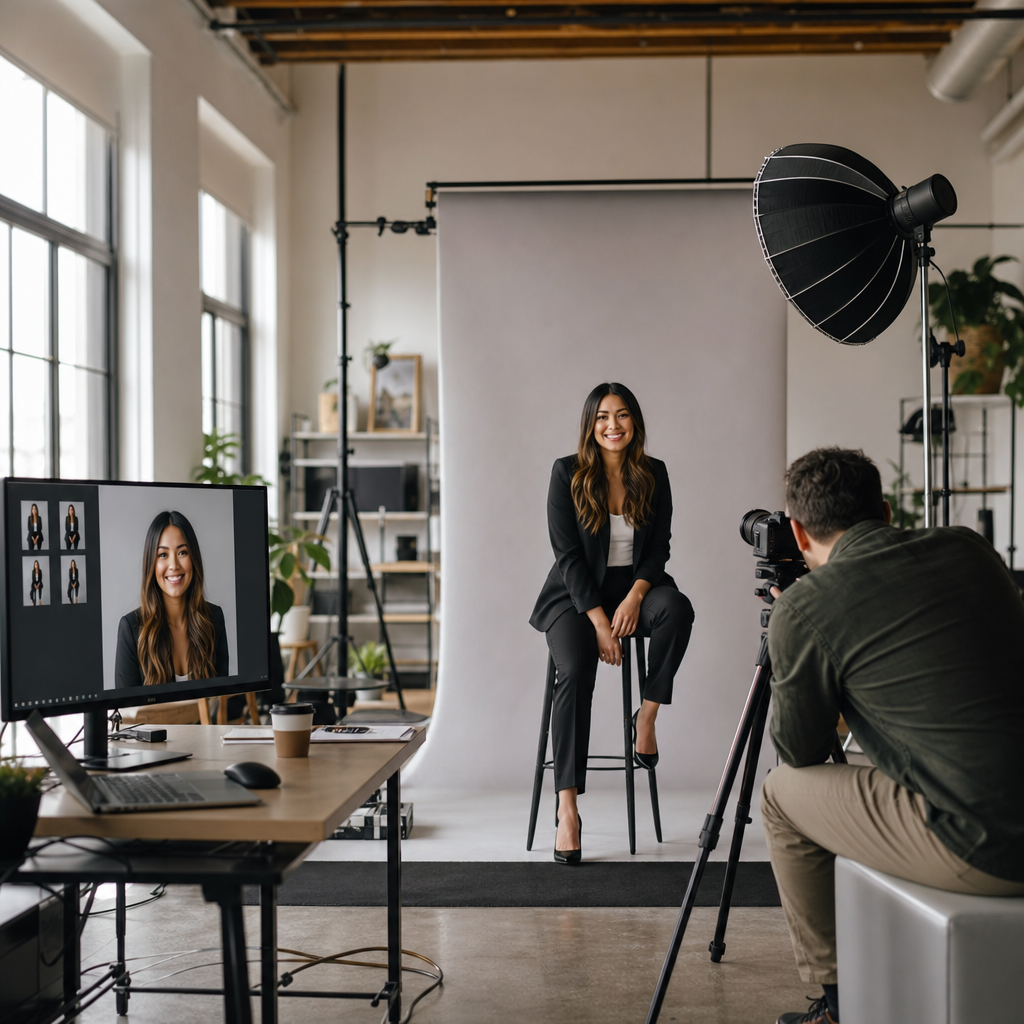
There is a particular kind of waiting room that used to announce itself by smell before sight: hot lighting gel, coffee gone cold in a paper cup, the faint chemical sweetness of a makeup kit opened one too many times that morning. You'd sit, straighten your collar for the fourth time, and wait for a stranger with a light meter to tell you when you looked like yourself. That ritual—the studio headshot appointment, booked weeks out, paid for in advance, often followed by a second appointment because the first roll didn't quite land—has quietly become optional. Somewhere between a selfie taken in a hallway with decent window light and an algorithm trained on tens of thousands of studio portraits, the professional headshot has been unbundled from the professional photographer.
This is not a small shift, even if it looks like one from a distance. For more than a century, the headshot has functioned as a kind of social passport: the image that precedes you into a boardroom, a byline, a dating profile, a LinkedIn feed scrolled past in half a second. Its job has never been to capture truth so much as to perform competence—the slight tilt of the head that reads as approachable, the backdrop that reads as established, the lighting that reads as money well spent. What has changed is not the job the photo does. What has changed is who, or what, is doing the work of making it.
The Democratization of the Good Light
Photographers have long understood something that the rest of us only feel intuitively: a headshot is really an argument about light. The soft, directionless glow that flatters a face in a well-appointed studio costs money to produce—strobes, softboxes, a reflector held just so by an assistant who has done this four hundred times. For decades, access to that light was a function of budget and geography. A junior associate at a regional law firm in Tulsa did not have the same photographic resources as a managing partner in Midtown Manhattan, and it showed, whether anyone said so out loud or not.
Generative AI headshot tools have, in effect, decoupled that light from its physical apparatus. Services like Headshot Lab take a handful of ordinary selfies—taken on a phone, in whatever light happened to be available that Tuesday—and run them through models trained to recognize and reproduce the visual grammar of professional portraiture: the catchlight in the eye, the gentle falloff behind the shoulder, the wardrobe that reads as "blazer" rather than "pajama top cropped awkwardly at the collar." The resulting images are not photographs in the traditional sense. They are syntheses, educated guesses about what a studio session would have produced, built from a training diet of real portraits and refined through the kind of iterative correction that machine learning does well.
The practical effect has been to collapse a process that once took weeks—researching a photographer, scheduling a session, choosing outfits, sitting through retouching notes—into something that can be initiated on a lunch break. According to reporting from the Pew Research Center, the share of job seekers conducting their search primarily through digital platforms has climbed steadily for a decade, and platforms like LinkedIn have become, for many professionals, the primary venue in which they are first seen by a stranger who might decide their fate. A blurry, badly lit, or simply absent profile photo is not a neutral choice in that economy. It is a kind of silence.
What the Camera Used to Decide, the Prompt Now Negotiates
There is something worth sitting with in the fact that a user of an AI headshot tool now makes decisions a photographer once made on their behalf, often without discussion: which background communicates "finance" versus "creative agency," whether a navy jacket outperforms charcoal under a company's brand palette, whether a slight smile reads as warmer or less authoritative than a neutral expression. These were historically matters of a photographer's house style, their taste imposed gently on a sitting. Now they are menu choices.
This raises an interesting and slightly uncomfortable question about authorship. When a user selects "executive office, soft daylight, navy suit" from a set of options and the system produces twenty variations, who made the photograph? The honest answer is something like: a collaboration between the user's actual face, the aesthetic conventions baked into the model's training data, and a set of stylistic defaults chosen by the company that built the tool. It is less like hiring a photographer and more like art directing one, except the photographer is a vast statistical model and the shoot happens in seconds rather than hours.
Writers covering the broader rise of generative imagery—from the fine-art implications discussed in The New Yorker's coverage of AI and creativity to the more technical unpacking found in MIT Technology Review—have tended to frame this moment in terms of anxiety: whose jobs disappear, whose authenticity is compromised, whether a synthetic image can ever carry the same evidentiary weight as one captured by a lens pointed at an actual, present body. Those are legitimate questions, and the headshot is not exempt from them. But the headshot occupies a slightly different cultural register than, say, a fine-art print or a photojournalistic image. Nobody has ever mistaken a corporate headshot for an unmediated slice of truth. It was always a performance, always retouched, always art-directed toward a desired outcome. The AI headshot simply makes explicit what the traditional headshot always quietly did.
The Office Without a Uniform, Now Uniformly Photographed
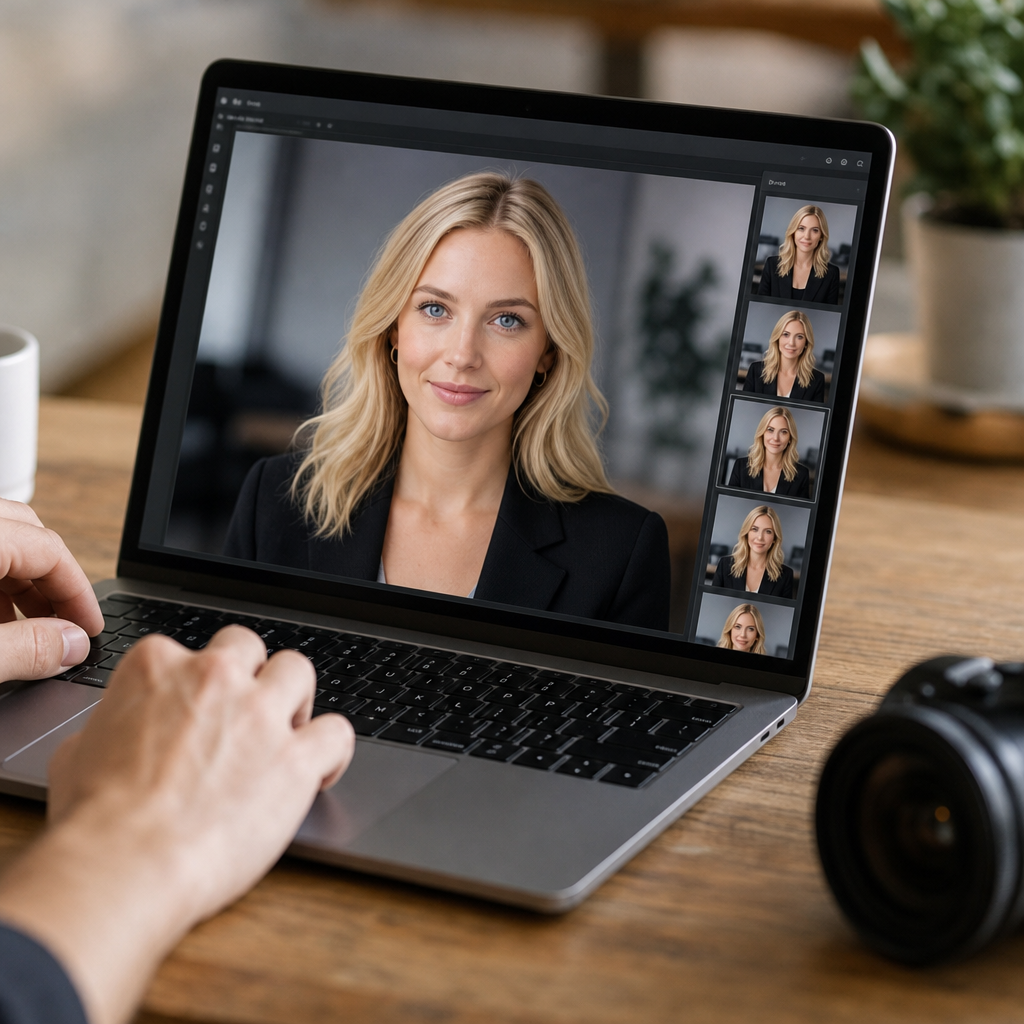
If the individual use case for AI headshots is about convenience and cost, the organizational use case is about something closer to cohesion. Walk through the "team" pages of almost any mid-sized company founded before roughly 2015, and you will likely find a visual mess: some employees photographed by a professional during a single on-site day years ago, others added later with a selfie cropped against a bedroom wall, a few represented by an avatar because they joined during a remote-hiring wave and never made it into a studio at all. The pandemic years accelerated this patchwork considerably. Distributed teams, hired across time zones and never gathered in one room, simply stopped having the natural occasion—the in-person all-hands, the annual retreat—that used to justify flying in a photographer.
Team-oriented AI headshot packages, the kind Headshot Lab and similar services offer to organizations, solve a problem that is less about individual vanity and more about brand coherence. A matched background and a consistent lighting treatment across forty employee photos does something subtle but real: it signals an organization that has its act together, even if half its workforce has never set foot in the same building. Design and branding publications, including Fast Company's design coverage, have long argued that visual consistency functions as a trust signal, a way of communicating competence before a single word of copy is read. A ragged photo grid on a "Meet the Team" page reads, even subconsciously, as a company still finding its footing. A uniform one reads as settled, serious, already arrived.
There is also a quieter equity argument buried in here. A traditional company photo day advantages whoever happens to be in the office that week, whoever is comfortable in front of a camera, whoever didn't have a dentist appointment. Remote employees, parents managing a school pickup, contractors who technically aren't supposed to be included but end up on the team page anyway—all of them have historically fallen through the cracks of the in-person shoot. An asynchronous process, where each person uploads selfies on their own schedule and receives a professionally rendered result days or even minutes later, removes a surprising amount of friction from what used to be a logistical headache involving calendars, studio rental, and the inevitable three people who couldn't make the date.
The Vanity of Looking Like Yourself, Only Rested
Ask anyone who has sat for a traditional headshot what they actually wanted from the experience, and the answer is rarely "a perfectly accurate record of my face." It is closer to: I want to look like myself on a good day. The version of me that got enough sleep, that didn't have a stressful commute, that isn't mid-argument with a sibling over text. Photographers have always understood this and built entire careers around the gentle art of flattering truth—the slight downlight that minimizes under-eye shadow, the pose that elongates rather than compresses, the direction to "think of something that makes you happy" right before the shutter clicks.
AI headshot generators inherit this same psychological contract, just automated. The better services are not attempting to manufacture an unrecognizable, airbrushed stranger; they are attempting to produce the most flattering plausible version of an actual face, the one you'd get if a skilled photographer and retoucher spent an hour on you instead of ninety seconds. This is part of why Headshot Lab and comparable platforms tend to offer dozens of generated options per session rather than a single result—the understanding, baked into the product itself, that "professional" is not one look but a range, and that the right choice depends on context nobody but the user can fully judge. A headshot destined for a press kit accompanying a book launch wants a different register than one destined for an internal Slack profile or a conference speaker page.
There is a useful comparison here to the history of studio portrait painting, long before photography existed at all. Court painters across sixteenth-century Europe were not working from life in any strict documentary sense; they were producing idealized, status-communicating images that nonetheless had to be recognizably the sitter, or the whole enterprise failed its social purpose. Art historians writing for institutions like the Metropolitan Museum of Art have long noted that portraiture's job was never pure likeness—it was likeness in service of a social claim. The AI headshot, in this light, is a very old genre wearing new software.
The Trust Question Nobody Quite Resolves
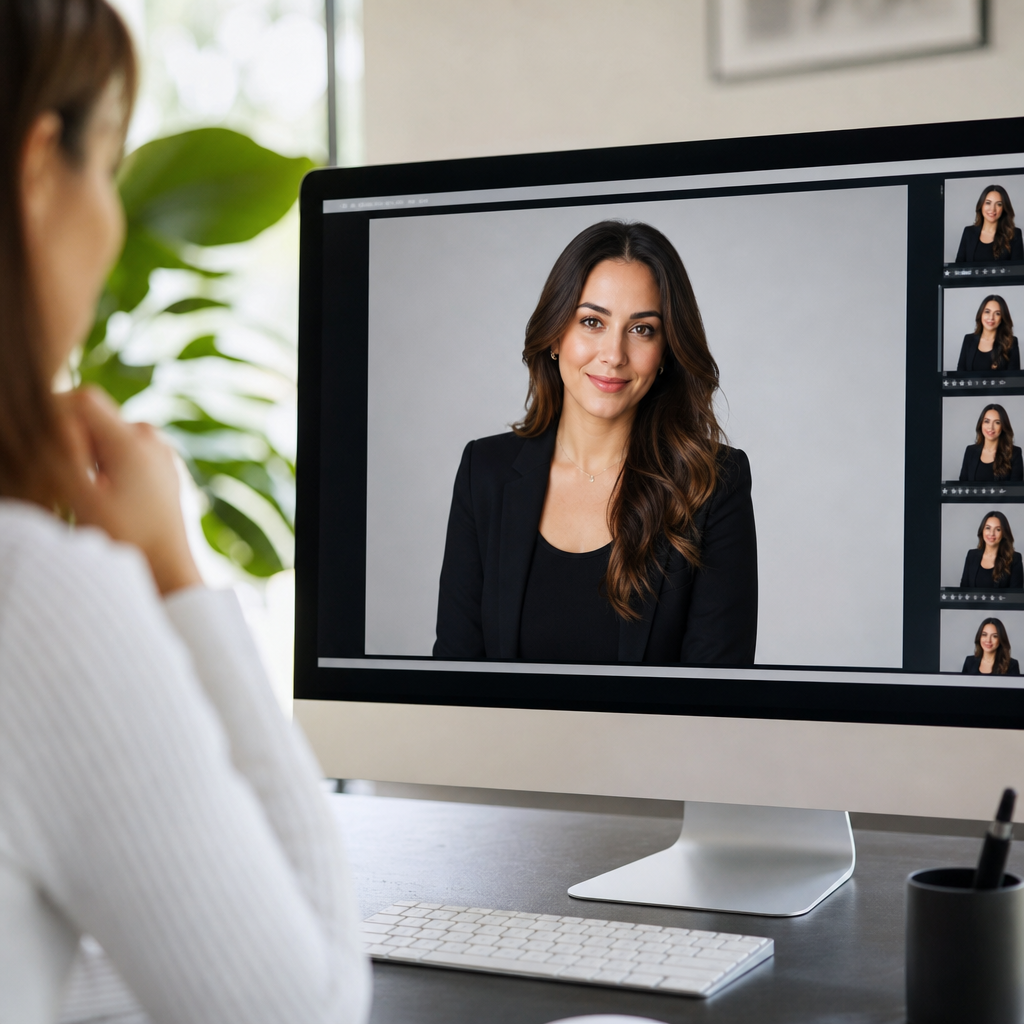
None of which fully settles the discomfort some people feel looking at a synthetic version of their own face smiling back from a screen. There is a strangeness to it that is worth naming rather than smoothing over. A traditional headshot, however flattering, is anchored to a real moment—a specific afternoon, a specific outfit, a specific exchange with a photographer who said "chin down slightly" and meant it about that particular sitting. An AI-generated headshot is anchored to a dataset instead, a statistical composite of what professional portraiture tends to look like, applied to your features. For some, that distinction matters enormously; for others, it is a technicality no more significant than the fact that a traditional headshot was already retouched in Photoshop before anyone saw it.
Reputable services have responded to this unease with a kind of radical transparency about process. Clear explanations of how uploaded photos are used, how long they're retained, and what rights the company claims over them have become table stakes, not differentiators—a trend consistent with broader guidance on digital image rights discussed by organizations like the Electronic Frontier Foundation. A money-back guarantee, retouch credits for results that miss the mark, and a clear choice architecture around attire and background are less about marketing flourish than about treating the image-generation process with the same seriousness a sitter once brought to choosing a photographer whose portfolio they trusted. The absence of a human photographer in the room does not mean the absence of craft; it relocates the craft into the model's training, the interface's defaults, and the company's willingness to let a dissatisfied customer simply try again.
What seems to be emerging, a few years into this technology's consumer availability, is a kind of settled pragmatism. Early adopters who treated AI headshots as a novelty—good for a laugh, suspect for anything serious—have largely given way to professionals who treat them the way they'd treat any other piece of modern infrastructure: useful, slightly uncanny in its speed, and ultimately judged by results rather than process. A headshot's only real test has always been whether it does its job—whether it makes a hiring manager pause half a second longer, whether it makes a potential client feel they're dealing with someone put-together, whether it survives being shrunk to a 40-pixel circle next to a name on a video call. By that standard, the mechanism behind the image matters far less than most of the anxious commentary about it would suggest.
A Portrait Without a Sitting
What's lost, if anything is lost, is the ritual itself—the specific, slightly performative intimacy of being looked at closely by someone whose entire job is figuring out how to make you look like your best self under good light. There is a reason actors and writers alike have described the traditional headshot session as oddly vulnerable: a stranger studies your face for an hour, makes small adjustments, asks you to tilt your head this way and that, and somewhere in that attention you occasionally catch a glimpse of how you're actually perceived by the world, rather than how you imagine yourself. That exchange doesn't happen when the process is a solitary selfie session followed by an algorithm's output. It's a trade-off, not a tragedy—a different kind of image-making for a different kind of working life, one increasingly conducted over video calls and asynchronous messages rather than in person at all.
It seems fitting, in the end, that the technology reshaping how we present our faces to strangers should arrive at the exact moment so much of professional life has become faceless by default—conducted through text threads, shared documents, meetings attended by a grid of small video tiles that most participants keep off anyway. The headshot persists as one of the last places where a working person is asked, explicitly, to be seen. That so many now meet that request not in a studio but at a kitchen table, phone propped against a stack of books, uploading selfies to a service like Headshot Lab and waiting a few minutes for the result, says less about the death of craft than about craft finding a new, more accessible address. The light hasn't disappeared. It has simply learned to travel.
Article written by FrontRank