 HEADSHOTLAB
Skip the Studio: Try a Professional Headshot Maker Online Tonight
There is a particular kind of silence that falls over a LinkedIn profile with no photo—a grey silhouette where a face should be, politely withholding itself from recruiters, collaborators, old colleagues scrolling through for a name they half-remember. It is the silence of someone who meant to get it done. Who has, in fact, meant to get it done for the better part of eighteen months. Somewhere between the pandemic's long tail and the great reshuffling of how and where we work, the professional headshot became one of those small, stubborn tasks that sits at the bottom of every list, outlived by its own good intentions.
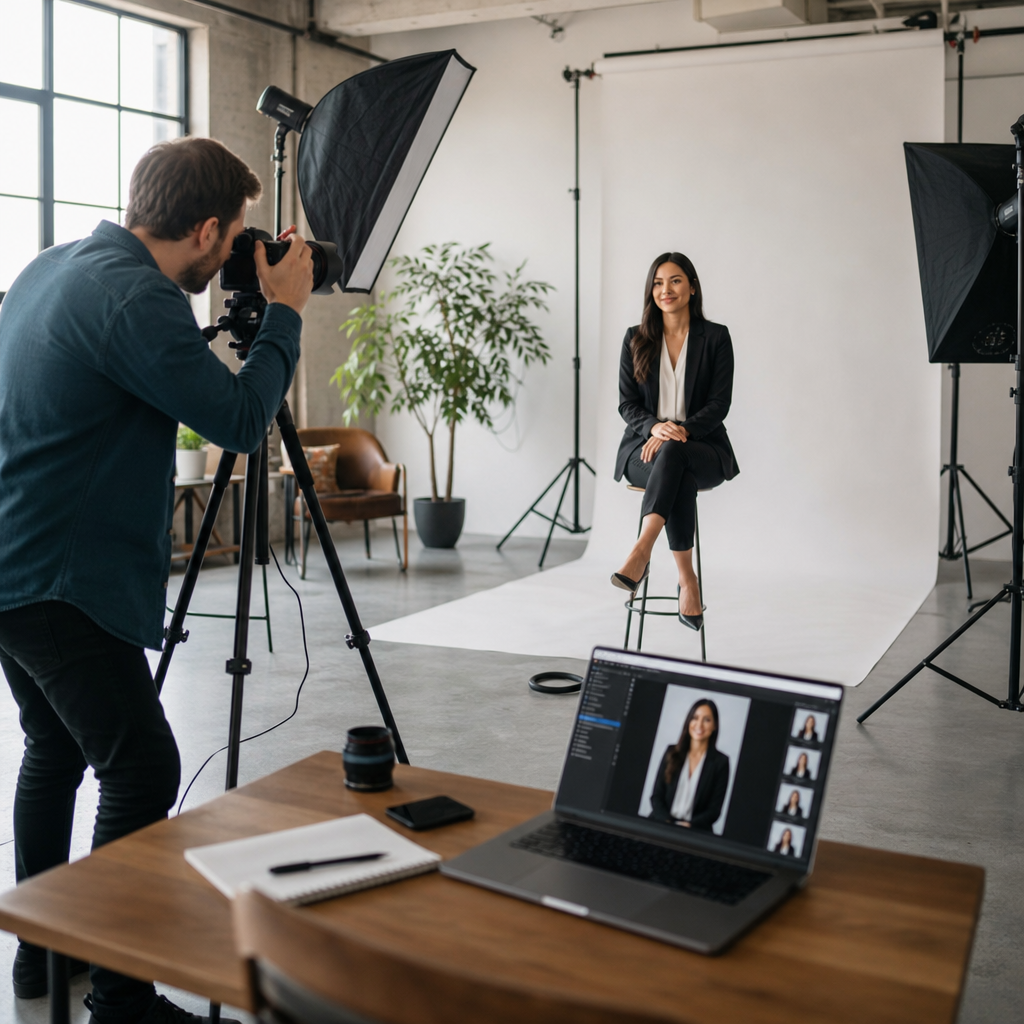
The traditional fix required a kind of logistical choreography that, on reflection, seems almost baroque. A studio had to be booked, often weeks out. An outfit had to be chosen, steamed, reconsidered. A Tuesday afternoon had to be surrendered. Someone with a light meter and a backdrop roll had to be paid, usually a few hundred dollars, sometimes considerably more if the brief included multiple looks or a same-day turnaround. And at the end of it, you received perhaps twenty images, three of which you liked, one of which you'd actually use. It was not an unreasonable system. It was simply a system built for a world with more time in it.
That world has largely gone. What has replaced it is quieter, faster, and—this is the part worth sitting with—genuinely good. A professional headshot maker online has become, for a remarkable number of professionals, the default rather than the compromise. Not a lesser version of the studio sitting, but a different proposition entirely: one that asks for a selfie instead of a Tuesday.
The Grammar of a Good Headshot
Every era has its visual dialect for professionalism, and headshots are a surprisingly precise record of it. The 1990s corporate portrait—navy blazer, mottled grey backdrop, a smile held a half-second too long—gave way to the softer, more "approachable" headshots of the 2010s, all natural light and open-necked shirts, photographed by boutique studios in converted warehouses. Each shift tracked something real about how institutions wanted to present themselves: formality giving way to warmth, hierarchy giving way to the illusion of flatness.
What's happening now is less a stylistic shift than a structural one. The image itself hasn't changed so much as its means of production. A well-made AI headshot today can replicate the studio grammar precisely—the catchlight in the eye, the gentle falloff of a seamless backdrop, the particular softness that comes from a beauty dish rather than a bare flash—without anyone actually standing in a studio. Wired and The Verge have both covered, with a mixture of fascination and mild unease, how convincingly generative tools now handle the small physical truths that used to give away an amateur photo: the way fabric creases at the shoulder, the way skin catches light differently across a jaw. Headshot Lab built its entire premise around getting that grammar right—asking users to choose attire, background, and style not as novelty options but as the same decisions a photographer would walk a client through at the start of a sitting, just compressed into a few taps.
What's lost, arguably, is a kind of ritual. There is no assistant adjusting a reflector, no small talk while the lighting is checked, no walk to a coffee shop afterward to decompress from having been looked at so closely for forty-five minutes. What's gained is availability. The service doesn't require you to have a free Tuesday. It requires you to have a phone, which, for almost everyone reading this, is not in question.
The Freelancer, the Founder, and the Forty-Person Team
Consider three people, none of them hypothetical in the sense that matters—each represents thousands of real searches, real late-night uploads, real small professional anxieties resolved before bed.
There is the freelance copywriter in Austin who has rebranded twice in three years, each time needing a new headshot to match a new site, a new set of client-facing collateral, and who simply cannot justify another several-hundred-dollar studio invoice for an image she'll refresh again in eighteen months. There is the founder in Lagos or Lisbon or Columbus—wherever the time zone happens to fall—pulling together a press kit the night before a funding announcement, who needs something that reads as credible to a journalist at TechCrunch without the two-week lead time a proper shoot would demand. And there is the operations manager at a mid-sized firm in Ohio, tasked with the unglamorous but very real job of making forty employee photos look like they belong to the same company, when half the team is remote, scattered across three states, and nobody's calendar aligns.
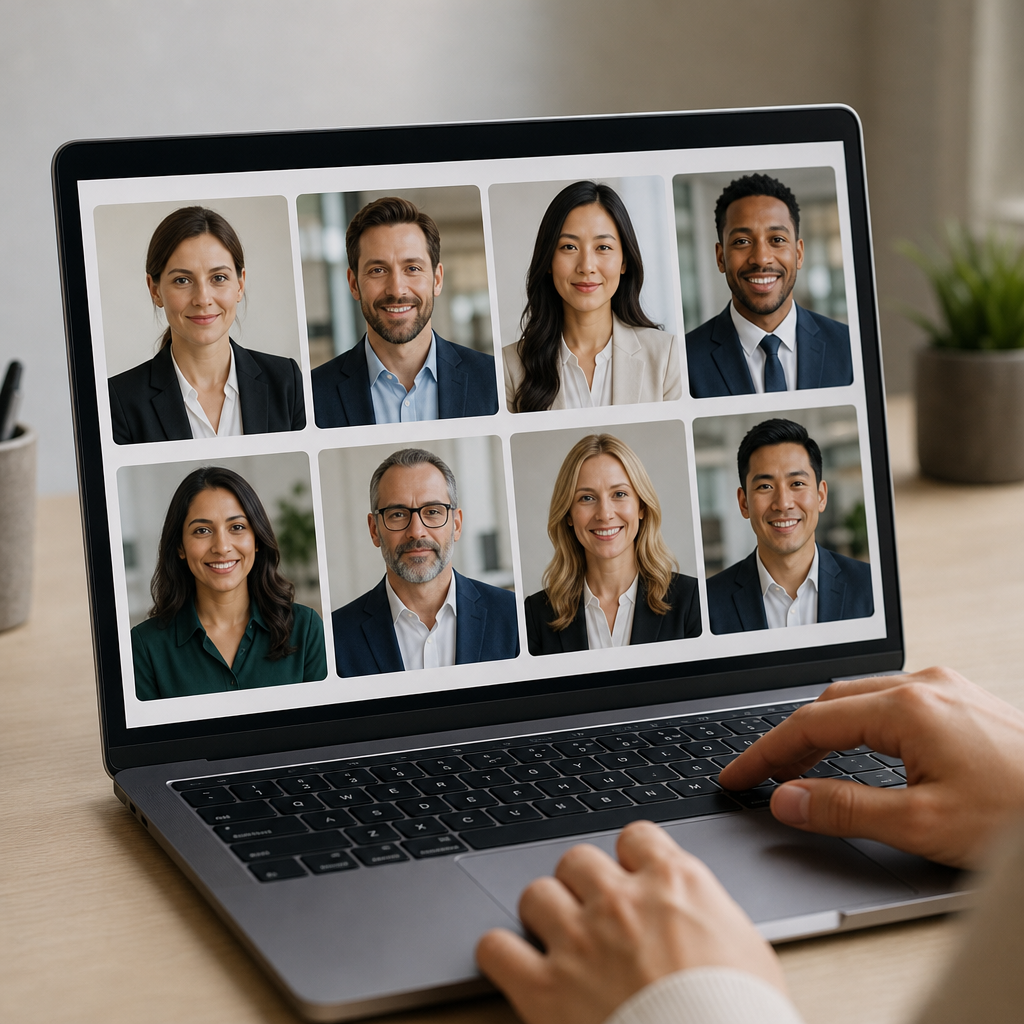
That third scenario is where the economics get genuinely interesting, because it's the one hardest to solve the old way. Coordinating a single in-person shoot for a distributed team means flying people in, or hiring photographers in multiple cities and hoping the lighting matches, or—more commonly—giving up and letting everyone submit whatever photo they have, producing a team page that looks less like an organization and more like a ransom note assembled from different fonts. Headshot Lab's team packages exist specifically for this problem: matching backgrounds, matching attire conventions, a consistent edit applied across every face, so that the org chart on the company website reads as a single coherent entity rather than forty separate improvisations. Harvard Business Review has written at length about the quiet signalling power of visual consistency in organizations—the way a unified aesthetic, even in something as small as a staff photo grid, communicates operational competence before a single word of copy is read.
The Economics of Looking Credible
There's a version of this story that's purely about cost, and it's not an unimportant one. A traditional headshot session, inclusive of a photographer's time, basic retouching, and perhaps a second outfit change, routinely runs past $300 in most mid-sized American cities, more in New York or San Francisco where studio rental alone eats a meaningful chunk of the fee. A platform like headshotlab.com collapses that into a one-time fee that typically lands well under a tenth of that figure, returning not three or four final images but dozens of styled variations, with retouch credits included for the inevitable moment where a user wants the jaw-line softened or a stray hair corrected. The Bureau of Labor Statistics has tracked a steady rise in freelance and gig-economy participation over the past decade, and that shift matters here specifically: a freelancer rebranding every year or two, or a job seeker applying across multiple industries with slightly different visual registers for each, simply cannot sustain the old cost structure. The economics of modern work—contract-based, portfolio-driven, perpetually in flux—demand a tool that can be used often, cheaply, and without ceremony.
But the more interesting economics aren't about price. They're about risk. A studio sitting is a single bet. You show up, the light is what it is, your face does what faces do on that particular Tuesday, and you leave with what you leave with. A professional headshot maker online inverts that risk structure entirely—dozens of outputs instead of one sitting, a money-back guarantee sitting underneath the whole transaction like a safety net nobody particularly wants to use but is glad exists. For someone job-hunting after a layoff, already managing the particular financial anxiety that comes with unemployment, that inversion of risk is not a minor convenience. It's the difference between a $300 gamble and a low-cost certainty.
What the Algorithm Actually Sees
It's worth pausing on what these tools are technically doing, because the answer is less mystical than the marketing copy around "AI magic" sometimes suggests. A diffusion-based image model, trained on enormous datasets of professional photography, has learned an extraordinarily granular sense of what separates a studio portrait from a bathroom-mirror selfie: the directionality of light, the compression characteristics of a long lens, the subtle vignette that draws the eye to a face, the specific way a navy suit jacket drapes across a shoulder under three-point lighting. When a user uploads a handful of selfies, the model isn't pasting a stock background behind an unchanged face—it's reconstructing the entire photographic event, estimating how that particular face, with its particular bone structure and skin tone, would have been lit and framed had a photographer actually been in the room.
MIT Technology Review has covered the broader trajectory of this technology with appropriate rigor, noting both its startling competence and its occasional, telling failures—the extra button on a blazer, a tooth that doesn't quite sit right, an earring that resolves into something slightly abstract. These artifacts are growing rarer with each model generation, but their occasional presence is a useful reminder that what's happening is reconstruction, not photography. It is, in a sense, closer to portraiture than photojournalism: an interpretation of a likeness, optimized for a specific emotional register—competence, warmth, approachability—rather than a literal unmediated record of a single moment in time.
This is precisely where attire, background, and style selection become more than cosmetic choices. A user picking "charcoal blazer, soft grey studio backdrop" versus "open-collar shirt, blurred office interior" isn't just choosing an aesthetic; they're choosing which professional dialect they want to speak. A corporate attorney and a UX designer at a Series B startup are, visually, telling very different stories about themselves, even though both might generate their headshots from the same underlying platform within the same ten minutes. The tool's flexibility is in some ways its most editorial feature—it asks the user to make a decision that used to be outsourced to a photographer's taste, or a brand consultant's deck, and hands that decision back.
Faces That Don't Match Their Floor Plan
There's a specific, almost architectural problem that's emerged as remote and hybrid work have matured past their early improvisational years: the mismatch between a company's physical presentation and its visual one. A firm might occupy a handsome, well-lit office in a renovated warehouse, its website full of clean typography and considered whitespace, and then undercut all of it with a team page of mismatched photos—one person photographed against a hotel curtain during a conference, another squinting into direct sun on a patio, a third using a cropped vacation photo because nothing else existed. Fast Company has pointed out that this kind of visual incoherence does measurable reputational damage, particularly for companies trying to recruit in competitive markets where a candidate's first real impression of "what it's like here" comes from scrolling a careers page, not from a conversation.
Solving that mismatch used to require either flying a photographer to every office location—expensive, logistically fragile, dependent on good weather and good hair days aligning across time zones—or accepting the incoherence as an unavoidable cost of being distributed. The team-package model offered by services like Headshot Lab sidesteps the problem structurally: every employee submits their own selfies from wherever they happen to be, and the output is normalized at the point of generation, not at the point of capture. The Ohio operations manager and the designer working from a flat in Lisbon end up with headshots that share the same backdrop tone, the same lighting logic, the same implicit dress code, despite never having been in the same room, the same country, or arguably the same season.
The Quiet Dignity of Looking Ready
There is something almost touching about how much weight a single photograph is asked to carry. It has to suggest trustworthiness to a hiring manager skimming forty resumes in an afternoon. It has to read as warm enough for a client scanning a consultancy's "About" page, but not so casual that it undercuts the invoice. It has to sit comfortably next to a dozen other faces on a company directory without looking like it wandered in from a different decade. Asking a single image to do all of that is, in retrospect, a strange amount of pressure to put on something that used to require nothing more than an old company badge photo.
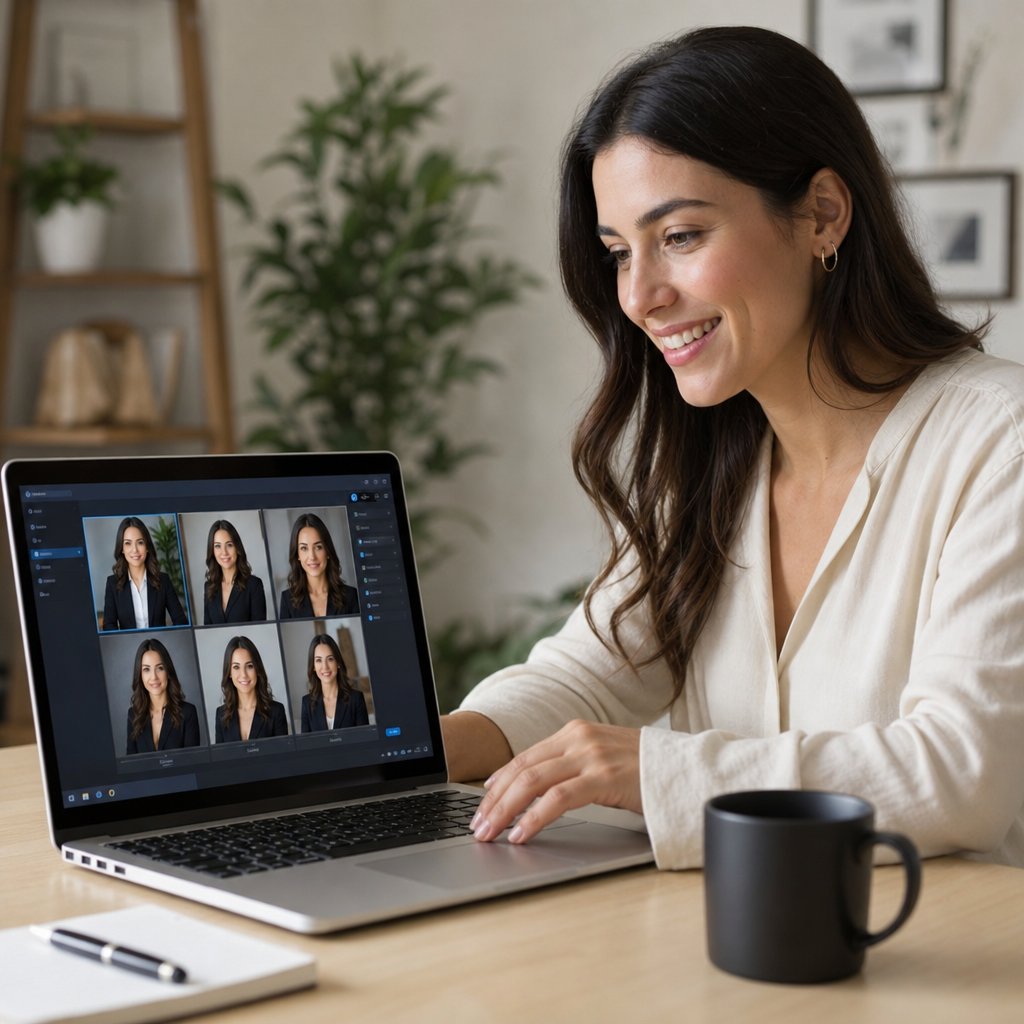
What the rise of the professional headshot maker online really represents is a recalibration of effort against stakes. The stakes of looking credible haven't diminished—if anything, in a hiring market as competitive and algorithmically mediated as 2026's, they've intensified, with applicant tracking systems and recruiter scroll-speed making that first visual impression do more work than ever. But the effort required to meet those stakes has collapsed, from a half-day commitment and a few hundred dollars, to twenty minutes and a modest one-time fee. That collapse doesn't cheapen the outcome. If anything, it democratizes a kind of visual professionalism that used to be gated behind disposable income and free time—two things an increasing share of the workforce, freelance or full-time, simply doesn't have in surplus.
There's a version of the future worth imagining here, not a dramatic one, just a quietly different default: a job seeker in a small town without a single professional photography studio within an hour's drive, uploading a selfie taken in their kitchen, and within minutes holding an image that would not look out of place on the masthead of a law firm. A remote team scattered across four time zones finally sharing a single, coherent visual identity without anyone boarding a flight. The studio hasn't disappeared so much as it has been rebuilt, invisibly, inside the phone already sitting in everyone's pocket—available at the exact moment the need arises, rather than the moment a calendar permits. Headshot Lab, and the broader category it belongs to, didn't invent that need. They simply noticed how badly it had outgrown the old way of meeting it, and built something smaller, faster, and oddly more considerate in its place—a studio with no address, open whenever you are, at headshotlab.com.
Article written by FrontRank