 HEADSHOTLAB
The Studio That Fits in Your Pocket: How to Get a Professional Headshot Without a Photographer
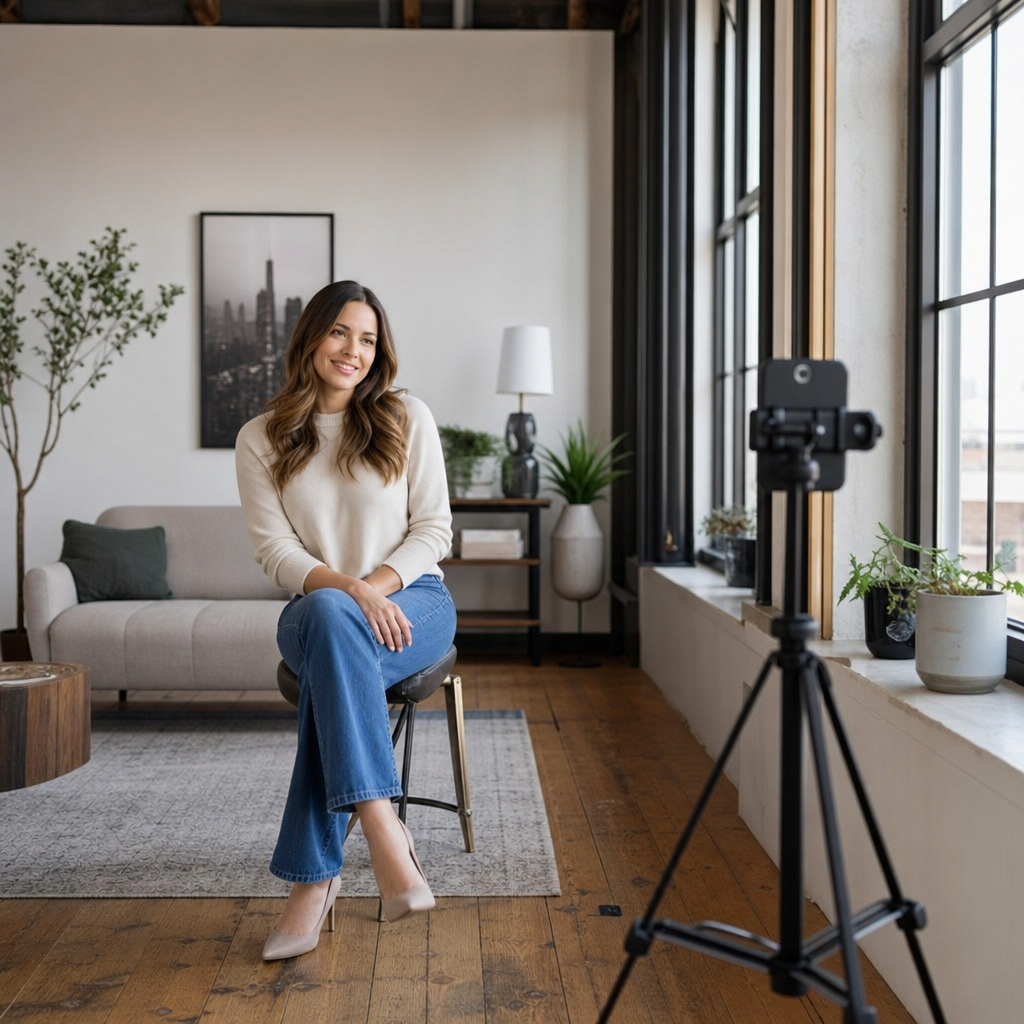
There is a particular kind of fluorescent dread that belongs to the old headshot appointment. You know the one: a strip-mall studio sandwiched between a dry cleaner and a nail salon, a backdrop the color of a hospital waiting room, a photographer telling you to "relax your shoulders" in a tone that guarantees you cannot. You paid $250 for the privilege, waited two weeks for the proofs, and ended up using the one photo where you look like you're mid-sneeze but at least your eyes are open. Multiply that by forty employees, and you have the modern corporate ritual of the team headshot day — a conference room rearranged, a rented light kit, a line of colleagues trying not to look like they're waiting for a vaccine.
That ritual is dissolving, quietly and without much ceremony, the way most genuine shifts in habit do. In its place is something that would have sounded like science fiction a decade ago and now sounds almost mundane: open an app, upload a handful of selfies, choose a blazer and a backdrop, and receive a portrait indistinguishable from one shot by a working professional with a $4,000 lens. The question that once required a phone call to a studio — "who do I even book for this?" — has been replaced by a different, more interesting one: how to get a professional headshot without a photographer at all, and whether something is lost in the trade.
This is not a story about gadgetry for its own sake. It is a story about a very particular kind of modern anxiety — the gap between how we look in the mirror on a Tuesday morning and how we're expected to look on a LinkedIn profile, a company "About" page, a conference speaker bio — and about the strange, almost tailor-like precision with which artificial intelligence has learned to close that gap.
The Vanity of the Profile Photo
Nobody wants to admit how much thought goes into a headshot, which is precisely why so many of us have a profile photo we hate. The portrait sits at the top of every cold email, every Zoom call thumbnail, every speaker panel program. It is, in the most literal sense, the first impression made at scale — reproduced hundreds of times, cropped into a circle, shrunk to the size of a thumbnail, and yet somehow expected to convey competence, warmth, and the faint suggestion that you have your life together.
Research into first impressions backs up the instinct. Psychologists have long documented how swiftly people form judgments from a face — a widely cited Princeton study found that trait impressions form within a tenth of a second, long before any résumé is read. LinkedIn itself has noted that profiles with a photograph receive dramatically more views than those without, and recruiters routinely cite the headshot as the first filter in an unconscious vetting process. None of this is new information to anyone who has agonized over cropping a vacation photo down to a passable profile picture. What's new is the realism with which that agonized cropping can now be bypassed altogether.
The traditional fix — book a photographer, rent a studio, buy a blazer you'll never wear again — was never really about vanity. It was about access. A good headshot photographer in a major city might charge several hundred dollars for an hour, and that's before retouching, before the second outfit change, before you factor in that most people need to take an afternoon off work to sit for it. For a freelancer in Tulsa or a nonprofit coordinator in Nairobi, that cost isn't trivial — it's prohibitive. The democratizing promise of AI headshot tools isn't that they replace craft; it's that they remove the toll booth that used to stand between an ordinary professional and a portrait that looked like it belonged on a magazine masthead.
The Selfie as Raw Material
What makes the current generation of AI headshot generators different from the filtered, slightly uncanny "cartoon avatar" apps of a few years ago is the sophistication of the underlying model. Modern diffusion-based image systems — the same broad family of technology behind tools like Midjourney and Stable Diffusion — don't simply apply a filter to an existing photo. They are trained to understand bone structure, the way light falls across a cheekbone, the subtle asymmetries that make a face recognizably yours rather than a generic approximation of a face. Fed a set of your own selfies, the model learns your likeness with enough fidelity to generate entirely new images: new lighting, new backgrounds, new clothing, new angles, while preserving the thing that matters most — that it still looks like you had a very good day in front of a very good camera.
This is the premise behind Headshot Lab, which asks users to upload a handful of ordinary phone photos — no ring light required, no professional makeup — and returns dozens of styled headshot options within minutes. You choose the attire: the charcoal blazer for the executive bio, the soft knit for the "approachable founder" LinkedIn look, the crisp white shirt for a press kit. You choose the backdrop: a seamless studio grey, a sunlit office with gentle bokeh, the kind of neutral backdrop that has become shorthand for "I take my career seriously." The system does the rest, drawing on a trained understanding of how professional photographers actually light and frame a face, then rendering it back as something closer to portraiture than to editing.
There is something almost tailor-like in the process — not unlike the bespoke suit trade, where a client is measured once and then a garment is cut specifically to their proportions, rather than pulled off a rack. The AI headshot works from your particular geometry, not a generic template, which is why the results tend to hold up under scrutiny from colleagues who would instantly clock a stock photo or an obviously synthetic face.
What the Studio Actually Sold You
It's worth pausing on what a traditional headshot session was actually providing, because the AI alternative only makes sense once you separate the craft from the logistics. A skilled portrait photographer brings genuine expertise: an eye for flattering angles, an instinct for when a smile looks performed versus natural, technical command of studio lighting that can soften a jawline or sculpt cheekbones without anyone noticing the effort involved. Photographers like Peter Hurley, whose "squinch" technique became something of a cult methodology in corporate headshot circles, built entire careers on these small, hard-won skills.
What a session also sold you, less visibly, was logistics: a rented space, equipment amortized over years of bookings, an assistant to manage lighting rigs, and the retoucher's hours spent in post-production smoothing stray hairs and blemishes. Industry pricing guides from organizations like the Professional Photographers of America reflect this — a single polished headshot often represents several hours of combined shooting and editing labor, which is precisely why it has historically cost what it costs.
AI headshot platforms essentially unbundle these two things. They cannot replicate a photographer's improvisational rapport — the joke that gets a genuine laugh caught mid-frame, the instruction to "think about good news" that produces an authentic softness around the eyes. But they can replicate, with startling consistency, the technical outcomes that rapport was in service of: the lighting, the framing, the retouching, the sense of polish. For a huge number of use cases — a LinkedIn photo, a company directory page, a conference bio — the technical outcome is what's actually being evaluated. Nobody studying your headshot on a hiring committee knows or cares whether a joke was told during the shoot. They're responding to light, symmetry, color, and expression, all of which a well-trained model can now produce convincingly.
The Office That Dressed Itself the Same Way Twice
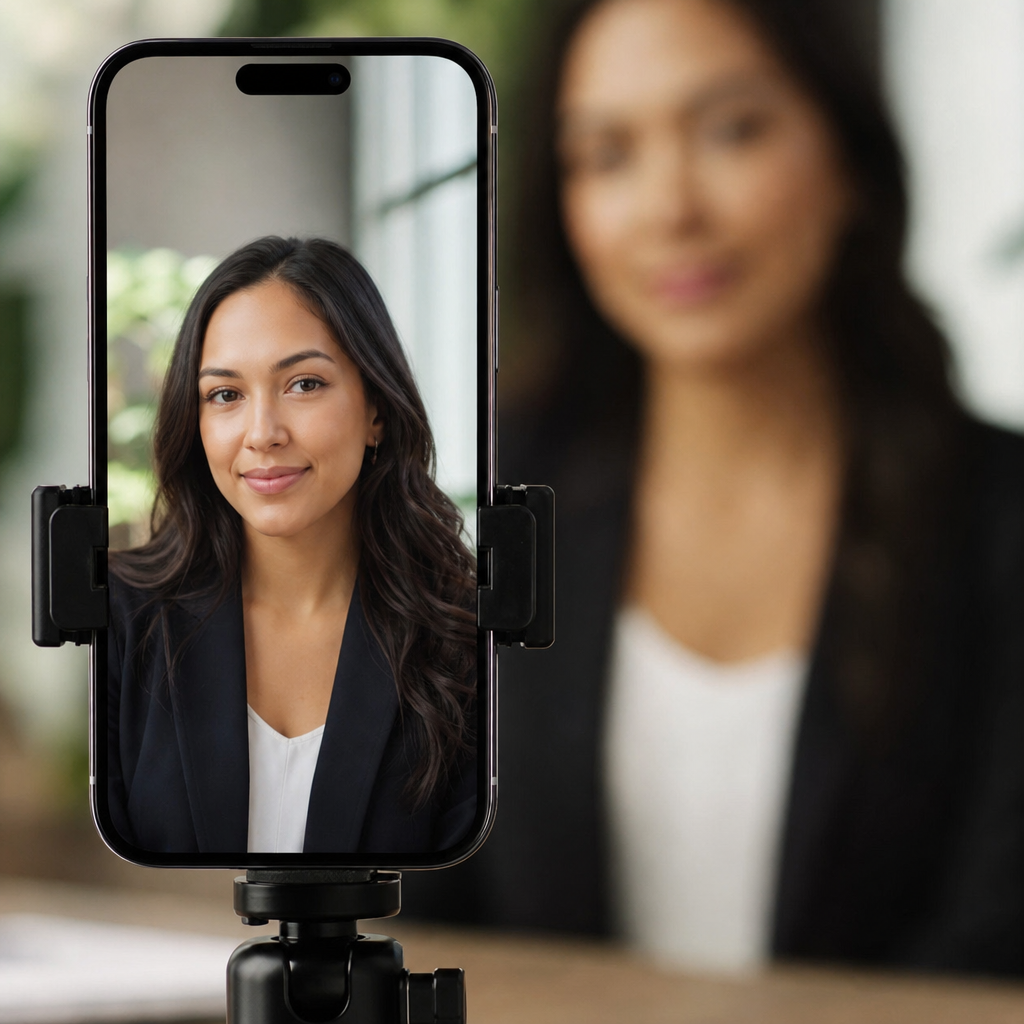
If the individual case for AI headshots is about convenience, the organizational case is about something closer to brand discipline. Any company with more than a handful of employees eventually discovers the particular visual chaos of a team page assembled over years: one headshot taken against a hotel-conference backdrop in 2019, another snapped on an iPhone in a parking lot during a hurried rebrand, a third that's clearly a cropped wedding photo because the employee in question joined remotely and nobody ever sent a photographer their way. The inconsistency is minor in isolation and glaring in aggregate — a visual tell that an organization's attention to detail frays the moment you scroll past the homepage.
Assembling a geographically distributed team for a single photo day is logistically brutal and, for fully remote companies, often simply impossible. This is where the team-package model offered by platforms such as Headshot Lab has found real traction: every employee uploads their own selfies from wherever they happen to be, and the organization specifies a shared backdrop and dress code across the board, so the final team page reads as a single coherent visual identity rather than a patchwork. A design agency in Lisbon, a sales lead in Austin, and a support engineer in Manila end up with headshots that look like they were shot in the same studio on the same afternoon, because stylistically, in every way that matters to the end viewer, they were.
This is not a cosmetic nicety. Brand consistency research, including long-running work cited by firms like McKinsey on the commercial value of coherent brand presentation, consistently finds that visual uniformity reads to audiences as competence and trustworthiness. A client evaluating a consultancy's "Our Team" page is, often unconsciously, evaluating whether this is an organization that sweats the details. Forty mismatched photos suggest an organization that doesn't; forty consistent ones suggest the opposite, regardless of how that consistency was achieved.
The Ethics of a Very Good Likeness
No honest account of this shift can skip past the discomfort it provokes. There is a reasonable question lurking under all of this: at what point does an AI-enhanced headshot stop being a photograph of you and start being a flattering fiction? The concern isn't abstract. Deepfake anxiety has saturated public conversation enough that outlets like the Reuters Institute have published extensively on how synthetic imagery erodes trust in visual media generally, and it's fair to ask whether headshot generators are part of that same current.
The honest answer is that there's a meaningful difference between fabricating a scene that never happened and refining the presentation of a face that is, unmistakably, your own. A professionally retouched headshot — AI-generated or otherwise — has never claimed to be a candid, unedited snapshot. Retouching, dodging, color grading, and studio lighting have been part of portrait photography since well before digital cameras existed; darkroom technicians were softening complexions and adjusting contrast for magazine portraits decades before Photoshop existed. What AI headshot tools do is compress that century-old practice of considered, flattering portraiture into a process that takes minutes instead of days and costs a fraction of a traditional sitting. The resulting image isn't a deception so much as a best-case rendering of an authentic likeness — the professional equivalent of choosing your best angle in natural light, except the choosing has been automated and vastly improved.
Reputable platforms address the trust question directly by keeping the human recognizably present: the final headshot should pass the "would my coworkers recognize me at the airport" test, not drift into an idealized stranger. This is one reason tools like Headshot Lab build in multiple style and retouch options rather than a single locked output — it keeps a human decision in the loop, choosing which version feels most like an honest representation rather than an algorithmic guess standing in for one.
A Portrait for the Pace We Actually Live At
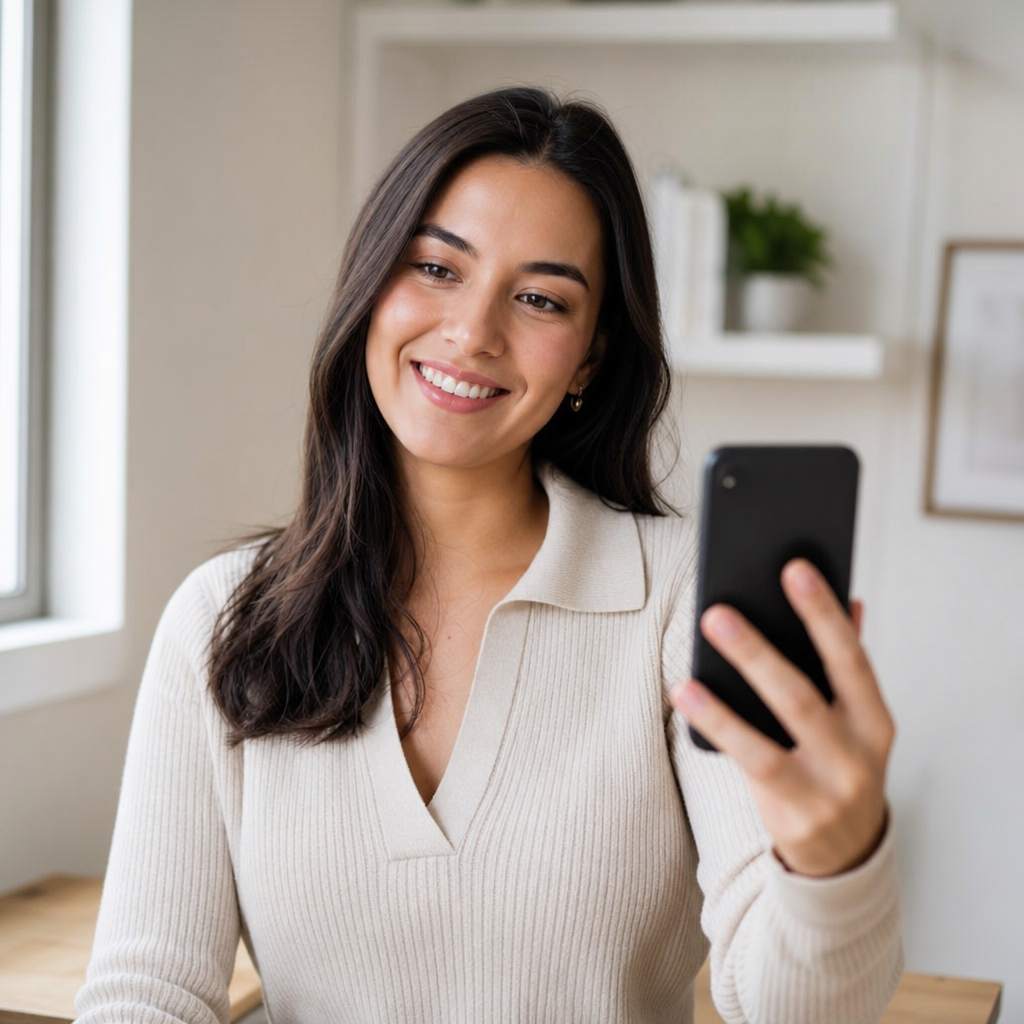
There's a certain generational poetry in the fact that the headshot — historically one of the most static, formal genres of photography, descended from oil portraiture and studio daguerreotypes — has become one of the most fluid. A job seeker applying across three industries in the same month can now plausibly have three distinct, appropriate headshots: a sharper, blazer-and-bookshelf version for the finance application, a warmer, cardigan-and-window-light version for the nonprofit interview, a crisp black-and-white option for a press kit. None of this required booking a single studio session. It required an evening with a smartphone camera and a willingness to let a model trained on millions of professional portraits do the technical work a photographer used to do by hand.
This fluidity maps onto how careers actually move now. The old assumption — one headshot, taken once a decade, good enough for a static job for a static employer — doesn't hold for people stitching together freelance work, pivoting between sectors, or managing a personal brand across platforms with entirely different visual expectations. The flexibility of an AI-generated portrait, with its dozens of variations and near-instant turnaround, suits a working life that has itself become far less fixed than it was when the studio headshot ritual was invented.
What remains constant is the underlying human need the headshot has always served: to be seen, briefly and favorably, by someone who will never meet you in person before deciding whether you're worth a reply. The mechanism behind that small act of self-presentation has changed enormously. The need it answers hasn't changed at all. Somewhere between the strip-mall studio and the smartphone camera, the portrait got faster, cheaper, and more forgiving — and strangely, for all that automation, no less personal. A good headshot was always a kind of translation: turning an ordinary face into the version of yourself you'd want a stranger to meet first. It used to take a studio, a stylist, and an afternoon. Now, more often than not, it takes a handful of selfies and a service like headshotlab.com quietly doing the translating — and somewhere in that trade-off, the studio appointment finally stopped being necessary.
Article written by FrontRank