 HEADSHOTLAB
The Invoice Nobody Frames: What a Professional Headshot Cost in a Studio on Lafayette Street
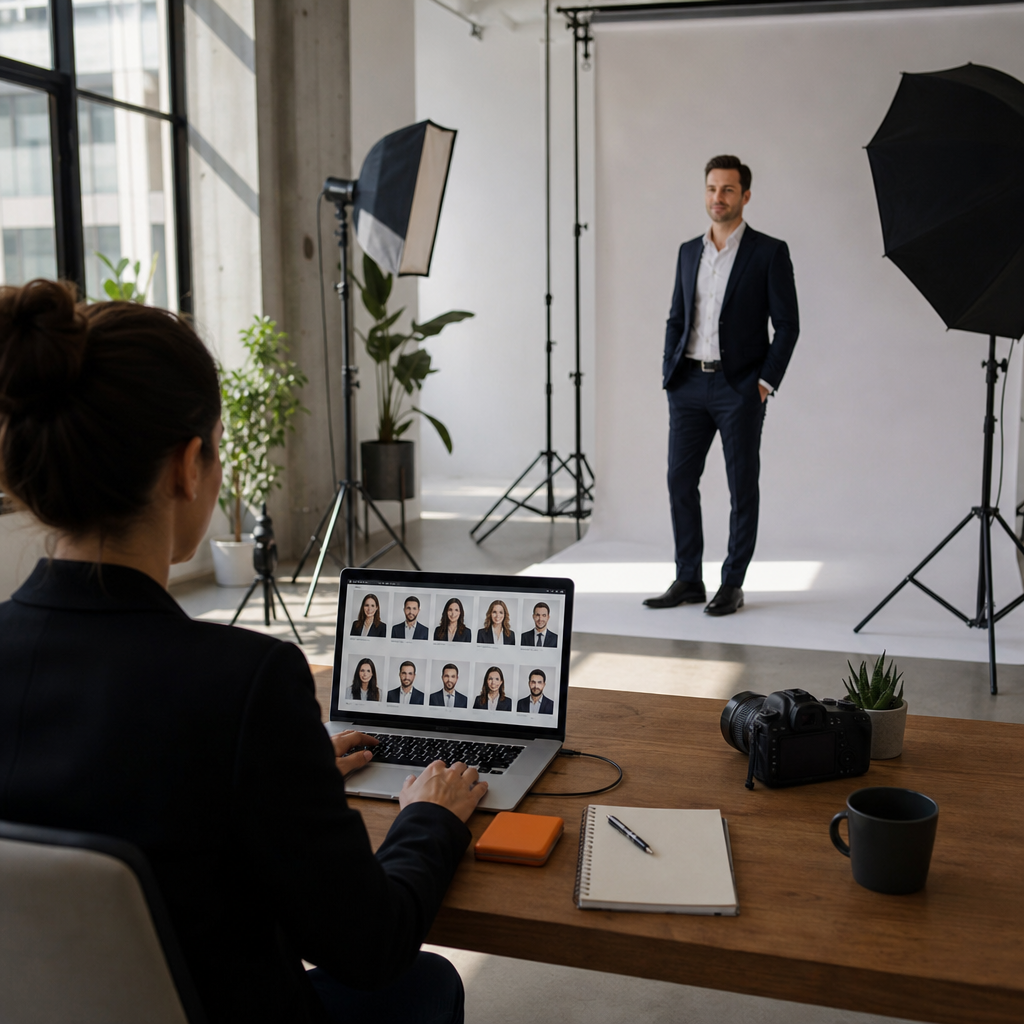
There is a particular kind of waiting room that exists only for headshots. A stool positioned three feet from a seamless paper backdrop. A ring light humming faintly. A rack of steamed blazers nobody actually owns, waiting to be worn for eleven minutes and returned. On a Tuesday morning in a studio just off Lafayette Street in Manhattan, a management consultant named Priya sat in that chair, waiting for a photographer named Dov to finish adjusting a softbox, and did the math in her head. Ninety minutes of studio time. A hair and makeup artist who'd arrived at eight. A rush-edit fee because her firm's all-hands was Thursday. By the time she left, tote bag over one shoulder, she had spent $650 on a photograph of her own face.
She is not an outlier. She is, if anything, the median case in a certain kind of American professional life, the one where a new job, a promotion, a rebrand, or simply the slow creep of LinkedIn vanity forces the question: how much does a professional headshot cost, and why does the answer feel so disproportionate to the thing itself, a single image, usually cropped at the collarbone?
The honest answer is that the price of a headshot has never been one number. It has been a range so wide it borders on absurd, stretching from the $25 a college student might charge with a borrowed 50mm lens to the $1,200 a celebrity portraitist might bill for an executive campaign. But in 2026, that range has started to fracture in a more interesting way, not just by photographer tier, but by category of production entirely. There is the old world of appointments, studios, and invoices. And there is a newer one, quieter and faster, where the "shoot" happens on a laptop at midnight and the bill looks nothing like Priya's.
The Arithmetic of a Traditional Sitting
To understand what a headshot costs, it helps to understand what it's actually made of, because the sitting fee is only the headline number. A typical freelance portrait photographer in a mid-sized American city — Austin, Denver, Pittsburgh — charges somewhere between $150 and $400 for a basic session, according to pricing surveys from the American Society of Media Photographers, which has tracked commercial photography rates for decades. In major metros, that floor rises fast. New York, Los Angeles, and San Francisco photographers routinely charge $300 to $700 for a standard individual session, and that's before anyone has opened a makeup kit.
Then come the add-ons, each perfectly reasonable in isolation, each quietly multiplying the total. Hair and makeup, if the photographer doesn't include it, runs another $75 to $200, a cost Business Insider's careers desk has itemized in its own breakdowns of executive portrait budgets. Retouching, which used to mean a few minutes in Photoshop smoothing a collar, has become its own micro-economy: $25 to $75 per final image for basic blemish and lighting correction, more if a retoucher is asked to do real reconstructive work, slimming a jawline or replacing a wrinkled shirt. Wardrobe consulting, a rush turnaround, printing physical proofs for a law firm's annual report — these were never hidden fees, exactly, but they were rarely mentioned in the initial quote either.
Add it up and a single polished headshot from a human photographer, properly lit, properly retouched, properly licensed for commercial use, lands most people somewhere between $250 and $700 for one useable final image, with executive and personal-branding packages for founders or public-facing professionals climbing toward $1,000 or more. Fast Company has covered this exact anxiety among job seekers and founders: the sense that a good photo has become a prerequisite for being taken seriously online, even as the cost of getting one creeps further out of reach for the freelancers and early-career workers who need it most.
What that number doesn't capture, though, is time. Booking a studio slot often means a two-to-three week lead time in busy markets. The session itself eats half a day once hair, makeup, wardrobe changes, and the drive home are factored in. And then there's the editing wait — a week, sometimes two, before a gallery link arrives, by which point the job posting that prompted the whole exercise may already have closed.
The Second Economy
Three years ago, when AI image generation first began producing faces that looked unmistakably human, the headshot world treated it the way the restaurant industry once treated meal kits: a curiosity, possibly a threat, surely not a replacement for the real thing. That posture did not survive contact with 2026.
What changed is not that AI headshots became good. Early versions, circulating widely in 2023, were good enough to go viral for their flaws — extra fingers, melted earrings, teeth rendered like piano keys, as documented in no shortage of skeptical coverage from outlets like Wired at the time. What changed is that the underlying models matured quickly and quietly, the way infrastructure usually does, until the gap between "obviously synthetic" and "indistinguishable from a studio portrait" narrowed to almost nothing for a well-lit, well-angled selfie set.
This is the gap that a service like Headshot Lab occupies. Instead of booking a studio, a user uploads a batch of selfies — the guidance is usually a dozen or so, taken in decent light, varied angles, no sunglasses — and chooses the attire, background, and style they want: charcoal blazer against a soft gray backdrop for a finance role, say, or a more relaxed open-collar look against warm wood tones for a creative portfolio. Within minutes, not weeks, the system returns dozens of edited options. The customer picks favorites, uses included retouch credits to fine-tune anything that feels slightly off, and walks away with a full set of usable headshots for a single flat fee, typically a fraction of what Priya spent on Lafayette Street, often under $50 for a full package rather than per-image.
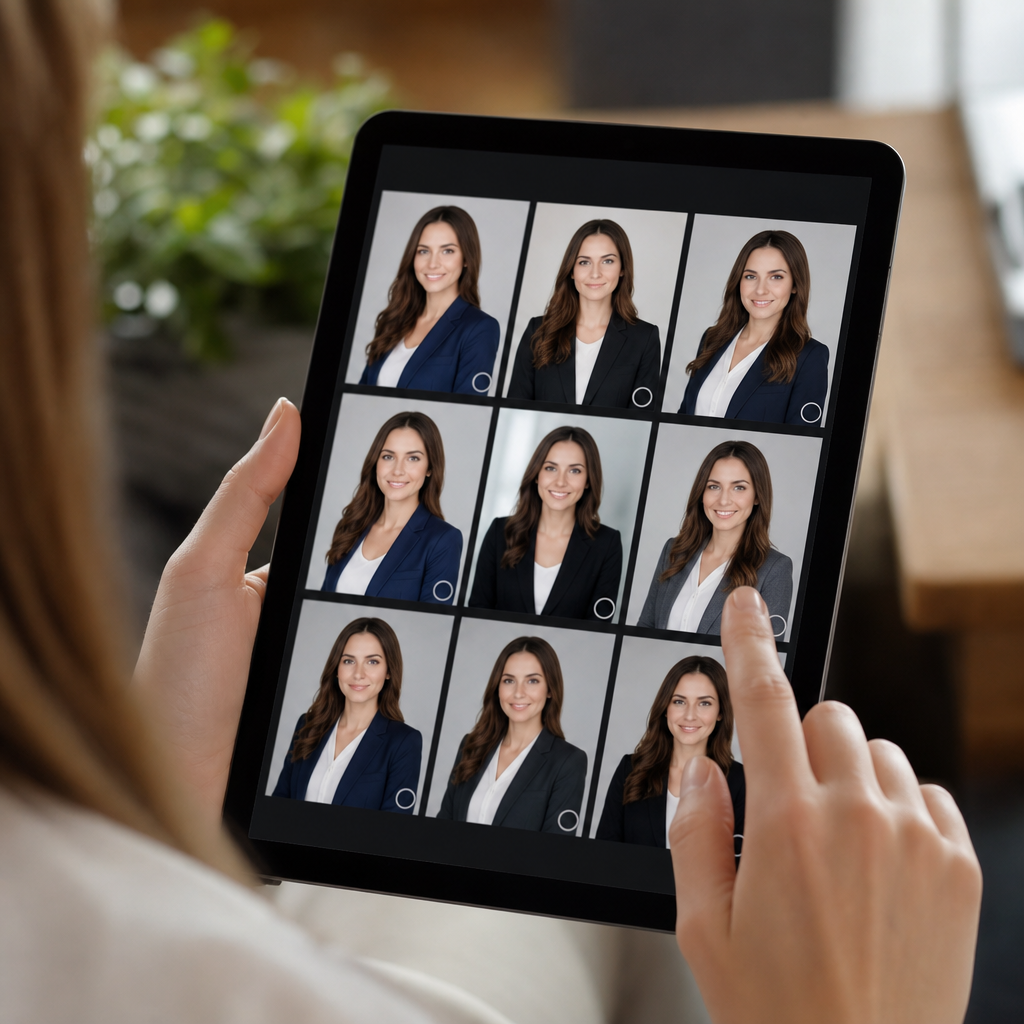
It is worth sitting with how strange that sentence would have sounded in 2019: a wardrobe you never put on, a background you never stood in front of, a lighting setup that never existed in physical space. And yet the resulting image, cropped at the collarbone, lit the way a studio key light would have lit it, is often impossible to distinguish from the real sitting. The New York Times has reported on the broader unease this provokes — questions about authenticity, about what a photograph even promises to be true — and those questions are legitimate and worth having. But they tend to arrive after the practical question has already been answered by the market: for an enormous number of professionals, the AI version is not just cheaper, it is functionally sufficient for the job the photo needs to do, which is almost always a small rectangle beside a name on LinkedIn, a company directory, or a press page.
What the Price Is Actually Buying
Here is where the conversation about cost gets more interesting than a simple ledger of dollars. Because the real answer to "how much does a professional headshot cost" was never just about the invoice. It was about what that invoice stood in for: control over one's own image, at a moment when a photo has become a kind of credential.
Consider the job seeker laid off in a round of cuts, the subject of so much coverage this past year from outlets tracking the tech and media contraction, including The Wall Street Journal's ongoing reporting on white-collar layoffs. That person needs a new headshot urgently, often while managing severance paperwork, unemployment filings, and the particular psychological toll of sudden unemployment. A $500 studio session with a two-week waitlist is not just expensive in that moment; it is poorly timed in a way that compounds the stress. The traditional pricing model assumes a calm, planned decision — a new job already secured, a rebrand with lead time, a company with a procurement budget. It was never built for urgency.
Consider, too, the small business owner or solo consultant for whom a headshot is not vanity but infrastructure. A therapist building a client-facing website. A real estate agent whose headshot appears on every listing and every yard sign. A consultant pitching retainer work to a client who will, fairly or not, form a snap judgment based on whether the photo looks current, confident, and professionally lit. For these people, cost isn't the only variable; consistency is. If the business grows, if the team grows, the question stops being "how much does one headshot cost" and becomes "how much does it cost to make fifteen people look like they belong to the same company."
This is where the economics shift most dramatically, and where Headshot Lab's team packages make a case that's less about any individual photo and more about organizational coherence. Coordinating a traditional team shoot — flying a photographer to one office, or worse, trying to synchronize remote employees across four time zones into matching studio sessions — is a logistical project unto itself, the kind of thing that gets its own line item and its own delayed timeline in a company's HR budget. A Fortune 500 communications team might manage it with ease; a 40-person startup usually cannot, and the result, as anyone who has browsed a mid-sized company's "About" page can attest, is the familiar patchwork: one employee photographed professionally in 2021, another using a cropped vacation photo, a third with a corporate ID badge photo that predates the pandemic. An AI-based team package solves this by standardizing background, lighting, and style across every employee regardless of where they're sitting when they take their selfies, turning what used to be a multi-week scheduling headache into something closer to a same-week rollout.

What Gets Lost, and What Doesn't
It would be a disservice to the subject to pretend nothing is traded away in this shift, because something is, and it's worth naming plainly. A traditional photographer brings judgment that a generative model does not yet fully replicate: the ability to read a room, to catch the fraction of a second when a genuine smile arrives instead of a performed one, to adjust lighting in response to the particular architecture of someone's face in a way that feels less like optimization and more like collaboration. Portrait photographers, including names like Peter Hurley, who essentially built a modern school of thought around the corporate headshot through his "squinch" technique and his widely cited teaching materials, have spent careers refining something closer to a craft than a service. That craft doesn't disappear because an alternative exists; it simply becomes one tier among several, the way bespoke tailoring didn't vanish when ready-to-wear became good.
What also doesn't disappear, interestingly, is the anxiety that drove the market in the first place: the sense that how a professional presents visually has become inseparable from how they're perceived professionally. Harvard Business Review has published research on the outsized role a LinkedIn photo plays in hiring managers' snap assessments — the "thin slice" judgments formed in a fraction of a second, well before a resume is read in detail. That research predates the AI headshot entirely, which suggests something important: the demand for a good photo was never really about vanity. It was about a legitimate, if uncomfortable, truth about how modern hiring and networking work. What's changed in 2026 isn't the stakes. It's the number of viable paths to meeting them, and the price attached to each one.
That plurality of paths is, in the end, the real story behind the cost question. A decade ago, "how much does a professional headshot cost" had a fairly narrow answer, bounded by geography, photographer reputation, and studio overhead. Today the same question forks almost immediately: are we talking about a traditional sitting with a human photographer and all its attendant scheduling and expense, or a same-day digital alternative that compresses cost and turnaround into something closer to ordering a print at a pharmacy kiosk? Both answers are legitimate. Both produce a usable photograph. They simply serve different moments in a professional's life, and increasingly, people are choosing based on which moment they're actually in — a calm rebrand with budget and time to spare, or a Thursday deadline with neither.
Back on Lafayette Street, Priya's $650 photo turned out well. Dov caught a genuine laugh on the fourth frame, the kind that doesn't come from being told to say a word that starts with a smiling consonant. She'll probably use that photo for years. But a few desks over at her firm, a junior analyst who joined the team three months ago, with no studio budget and a start date that arrived faster than any photographer's calendar could accommodate, uploaded a dozen phone photos to Headshot Lab on a Sunday night and had a full set of polished options by Monday morning, in time for the staff directory's noon deadline. Neither photo is more "real" than the other in any way that matters to the people who will actually look at them — a recruiter scrolling LinkedIn, a client checking a consultant's bio before a call, a colleague putting a name to a face before a meeting. What's changed is simply that the second option now exists at all, priced for a moment that used to have no good answer, and that shift, more than any single number, is what the question of cost is really circling.
Article written by FrontRank