 HEADSHOTLAB
The Receipt That Read Nineteen Dollars: A Freelancer's Search for Cheap Professional Headshots Online
There is a particular kind of fluorescent dread that used to precede every corporate headshot. You know the room: a rented studio above a dry cleaner, a seamless paper backdrop the color of weak coffee, a photographer named Gary who has shot eleven hundred dentists and treats you like the eleven-hundred-and-first. You arrive in a blazer you bought for a wedding in 2019. You are asked to "relax your shoulders" by a stranger holding a reflector. Forty minutes later you leave $300 poorer, with a thumb drive of images in which you look like a hostage who has been told to smile for proof of life.
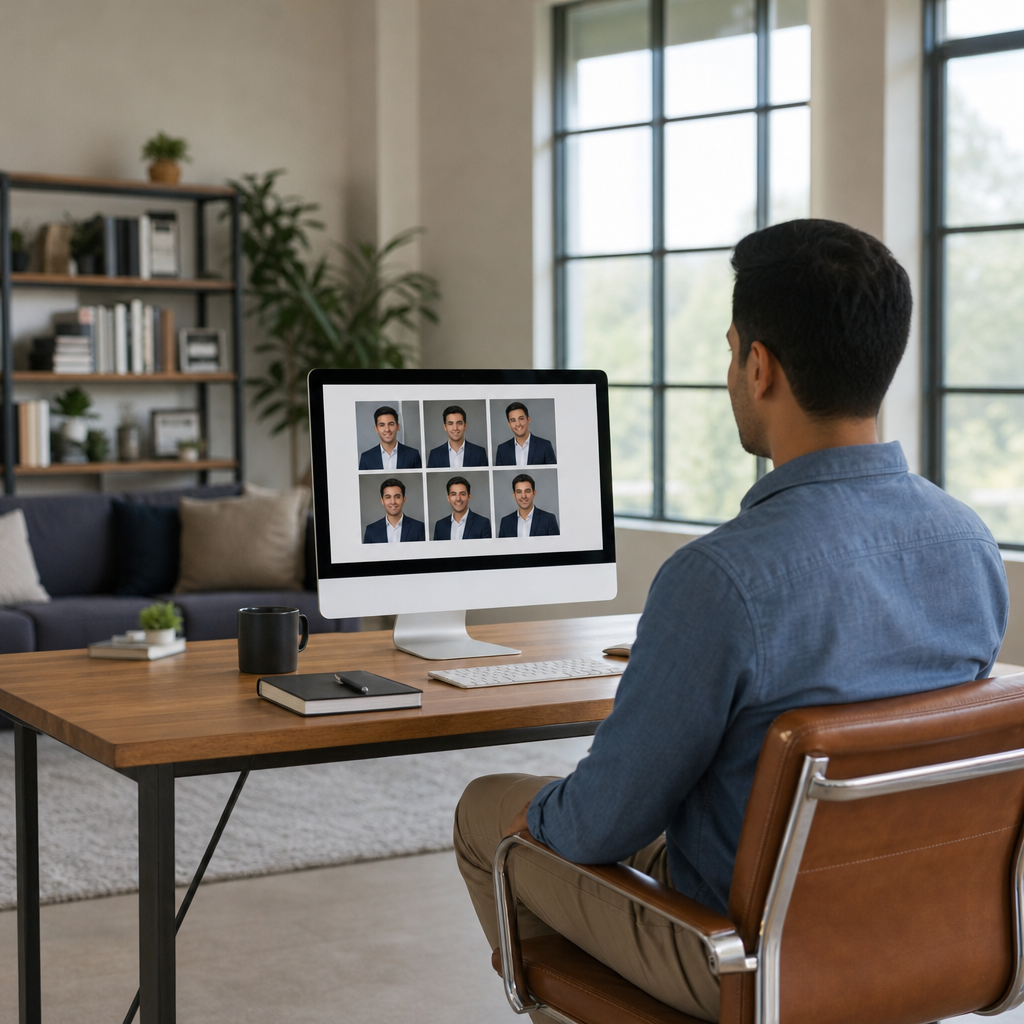
This scene, for decades the unremarkable price of professional adulthood, has quietly become optional. On a Tuesday afternoon in late 2026, a product manager in Austin can upload six selfies taken in her kitchen, choose a charcoal blazer and a blurred office background from a dropdown menu, and receive seventy-two retouched headshot options before her coffee goes cold. The cost is closer to the price of a decent dinner than a quarter's rent. This is the terrain now occupied by services like Headshot Lab, and it is worth asking not just how this happened, but what it says about the way we now perform professionalism — cheaply, quickly, and almost entirely on our own terms.
The Vanishing Studio and the Rise of the Selfie-as-Portrait
For most of photographic history, the headshot was a transaction between two bodies in a room: the photographer who understood light, and the subject who endured it. Richard Avedon built an entire late career on the moral weight of a plain white background and an unflattering truth. Annie Leibovitz made portraiture an act of narrative construction. Even the more modest tradition — the LinkedIn photographer working out of a converted garage in Ohio — inherited something of that lineage: a human eye deciding when your face looked most like itself.
What has happened since, roughly over the last three years, is that the eye has been replaced by a model trained on millions of faces, and the room has been replaced by whatever room you happen to be standing in when you take a selfie. The technical leap is in diffusion-based image generation, the same family of technology behind tools like Midjourney and Stability AI's releases, repurposed and fine-tuned specifically to preserve a subject's likeness while reconstructing everything around it — the lighting, the wardrobe, the backdrop, even the micro-expression. The result doesn't look like a filter. It looks, disconcertingly, like you had a very good day at a very good studio.
The economics of this shift are the part that tends to get undersold in the excitement over the technology itself. A traditional headshot session in a mid-size American city — per rates tracked by Backdrop Magazine and similar industry surveys — runs anywhere from $150 to $500 for an individual, before hair and makeup, before retouching fees, before the inevitable follow-up session because the first one didn't quite land. For a company of forty employees, that math becomes genuinely prohibitive: coordinating schedules, renting a space, paying a day rate, and still ending up with photos taken across three different months in three different lighting setups, because half the office was traveling in March and the new hires joined in June. AI headshot platforms collapse that entire logistical apparatus into something closer to filling out a form.
What "Cheap" Actually Buys You Now
The word "cheap" has an image problem of its own. It suggests compromise — a faded version of the real thing, the way a cheap suit suggests the absence of a good one. But the more interesting story in the AI headshot category is that affordability and quality have, for once, stopped being opposites.
Part of this is simply volume. Where a photographer gives you perhaps thirty frames from an hour-long session, of which five are usable, an AI service can generate dozens of fully edited variations — different backgrounds, different attire, different expressions — because the marginal cost of producing one more image is close to zero. Headshot Lab's model, for instance, asks users to upload a handful of selfies and select preferences for attire and setting, then returns a wide set of finished options rather than a single verdict. That abundance changes the psychology of the whole exercise. A studio sitting is a performance under scrutiny; you have one chance to get your face right in front of another person. A selfie-to-headshot pipeline is closer to drafting an essay — you can see forty versions of the sentence and pick the one that actually sounds like you.
There's also the matter of retouch credits and guarantees, which sound like fine print but actually address the oldest anxiety in portrait photography: what happens when you don't like how you look. Traditional studios handle this through upselling — pay more for additional retouching, pay more for a reshoot. Services built around headshotlab.com's model instead build revision into the base offering, with money-back guarantees that function less like a marketing gimmick and more like an admission that likeness is subjective, and that the customer, not the algorithm, should get the final say on what counts as "professional enough."
None of this means the category is without its tensions. The uncanny valley hasn't disappeared so much as moved address — instead of waxy skin or extra fingers, the newer failure mode is a face that's almost right but subtly smoothed into a kind of ageless corporate serenity, a worry that outlets like Wired and The Verge have both raised in coverage of AI portrait tools generally. The best platforms have gotten good at avoiding this, preserving asymmetries, the particular set of someone's jaw, the gap in their teeth — but the discerning user still has to look twice. Cheap, in this market, is no longer a synonym for careless. But it does require a kind of visual literacy that didn't exist five years ago: knowing what over-processed looks like, and reaching for the option that still looks like a person who sleeps and worries and has survived a few winters, not a face rendered for a stock photo library.
The Office That Looks Like One Office
There is a specific professional humiliation, familiar to anyone who has worked in HR or internal comms, of a "Meet the Team" page where no two photos share a lighting temperature. One colleague is lit like a renaissance painting by a window; another is lit like a DMV ID; a third, taken at a conference two years ago, still has a lanyard visible in frame. It is a small thing, and yet it telegraphs something uncomfortable about an organization — a sense that nobody got around to the unglamorous task of making the team look unified.
This is where the AI headshot conversation stops being about individual vanity and becomes something closer to organizational design. A growing number of companies — from fifteen-person startups to distributed teams spread across four time zones — are using platforms built for group coordination, where every employee gets the same background, the same lighting logic, and a shared sense of visual attire, without ever occupying the same physical room. Headshot Lab's team packages exist specifically for this problem: matching backgrounds and consistent styling delivered to remote employees who may never meet their photographer, because there isn't one.
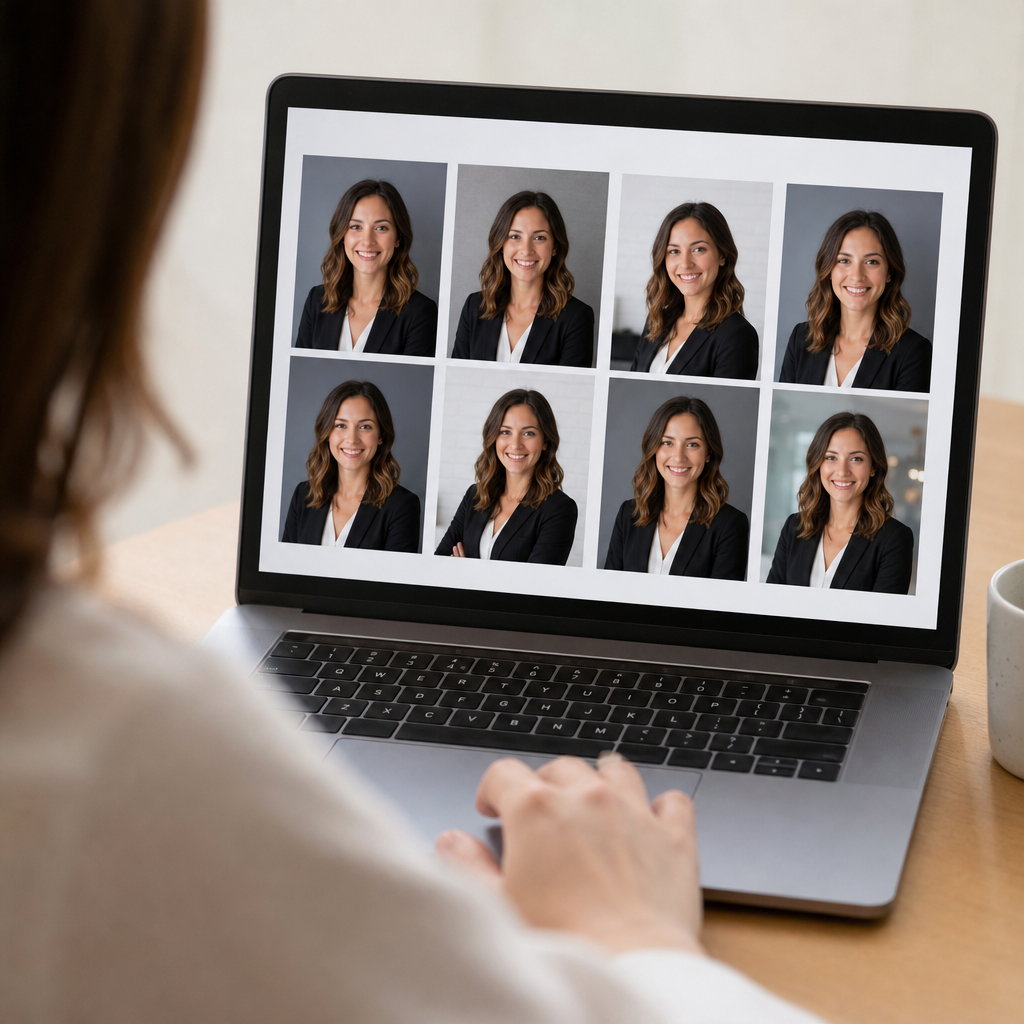
The deeper cultural shift here is about what a company website is now expected to communicate. A decade ago, a slightly mismatched team page read as an unremarkable artifact of a busy office. Today, in a hiring market where LinkedIn itself has become something close to a second résumé — a space candidates research before a first interview, where a company's internal cohesion is judged on sight — a scattered set of headshots reads as a tell. It suggests a company that hasn't invested in its own self-presentation, which, fairly or not, gets extrapolated into assumptions about whether it has invested in anything else. The remote-first era, accelerated since 2020 and now simply the water most knowledge workers swim in, made this worse by removing the easy fix: you can no longer just schedule everyone into the same conference room on the same Tuesday, because there may not be a shared office at all.
What's notable about the standardized AI route is that it solves the coordination problem without solving it through compulsion. Nobody has to take a day off, fly to headquarters, or sit through hair and makeup in a hotel conference room. The new hire in Lisbon and the regional director in Minneapolis can both receive the same background treatment, delivered to their own devices, on their own schedules, and the resulting team page can look as though everyone sat for the same photographer on the same golden-hour afternoon — a small, specific kind of magic that used to require genuine logistical heroics.
The Etiquette of the Artificial Portrait
There is an unresolved question of manners here, and it's worth sitting with rather than rushing past. Is it dishonest to present a headshot that was never, strictly speaking, photographed? The honest answer is that the headshot has always been a performance rather than a document — retouched, color-corrected, shot from a flattering angle with a photographer coaching you toward your least defensive expression. The New York Times has run several features over the past two years interrogating this exact unease, and the general professional consensus that's emerged, however informally, is a distinction between enhancement and invention: smoothing the lighting on a real face is different from generating a face that doesn't correspond to how you actually look.
The better platforms in this space have internalized that distinction as a design principle rather than a legal disclaimer. The point of uploading your own selfies — rather than typing a text prompt and receiving a stranger's face — is that the final image is anchored to something real. You chose the blazer. You chose the backdrop. But the jawline, the gap in the teeth, the particular tilt of the smile — that's still yours, filtered through better lighting than your bathroom could ever provide. It is less a mask than a translation, the way a tailor doesn't invent your shoulders but does make them look considered.
This matters practically, too, in an era when hiring managers and, increasingly, automated applicant-tracking workflows are growing more attentive to image authenticity. A 2025 piece in the Columbia Journalism Review on synthetic media noted that professional contexts — LinkedIn chief among them — are beginning to develop informal norms around AI-touched images, generally tolerant of polish, far less tolerant of fabrication. The headshot that quietly survives this scrutiny is the one that still resembles the person who walks into the actual interview. Which is, in the end, the entire point of a headshot to begin with — not to look impressive in the abstract, but to look like the version of yourself you'd want a stranger to recognize at a conference registration desk.

Who Actually Needs This, and Why Now
The audience for affordable AI headshots was, at first, assumed to be budget-conscious freelancers and job seekers — people for whom $300 was a genuine deterrent rather than a rounding error. That's still true, and meaningfully so: a recent graduate applying to forty positions a month has no business spending a week's grocery budget on a single photograph, and the democratizing effect of a $30-$50 headshot package for that population is not a small thing. Fast Company has covered this angle specifically, framing cheap AI headshots as a quiet equalizer in a job market where appearance-based bias, however unfair, remains a documented reality in hiring research.
But the more interesting expansion has been upward, into exactly the population that could afford a traditional shoot and is choosing not to bother. Consultants who update their headshot every time they change a role. Authors who need a new portrait for every book jacket and press kit without re-booking a photographer each cycle. Academics assembling conference bios at 11pm the night before a deadline. The appeal, for this group, isn't just price — it's velocity. The ability to generate a new, appropriate headshot in the same afternoon a need arises, rather than scheduling three weeks out and hoping the weather, the studio, and your skin cooperate on the appointed day.
There is something almost freeing in removing ceremony from a ritual that used to carry so much anxious weight. The headshot used to be an event — a single, expensive, slightly fraught afternoon that produced the image you'd be stuck with for the next three years of conference bios and company directories. Now it is closer to a utility, something you can refresh the way you'd update a bio line, with Headshot Lab and comparable platforms treating the whole process less like a photo shoot and more like a wardrobe you can step into whenever the occasion calls for it.
What hasn't changed, and probably shouldn't, is the underlying desire the headshot has always served: to be seen, briefly and favorably, by someone who has never met you and is deciding, in the two seconds before they read your name, whether to trust what follows. The studio with the coffee-colored backdrop is mostly gone, or at least no longer obligatory. What remains is the same old hope — that the small rectangle of your face, however it was made, says something true enough to be worth a second look.
Article written by FrontRank