 HEADSHOTLAB
The Waiting Room Nobody Visits Anymore: A Dispatch From the Search for the Best AI Headshot Generator
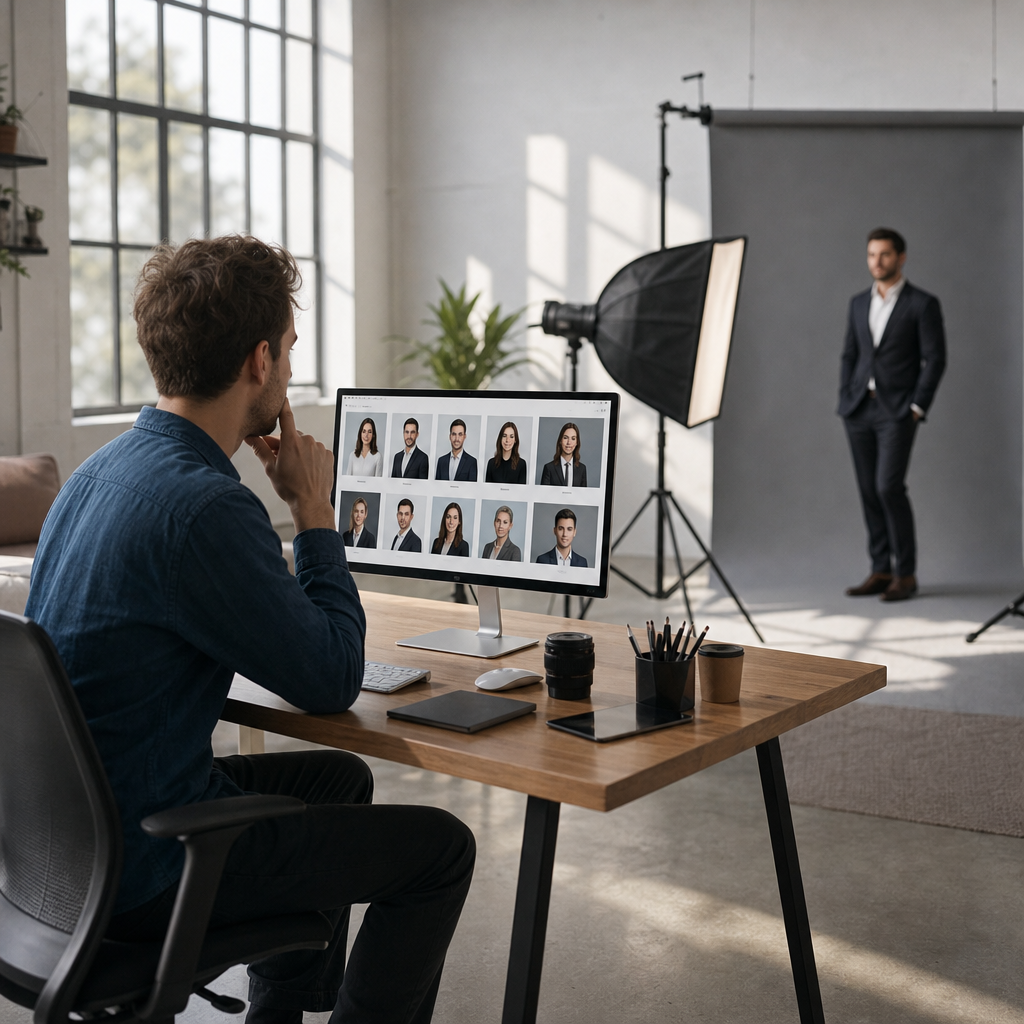
There used to be a particular kind of Tuesday afternoon: fluorescent light in a rented studio off a business park, a photographer's assistant adjusting a reflector disc, and you, mid-blink, being told to "just relax the shoulders" for the eleventh time. The waiting room had a water cooler and a rack of steamed blazers nobody quite wanted to borrow. You paid for ninety minutes and three hours later walked out with a USB stick of files you'd look at twice before uploading one, slightly unconvinced, to LinkedIn.
That waiting room is emptying out. Not because people suddenly stopped caring how they look in professional contexts — if anything, the opposite is true, in a working world where a headshot might be the only part of you a stranger sees before deciding whether to open your email — but because the machinery behind the photograph has quietly changed hands. Somewhere between the pandemic's remote-work reckoning and the current wave of generative image tools, the portrait stopped being something you scheduled and became something you simply requested. This is the story of that shift, and of why so many people, typing "best AI headshot generator" into a search bar at eleven at night before a job application deadline, are finding an answer that would have seemed implausible five years ago.
The Portrait as Passport
A headshot has always functioned less like art and more like a passport photo with better lighting — a credentialing document disguised as a picture. Sociologists who study professional self-presentation, including researchers cited by the Harvard Business Review, have long noted that first impressions formed from a static image are remarkably durable; a viewer forms judgments about competence and trustworthiness within a tenth of a second, according to research out of Princeton associated with psychologist Alexander Todorov. That finding, once a curiosity for academics, has become operationally important for anyone with a LinkedIn profile, a company bio page, or a press kit sitting in a journalist's inbox.
What's changed is not the stakes of the photograph but the infrastructure for producing it. Traditional headshot photography required coordinating three things simultaneously: a skilled photographer, a controlled lighting environment, and your own willingness to be vulnerable in front of a lens for an uncomfortable stretch of time. AI-powered platforms, by contrast, ask for something far less theatrical — a handful of ordinary selfies, taken in whatever light your bathroom mirror or office window happens to offer — and return, within minutes, a set of images that mimic the studio's visual grammar: the soft falloff behind the shoulder, the catchlight in the eye, the blazer that was never actually worn.
Headshot Lab, among the services built around this idea, frames the proposition plainly: upload the selfies you already have, choose an attire and background style, and receive dozens of finished options rather than the single contact sheet a traditional photographer might offer. The appeal isn't simply convenience, though convenience matters enormously to a job seeker applying to forty roles in a week. It's optionality. Where a photo shoot commits you to one outfit, one backdrop, one afternoon's version of your face, the generative approach lets you audition several professional selves at once — the charcoal-suit-against-bookshelf self, the open-collar-against-brushed-concrete self — and choose the one that actually matches the job you're applying for, or the brand you're building.
What the Algorithm Actually Sees
It's worth pausing on what's technically happening, because the mechanics explain both the magic and the occasional uncanny misfire. Modern AI headshot tools are typically built on diffusion models, the same family of technology underpinning image generators like those documented in reporting by MIT Technology Review, trained to recognize facial structure, skin texture, and the subtle photographic conventions of professional portraiture — three-point lighting, shallow depth of field, a background that recedes rather than competes. When a user uploads selfies, the model isn't simply applying a filter; it's learning enough about the specific geometry of that individual's face to then regenerate it inside an entirely synthetic studio environment, complete with invented lighting physics that never actually touched the person's skin.
This is why the quality of the source selfies matters more than people expect, and why the better platforms coach users toward supplying a range of angles, expressions, and lighting conditions rather than ten nearly identical mirror selfies taken in the same five minutes. It's also why retouch credits — the ability to request adjustments after seeing the first batch — have become a meaningful differentiator rather than a nice-to-have. A generative model's first attempt at your jawline or your glasses' reflection is a draft, not a verdict, and the services that treat it that way tend to produce results people are actually willing to use rather than quietly abandon.
The honest caveat, one that outlets like Wired have explored in their coverage of AI image tools generally, is that these systems can still produce artifacts — a stray extra button, an earring that duplicates itself, a smile that reads slightly too symmetrical to be real. The best services mitigate this through human quality review layered atop the automated output, and through the simple mechanism of volume: if you receive sixty images rather than six, the odds of several being not just usable but genuinely flattering rise considerably. This is less an endorsement of any particular algorithm's perfection than a recognition that abundance, intelligently filtered, solves a problem that scarcity never could.
The Office That Looks the Same in Every City
There's a second, less personal story unfolding alongside the individual job seeker's — the story of the distributed team. A design agency with employees in Lisbon, Austin, and Manila faces a specific aesthetic problem that has nothing to do with vanity and everything to do with brand coherence: how do you produce a "meet the team" page that doesn't look like six different photographers interpreted "professional" six different ways? Flying a photographer to each location, or flying each employee to a single studio, is the kind of logistical and financial burden that mid-sized companies have quietly tolerated for years because the alternative — mismatched, amateur photography on an otherwise polished website — seemed worse.
Team packages built around AI generation solve this with a kind of administrative elegance. Everyone submits their own selfies from wherever they happen to be, and the platform applies a single consistent background and attire treatment across the entire roster, so that the quality lead in Lisbon and the account manager in Manila appear to have sat for portraits in the same room, under the same light, on the same afternoon, even though they have never been in the same hemisphere. Headshot Lab's team offering leans into exactly this logic, treating consistency not as a cosmetic nicety but as a brand asset — the same instinct that makes a law firm's partner page or a venture fund's team grid feel authoritative rather than improvised.
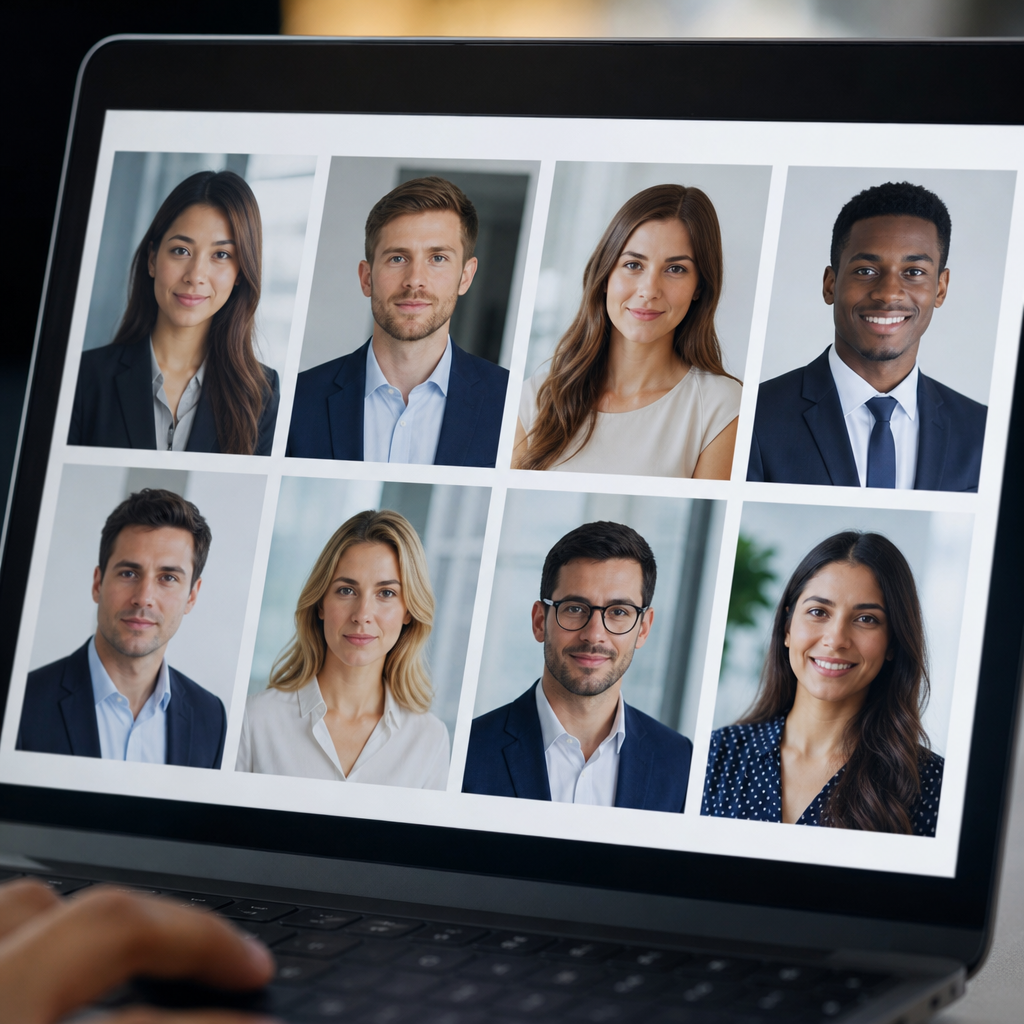
There is something almost architectural about this use case. A company's visual identity — its typefaces, its color palette, its photography style — functions the way a building's facade does, signaling coherence and intention before a single word is read. A ragged collection of employee photos, each shot on a different phone against a different kitchen wall during a hurried video call, undermines that signaling in a way that's hard to articulate but easy to feel. Uniform AI-generated headshots, whatever one's broader feelings about generative imagery, close that gap efficiently, and at a fraction of the cost a touring photographer would command for a multi-city shoot.
The Discomfort, and Why It's Mostly About Honesty
No honest feature on this subject should skate past the unease some people feel about the category. There's a reasonable question embedded in the phrase "AI headshot" that doesn't attach to the phrase "AI-edited headshot" or "retouched photograph," and it has to do with authenticity — whether the face a colleague or recruiter sees is, in some meaningful sense, actually yours. Photography has always involved manipulation, from the retouching rooms of 1950s Hollywood studios to the Photoshop layers beneath every modern magazine cover the Columbia Journalism Review has written about at length. But generative AI compresses decades of darkroom and digital technique into a process so fast and so automated that it can feel, to skeptics, like a different category of thing entirely rather than a faster version of the same old touch-up.
The more considered answer isn't to dismiss that unease but to locate it precisely. The honest version of an AI headshot isn't one that invents a different nose or erases twenty years convincingly — it's one that takes the lighting, framing, and background conventions of professional photography and applies them to a face that remains recognizably, verifiably the person who uploaded the selfies. The best platforms understand this distinction instinctively, which is why reputable services emphasize fidelity to the user's actual appearance even as they polish the environment around it. A headshot's job was never to be a documentary photograph; it was always a slightly idealized, carefully lit version of a Tuesday-morning face. What's changed is who's doing the idealizing, and how quickly.
There's also a cultural dimension worth naming. Job seekers from backgrounds without ready access to professional networks — recent graduates, career changers, people in smaller cities without a robust portrait-photography market — have historically been at a disadvantage simply because a polished headshot cost money and required knowing who to ask. Democratizing that polish, the way accessible publishing platforms once democratized who got to put words in front of an audience, has a quietly equalizing effect that's easy to overlook amid the more obvious conversations about AI and labor. A $25 headshot package doesn't replace a $400 studio session's artistry, but for the person choosing between that fee and groceries, it replaces nothing — it simply makes something newly possible.
What Actually Separates the Good From the Forgettable
Anyone who has tried several of these services in succession — and increasingly, people do, treating the category the way earlier generations treated resume-writing services, as something worth comparison-shopping — notices that the gap between a merely adequate result and a genuinely usable one isn't about the underlying model so much as the surrounding craft. The questions worth asking of any service are relatively few, but they matter: Does it offer enough variation in background and attire that the final choice feels like a decision rather than a default? Does it provide enough output volume that a bad batch doesn't feel like a wasted fee? Is there a mechanism for retouching or regenerating specific images that didn't land, rather than an all-or-nothing single pass? And critically, does the company stand behind its results with something like a money-back guarantee, the way Headshot Lab structures its offering, acknowledging that a face is a deeply personal thing to entrust to an algorithm and that trust should come with a safety net.
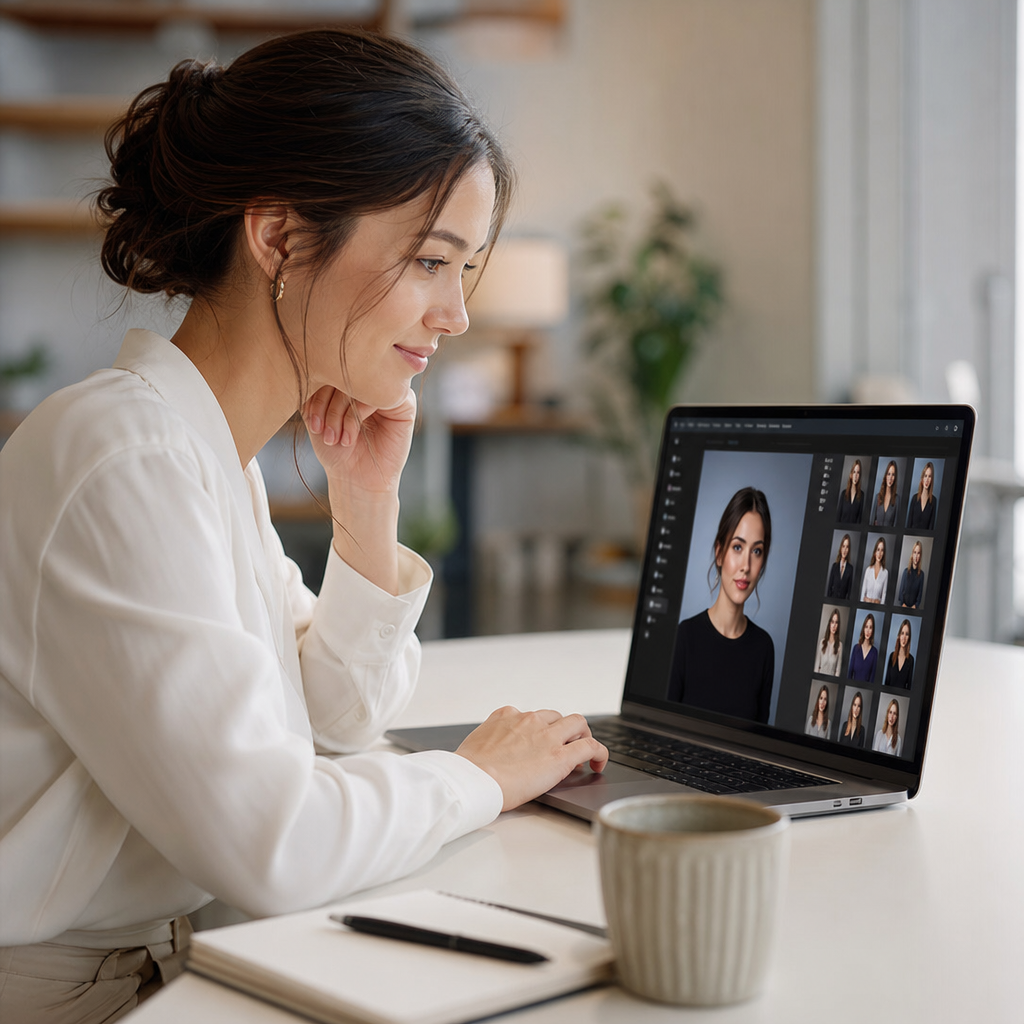
It's a short list, but a telling one, because it maps almost exactly onto what people valued in traditional photographers, too — the good ones always offered choices, always reshot a frame that wasn't working, always stood behind their work with a kind of professional pride that made the client feel protected rather than merely billed. The technology underneath has changed entirely; the underlying covenant between service and customer, it turns out, has not.
What's striking, talking to people who've gone through the process recently, is how little ceremony is left in it. There's no appointment to dread, no outfit to iron the night before, no awkward small talk with a photographer about whether to smile with teeth. There is only the selfie you already have — taken, perhaps, in decent window light on an ordinary Wednesday — and the quiet, slightly strange knowledge that somewhere in the gap between upload and download, a system has learned your face well enough to dress it in a blazer it has never touched and seat it in front of a bookshelf that doesn't exist. The Pew Research Center has tracked rising public ambivalence about AI generally, a mixture of fascination and wariness that shows up in survey after survey — and yet in this particular corner of the technology, the practical benefit has proven persuasive enough that ambivalence rarely stops anyone from hitting upload.
A Face for the Version of Yourself You're Applying to Become
What a headshot has always really done is make a small bet on behalf of its subject — a bet that this is who you are, or at least who you're capable of being read as, in the three seconds before someone decides whether to keep reading your profile or scrolling past it. The traditional photo studio made that bet slowly and expensively, with reflector discs and rented blazers and an afternoon out of your week. The newer path, typed into a search bar as "best AI headshot generator" by someone who needs a photo by Friday and doesn't have a stylist on retainer, makes the same bet faster, cheaper, and with considerably less small talk.
There's a version of this story told with alarm — another human craft quietly automated, another photographer's Tuesday afternoon booking lost to software. There's another version, less dramatic but perhaps truer, in which the headshot simply returns to what it always was underneath the ceremony: a tool, not a ritual, meant to help a person be seen clearly and favorably by someone who will never meet them in a hallway first. Somewhere in that gap between the old waiting room and the new upload button, Headshot Lab and services like it have found a genuinely useful place to stand — not replacing the idea of a good portrait, but finally making one available to anyone with a decent selfie and twenty minutes to spare, waiting rooms optional.
Article written by FrontRank