 HEADSHOTLAB
The Photo Booth in Terminal 4: How an AI Professional Headshot Generator Replaced the Studio
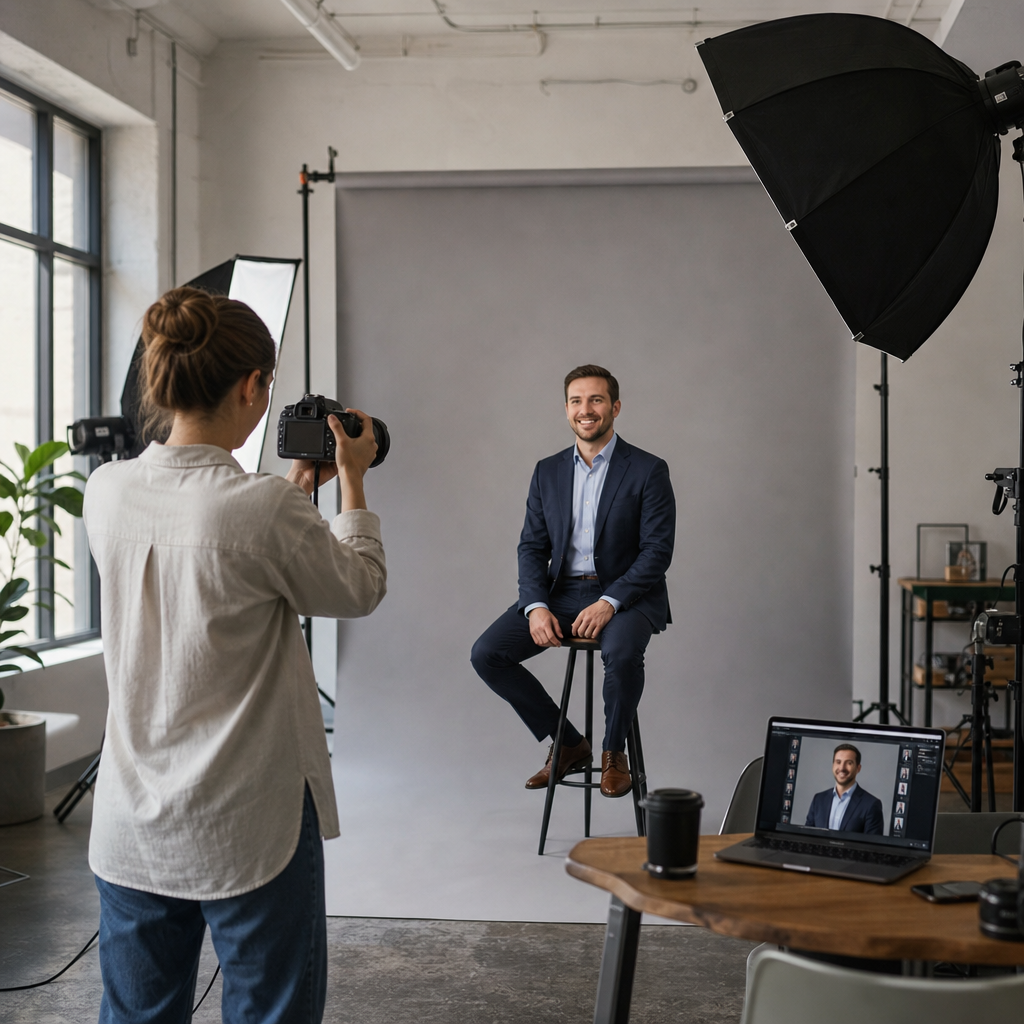
There is a particular kind of fluorescent dread that belongs to corporate photo days. A folding screen the colour of wet concrete gets wheeled into a conference room. Someone's assistant hands out a sign-up sheet. By 2 p.m. the light has gone flat and everyone in line looks like they are waiting to hear bad news from a doctor. For decades, this was simply how professional headshots happened: badly, briefly, once a year, whether you liked it or not.
That ritual is dissolving. Not with fanfare, but with the quiet efficiency of a browser tab. Somewhere between a long-haul flight and a Tuesday lunch break, a growing number of professionals have taken out their phones, uploaded a handful of selfies to an app, and emerged twenty minutes later with a studio-grade portrait—jacket pressed, lighting cinematic, background a soft and anonymous grey that could belong to any boardroom on earth. The tool doing this work is what the industry now calls an AI professional headshot generator, and its rise says less about software than it does about how we've come to think about the face we present to the working world.
This is the story of that shift: not a product demo, but a cultural moment, arriving at the exact point where remote work, personal branding, and generative imaging collided.
The Studio That Never Opens
For most of photographic history, a "proper" headshot required proximity—to a studio, a photographer, a loaned blazer, a makeup artist dabbing away shine under hot lights. Richard Avedon's stark white backdrops for In the American West set a visual grammar that corporate photography borrowed wholesale: clean, unforgiving, a little theatrical. Annie Leibovitz brought warmth and narrative to portraiture, but even her most accessible techniques required equipment, timing, a relationship between photographer and subject that cannot be rushed.
That grammar survived largely intact until the pandemic hollowed out the office. When LinkedIn profiles became, almost overnight, the primary way colleagues met each other, the absence of a decent photo became conspicuous. You could not borrow the office photographer anymore, because there was no office. Remote workers in Lisbon, Lagos, and Louisville found themselves needing the same polished image, with none of the same infrastructure. The market noticed before the culture did.
What emerged wasn't a workaround so much as a genuine reinvention. Generative AI models, trained on the visual conventions of studio photography—the Rembrandt lighting, the three-quarter turn, the subtle vignette—learned to simulate the entire apparatus. No studio. No photographer. No blazer, even, since the system can dress you in one that was never sewn. Platforms such as headshotlab.com exist precisely in this gap: you supply the raw material—a set of ordinary selfies, taken in whatever light your kitchen or office happens to have—and the system does the work a crew once did, returning dozens of finished images with different attire, backdrops, and expressions to choose from.
There's something almost architectural about how these systems operate, in the sense that they are constructing an entire environment around a face that technically never stood there. The wood-panelled office, the neutral studio grey, the soft bokeh of a window-lit loft—none of it exists, and yet the final image reads as entirely plausible, because the model has learned what "plausible" looks like from millions of real photographs. It is a kind of forgery in service of honesty: the face is unmistakably yours, even if the room around it is a fiction everyone has quietly agreed to accept.
The Etiquette of the Uncanny
Every new photographic technology arrives trailing anxieties about authenticity, and the AI headshot is no exception. There's an entire minor genre of LinkedIn commentary dedicated to spotting the artefacts—the slightly too-symmetrical ear, the collar that dissolves oddly into a blazer, the eyes that are a shade too bright. Early models produced images that, if you looked closely, had the faint plastic sheen of a rendered video game character. The internet, as it does, turned this into a sport, with think pieces in outlets like The Verge and Wired dissecting whether an AI headshot constitutes a small professional deception or merely a modern convenience, no different from teeth whitening or a well-cut suit.
But the technology has matured faster than the discourse around it. The newer generation of models—the ones underpinning tools like Headshot Lab—are trained not just on generic faces but calibrated against the specific geometry of the uploaded selfies, which is why a careful service will ask for a dozen or more images from different angles, in different light, before generating anything. The result is less a mask laid over your face than a very good photographer's idea of your best self: the haircut you have on your good days, the jawline under flattering light, the collar that sits just so. Nobody who meets you at a conference afterward feels misled. They simply think, correctly, that you clean up well for photos.
There is also a generational comfort gap worth noting. Those who came of age choosing Instagram filters and Snapchat lenses—essentially rudimentary, real-time image generation—tend to regard an AI headshot the way earlier generations regarded a touch-up in a darkroom: an expected, unremarkable part of the process. Older professionals, raised on the gospel of the unretouched photograph as some kind of moral document, have been slower to embrace it, though that resistance is softening fast, largely because hiring managers and recruiters have stopped caring how a good photo was made and started simply expecting one. A 2026 survey cycle from workplace researchers, echoing earlier findings published via Pew Research Center, continues to show that profile photo quality meaningfully affects perceived competence and trustworthiness in digital-first hiring—an unglamorous fact that has done more to normalise AI headshots than any marketing campaign could.
The Economics of Looking the Part
Strip away the technological novelty and what's left is a fairly blunt economic story. A traditional corporate headshot session, booked through a working photographer in a major city, routinely runs several hundred dollars for a single look, before retouching fees, and that's before you factor in the cost of someone's time—travel to a studio, hours spent waiting for the right light, a second session if the first didn't land. For a freelancer or a small business owner, that expense is often the reason the "professional photo" line item never gets ticked off a to-do list at all. People resort to a cropped wedding photo, a slightly blurry selfie, an old headshot from a job three employers ago, because the alternative felt disproportionately expensive for what amounts to a single JPEG.
The AI headshot generator inverts that arithmetic almost completely. A one-time fee, typically a fraction of a single studio session, now returns not one photo but dozens—different jackets, different backgrounds, different expressions, enough variation that a person can genuinely choose the image that feels most like them rather than settling for whatever the one session happened to produce. Headshot Lab's model, for instance, builds in retouch credits and a money-back guarantee precisely because the old anxiety—what if it doesn't look like me—doesn't disappear just because the price has dropped. It gets addressed with the same seriousness a studio would bring, just restructured around software rather than square footage.
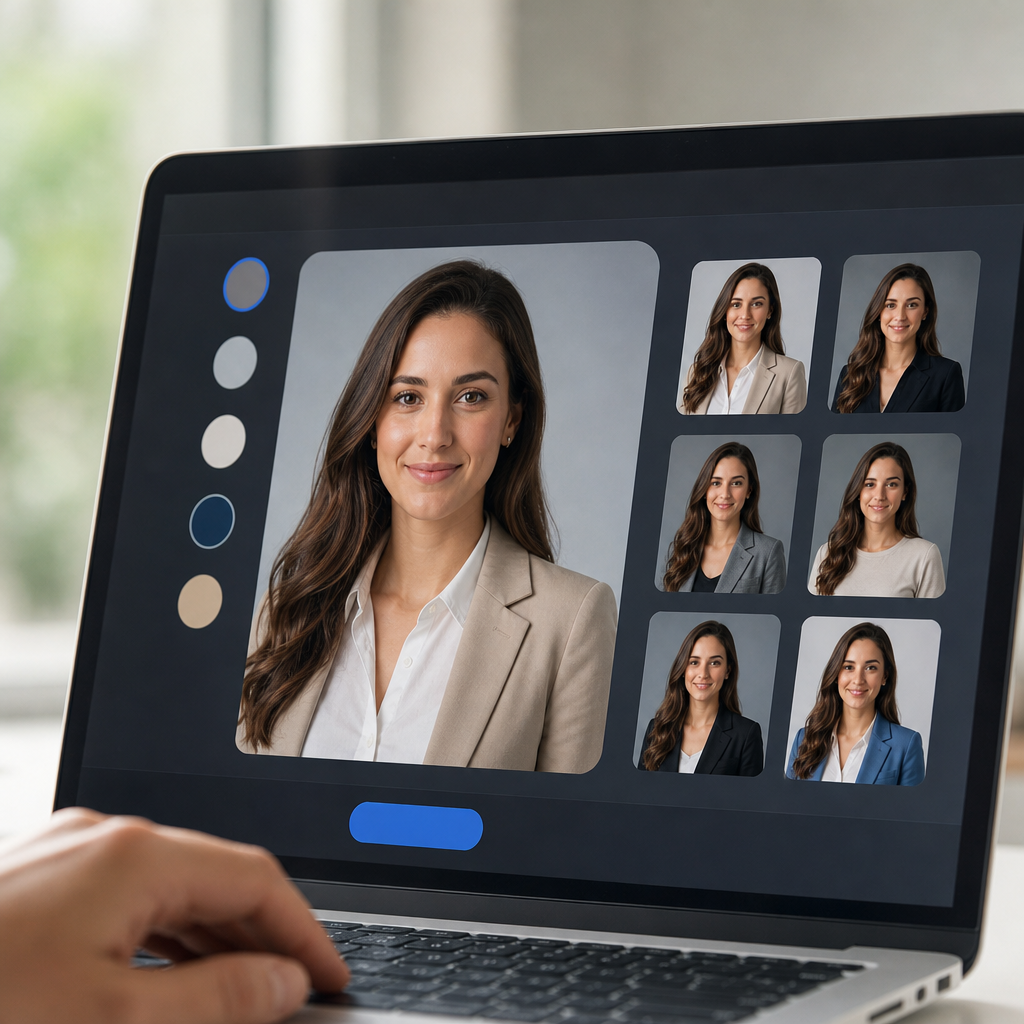
This economic shift matters most, perhaps, for the people who were least served by the old model: job seekers between roles and reluctant to spend on a shoot for a position they don't yet have; new graduates with no professional photo to their name at all; remote workers scattered across geographies where a decent corporate photographer simply isn't local, or isn't affordable, or isn't available on short notice. For them, the AI headshot generator isn't a novelty. It's access—to the same visual credibility that used to require a studio, a stylist, and a line item that most people couldn't justify.
The Team Photo, Reinvented
There's a second, less-discussed story unfolding alongside the individual one, and it belongs to organisations rather than individuals. Any company that has tried to assemble a matching "About Us" page knows the particular logistical misery involved: coordinating twenty, fifty, two hundred employees across different offices and time zones, all for the same photographer on the same day, wearing roughly the same thing, in front of roughly the same backdrop. Someone is always on leave. Someone always joins the company three weeks after the shoot and sticks out forever in a mismatched photo, a visual asterisk on the team page.
AI-generated headshots solve this with a kind of bureaucratic elegance that traditional photography never could. A team package—the sort Headshot Lab offers for organisations—standardises attire and background across every employee without requiring any of them to be in the same room, or even the same continent, on the same day. New hires can be onboarded visually the moment they join, rather than waiting for the next scheduled shoot eight months later. It is the photographic equivalent of a style guide: consistent typography for faces.
This has implications beyond tidiness. Companies building out press kits, investor decks, or conference speaker pages have historically struggled with an uneven bench of photo quality—some executives photographed beautifully by a hired professional, others represented by a grainy photo taken on a work trip. Standardising that through an AI generator creates a more coherent brand presence, the same instinct that drives companies to commission custom typefaces or consistent colour palettes. The headshot, in this reading, stops being a personal vanity project and becomes part of a company's visual identity system—something designers at firms like Pentagram have long argued belongs in the same category as logo and signage.
The Honesty Question, Revisited
It would be dishonest, in a piece about honesty and photography, to pretend the ethical conversation is fully settled. There remain legitimate questions about where the line sits between a flattering photograph and a fabricated one, and different platforms draw that line differently. The more credible services in the space are notably conservative about it: they generate variations on your bone structure, your actual features, dressing and lighting you differently rather than reshaping your face into something unrecognisable. The goal isn't to generate a more attractive stranger wearing your name tag. It's to generate the version of you that would have existed if a world-class photographer had an unlimited budget, unlimited patience, and access to a wardrobe department.
There's a useful analogy in how the fashion and beauty industries have long handled retouching—a practice outlets like The Guardian have covered extensively in its more dishonest extremes, where bodies are reshaped beyond recognition. The backlash there wasn't against the idea of a flattering photograph; it was against photographs that lied about what a person actually looked like. AI headshots, done well, sit closer to good lighting and a skilled editor's touch than to that more troubling end of the retouching spectrum. The distinction is subtle, but it's the one serious providers are increasingly explicit about, precisely because the professional stakes—a hiring decision, a client's first impression, a journalist deciding whether to trust a source's bio photo—are too high to get wrong.

What's emerged, then, isn't a single verdict on AI headshots but an evolving etiquette, not unlike the one that governs filters on dating apps or lighting apps on video calls. Nobody expects a Zoom call to look like an unlit basement; nobody feels deceived that a colleague used a ring light. The AI headshot generator is simply the next entry in that same lineage of acceptable, expected enhancement—provided it still looks like you, and provided the company behind it is transparent about what it's doing, which is precisely the standard platforms like headshotlab.com have built their reputation on meeting.
Elsewhere, the Studio Persists
None of this spells the end of photography as a craft. If anything, the rise of the AI headshot generator has clarified what traditional photographers are actually for: the editorial portrait with real narrative ambition, the environmental shoot that captures a founder in their actual workshop, the kind of image-making that depends on spontaneity, relationship, and a photographer's eye for a moment that can't be modelled from training data. Magazine profiles, long-form documentary photography, the work of someone like Platon capturing world leaders with startling intimacy—none of that is threatened by a tool built to generate a clean, competent corporate portrait in twenty minutes. Those are different categories of image entirely, serving different purposes, the way a wedding photographer and a passport photo booth have never really competed for the same job.
What the AI headshot generator has displaced isn't art. It's errand. The headshot was, for most working professionals, never meant to be art—it was meant to be a reliable, forgettable, competent representation of a person, suitable for a profile page, a conference badge, a press release. That is precisely the kind of task software has always been good at absorbing: not the creative peak of a craft, but its most repetitive, logistically burdensome floor. The folding grey screen in the conference room, the sign-up sheet, the fluorescent dread—all of it was solving a problem that no longer requires a room, a crew, or a day off work to solve.
Somewhere tonight, someone is sitting at a kitchen table with their phone propped against a stack of books, taking the dozen ordinary photos that will become, by morning, a studio portrait nobody will ever be able to prove wasn't shot by hand. They'll upload their new photo to LinkedIn, swap it onto a company page, maybe print it for a conference badge, and nobody meeting them for the first time will think of it as anything other than a good photo of a person who, as it happens, looks exactly like themselves. That quiet unremarkableness may be the real achievement of the AI professional headshot generator: not that it replaced the studio, but that it made the entire question of where the photo came from stop mattering at all. Tools like headshotlab.com didn't just make headshots faster to produce; they made the idea of needing one feel, for the first time in a long time, entirely painless.
Article written by FrontRank