 HEADSHOTLAB
Unemployment Line, Lit Like a Portrait Studio: AI Headshots for Resume Season Find Their Moment
There is a particular kind of fluorescent light that falls across a kitchen table at eleven at night, the hour when most resumes actually get finished. It is not flattering. It turns a face the color of old paper and makes every blemish look like a headline. And yet, for years, this was the lighting under which millions of job seekers photographed themselves for LinkedIn, because the alternative — booking a photographer, choosing a blazer, finding a backdrop that wasn't a radiator or a half-open closet door — felt disproportionate to the task of updating a profile picture. You needed a new job, not a new portrait. The two have now quietly merged.
The résumé, that most conservative of documents, has spent the last two years absorbing a very modern anxiety: that the photograph attached to your digital presence says more, faster, than the document itself. Recruiters confess, often off the record, to forming an impression within the first two seconds of a LinkedIn profile opening, a human reflex that predates algorithms and will likely outlast them. Research from LinkedIn itself has long noted that profiles with photos receive dramatically more views, and views, in the current job market, are not a vanity metric. They are the market.
Into this gap between desire and means has walked a fairly unglamorous piece of technology: a diffusion model trained to understand what a studio headshot looks like, fed a handful of selfies, and asked to produce something that could pass for the work of a photographer with a lighting rig and twenty years of portraiture behind them. The category now has a name — AI headshots for resume use, specifically, as distinct from the dating-app or social-media varieties that preceded it — and a growing, slightly bemused following among the exact demographic least likely to describe themselves as early adopters: accountants, paralegals, hospital administrators, the quietly employed and the recently laid off alike.
The Portrait Studio That Closed, Then Reopened as Code
To understand why this shift happened in 2026 rather than, say, 2019, it helps to remember what a professional headshot used to cost — not just in money, though that mattered, but in time, coordination, and a certain social performance. A sitting might run anywhere from $150 to $500 depending on the market and the photographer's reputation, according to pricing surveys from the American Society of Media Photographers, and that was before hair, makeup, or the half-day taken off work. For a laid-off worker applying to forty positions a week, that expense sat uncomfortably alongside rent and the cost of a decent interview suit.
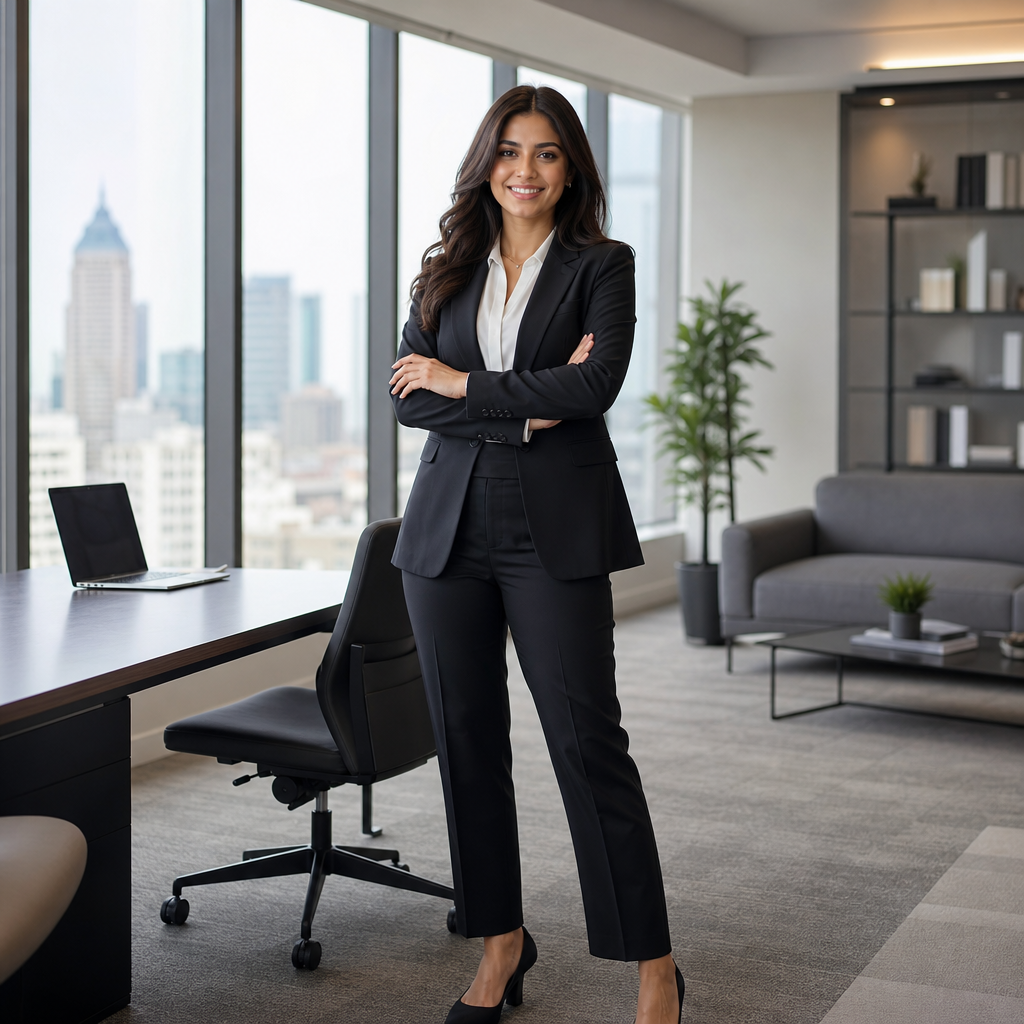
The pandemic had already begun eroding the assumption that professional photography required a studio. Video calls trained an entire workforce to think critically about their own lighting, their own backdrop, the angle of a laptop camera propped on a stack of books. What AI headshot tools did was take that newly acquired visual literacy and remove the remaining friction: the need for a second person, a second location, a second occasion entirely. A user uploads a dozen or so existing photos — vacation snapshots, old selfies, the accidental good one from a cousin's wedding — and within minutes receives a set of images rendered in the visual grammar of professional portraiture: soft key light, a background that reads as "executive floor" or "creative studio" without actually being either, attire that can be specified down to the collar.
Services in this space, including Headshot Lab, have built their offering around exactly this transaction: choose your attire, choose your background, receive dozens of options, pay once. The appeal is not that it replaces the eye of a skilled portrait photographer so much as it replaces the entire apparatus around that eye — the studio rental, the scheduling, the retake fee. What's left is something closer to choosing a suit off a rack that happens to fit perfectly, rather than commissioning one from a tailor. It is not couture. It does not pretend to be. But for the purpose at hand — a small rectangular image sitting beside a name on a résumé header or a LinkedIn banner — it has proven, to the evident surprise of the photography establishment, to be enough.
What the Recruiter Sees in Four Seconds
There's a particular vocabulary that recruiters use when describing a candidate's online photo, and it rarely touches on artistic merit. They talk about "approachability," about whether someone "looks like they'd be easy to work with," about photos that seem "current" versus ones that look lifted from a decade-old conference badge. A 2023 analysis of hiring behavior reported by the Harvard Business Review found that first impressions formed from static images correlate strongly with perceived competence and trustworthiness — judgments made in a fraction of a second and only slowly revised, if at all, by subsequent information. In other words, the photograph is not decoration on a résumé. It is, for better or worse, doing cognitive work before a single line of the document is read.
This explains why so much of the anxiety around professional photography has migrated, almost without anyone naming it directly, from "do I look good" to "do I look current, consistent, and credible." The old studio headshot, the one with the gray seamless backdrop and the slightly stiff three-quarter turn, was itself a kind of visual shorthand — understood instantly by anyone who had ever sat for one. AI-generated headshots have simply learned to reproduce that shorthand at scale, offering the same reassuring visual cues — the soft falloff of studio lighting, the blazer, the plain background — without requiring the sitter to actually enter a studio.
What's changed the calculus further is the sheer compression of timeline. A job seeker in November 2026, updating a résumé at midnight after a round of layoffs or simply after months of quiet searching, doesn't have the luxury of booking a photographer two weeks out. The application pipeline for many roles closes within days. Career coaches, including those writing for The Muse, have begun explicitly recommending that candidates treat their LinkedIn photo as part of the application itself, something to be refreshed with each major job search rather than left untouched for years. That advice only became practical once the turnaround for a polished photo shrank from weeks to minutes.
There is something almost quaint, in retrospect, about how long professional headshots resisted this kind of disruption while nearly everything else about the job search — the résumé builder, the cover letter draft, the interview prep — had already gone digital and often AI-assisted. The photograph was the last analog holdout, the one piece of the application that still required a physical body to be physically lit. That holdout has now ended, and with it, a particular kind of class gatekeeping: the quiet understanding that polished self-presentation cost money, and that the people who could afford a $300 sitting looked, online, meaningfully more "hireable" than those who couldn't.
The Selfie That Learned to Wear a Blazer
There's a scene that plays out now with some regularity, reported half-jokingly across career forums and professional subreddits: someone uploads a stack of beach photos, blurry group shots, the occasional passport-style snap taken against a bathroom door, and receives back an image of themselves in a navy blazer, lit like a partner at a law firm, standing in front of a background that resembles — but is not — a genuine office. The uncanny part isn't that it looks fake. It's that it doesn't.
This is where the craft question becomes interesting, and where the skepticism of professional photographers deserves to be taken seriously rather than dismissed. A real photographer reads a face the way a tailor reads a body — understanding which angle minimizes a strong jawline's harshness, which light flatters a particular skin tone, how a genuine smile differs from a performed one in the set of the eyes. The National Press Photographers Association has written at length about the irreducibly human judgment involved in portraiture, the split-second decisions a photographer makes between frames. No model, however well trained, replicates that judgment; it approximates its output.

But approximation, it turns out, is precisely what most résumé photography has always required. Few LinkedIn viewers are evaluating a profile picture for its painterly qualities. They are scanning for a small set of signals — is this person dressed appropriately, do they appear alert and friendly, does the image look recent and intentional rather than cropped from a group photo at someone's birthday party. These are exactly the signals that a well-trained model, fed enough source images of the actual person, can reproduce with reasonable fidelity. The service becomes less a replacement for portrait artistry and more a replacement for the specific, narrow task of producing a corporate-style photograph quickly and affordably, with the retouching and styling built into the price rather than billed as extras.
Platforms like Headshot Lab have leaned into this framing deliberately, offering dozens of variations from a single upload so that users can select the version that feels most like them, rather than being locked into the handful of frames a traditional photographer might deliver from a two-hour session. The inclusion of retouch credits and a money-back guarantee signals an awareness that trust is the real product being sold here — not just an image, but the confidence that the image will survive scrutiny from a hiring manager, a professional contact, a former colleague who might raise an eyebrow at a photo that looks almost right but not quite.
The Office That Looks the Same From Every Desk
If the individual job seeker represents one half of this story, the other half belongs to the employer — specifically, the quiet but persistent problem of the mismatched team page. Walk through the "About" section of almost any mid-sized company's website built before this shift and you'll find a visual patchwork: one employee photographed against a brick wall in natural light, another against a laptop camera's blue-tinged indoor glow, a third using what is unmistakably an old LinkedIn photo from a previous job, blazer and all, the background cropped out by a different company's logo.
This inconsistency isn't merely aesthetic. Brand consultants have long argued, as outlined in pieces from Fast Company, that visual coherence across an organization's public-facing materials functions as a trust signal in its own right — a sense that the company is organized enough to have gotten its own house in order, extending even to something as small as whether everyone's headshot shares a background color. For distributed and remote-first companies, this problem compounds: team members might be scattered across four time zones and have never occupied the same physical room, let alone the same studio.
Team packages that generate matching backgrounds and attire across an entire staff roster solve a logistical headache that once required flying people to a central office or hiring a photographer to travel between locations — an expense that few but the largest companies could justify. Now a fifteen-person startup can present a leadership page as polished and visually unified as one belonging to a firm ten times its size, without anyone leaving their home office. It is a small thing, in the scheme of a company's fortunes, but a cumulative one — the kind of detail a prospective client or new hire notices without quite being able to say why it matters.

The Light That Finally Found Everyone
What's striking, stepping back from the mechanics of lighting models and background rendering, is how closely this shift tracks a much older story about who gets access to self-presentation and who doesn't. Studio portraiture, from its earliest commercial days in the nineteenth century through its mid-century heyday in department store photo studios, was always rationed by cost. The well-funded got retouched prints; everyone else made do with whatever the drugstore photo booth produced. Each subsequent technological leap — the Polaroid, the digital camera, the smartphone — closed that gap a little further, democratizing not the art of photography but the baseline competence of it.
AI headshots for resume use represent the latest and perhaps most consequential closure of that gap, precisely because the stakes attached to this particular photograph — employability, first impressions, the silent arithmetic recruiters perform in the seconds before they read a word of actual experience — are higher than almost any other image a person will circulate about themselves. A gig worker assembling a portfolio site, a career-changer entering a new industry with no professional photos to draw from, a recent graduate whose only existing pictures are campus candids — all now have access to the same visual register once reserved for those who could afford a sitting fee and a stylist.
There is, of course, a reasonable argument to be made for caution, and the better services in this space seem to understand it instinctively: a headshot that drifts too far from its subject's actual appearance creates its own risk, the awkward moment when an interview candidate looks noticeably different from their profile photo. The goal, properly understood, isn't transformation but translation — rendering an existing face in the visual language of professional confidence, the way a well-cut jacket doesn't change a person's shoulders so much as describe them more clearly. Money-back guarantees and generous option sets exist precisely to manage that tension, giving users enough variation to find the frame that feels like an accurate, if elevated, version of themselves.
What remains, after the technical novelty wears off, is a genuinely useful shift in who gets to look prepared. The kitchen-table fluorescent light hasn't disappeared — people still apply for jobs at midnight, still scroll LinkedIn from their phones at four in the morning before a shift — but it no longer has the final word on how they appear to the world. Somewhere between the selfie and the screen, something has learned to do what a studio once did: notice the good light already present in an ordinary face, and simply hold it there. For anyone updating a résumé this week, that small mercy, available now through a service like headshotlab.com, is doing more quiet work than it gets credit for.
Article written by FrontRank