 HEADSHOTLAB
The Profile Picture That Got There First: AI Headshots for LinkedIn Profile Photos Come of Age
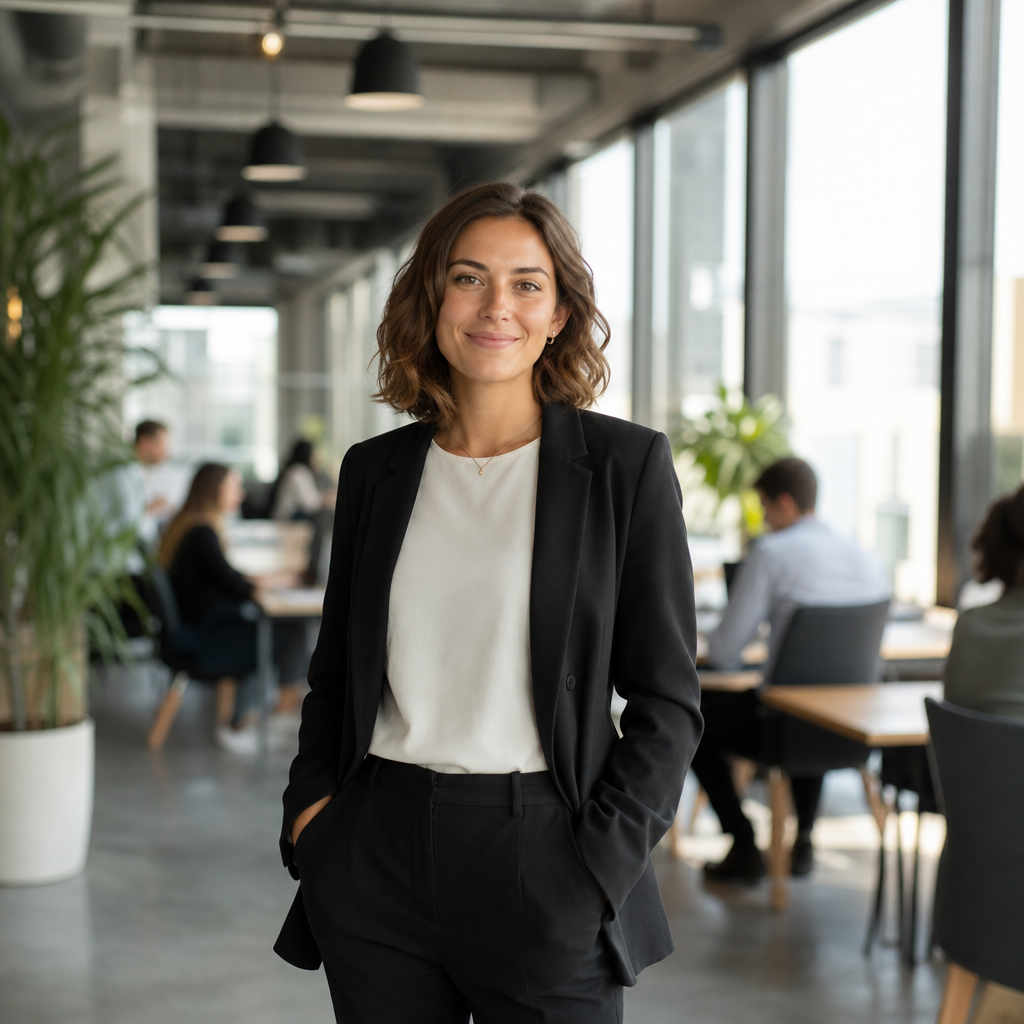
There is a particular kind of pause that happens just before someone updates their LinkedIn photo. It is the pause of a person deciding how they want to be understood by strangers before any words are exchanged. For most of the platform's history, that pause ended in one of two ways: a blurry crop from a wedding, cousin cut out at the shoulder, or a trip to a photographer's studio that cost several hundred dollars and an afternoon nobody had to spare. By late 2026, a third option has quietly become the default for a growing number of professionals — one that did not exist in any serious form five years ago, and now accounts for a meaningful share of the faces appearing in new connection requests across the platform.
The rise of AI headshots for LinkedIn profiles is not really a story about software. It is a story about time, about the economics of looking competent, and about a generation of workers — many of them freelance, remote, or several job changes into a career that no longer guarantees an office with a backdrop worth photographing — who needed to solve an old problem with none of the old infrastructure. The photography studio, with its seamless paper backdrop and its softbox lights, has not disappeared. It has simply stopped being the only door into a good portrait.
The Studio That Lives in a Phone
Walk into any co-working space in a city like Austin, Lisbon, or Bengaluru and you will find the same scene repeating itself with minor variations: someone propping a phone against a water bottle, angling their face toward the window, taking the same photo eleven times. This is the new casting call. The lighting is not a softbox; it is whatever the afternoon happens to be doing outside. The backdrop is not seamless paper; it is a blurred suggestion of a kitchen or a hallway. And yet, within minutes, that raw material can be fed into a service and returned as something that looks, convincingly, like it was taken by a photographer with a client list and a Soho loft.
This is the premise behind Headshot Lab, which belongs to a category of tools that treat the selfie not as a finished product but as a kind of genetic code — enough information about a person's face, their expressions, the particular way light falls across their features, to reconstruct a studio-grade portrait without the studio. Users upload a batch of casual photos, select the attire and background they want — charcoal blazer against a muted gray, perhaps, or a soft gradient reminiscent of a modern office — and within a short processing window receive dozens of options to choose from. There is something almost unsettling about the efficiency of it, the way a problem that used to require a calendar invitation and a cancellation fee now resolves itself before a coffee goes cold.
The appeal is not merely convenience, though convenience is considerable. It is the removal of a specific kind of anxiety — the anxiety of not having "a decent photo," which for years functioned as a quiet tax on anyone between jobs, between cities, or simply between budgets. A 2023 Stanford study on first impressions found that viewers form judgments about competence and trustworthiness from a face in well under a second, long before they have read a headline or a job title. LinkedIn itself has published data suggesting that profiles with photographs receive dramatically more views and connection requests than those without, a pattern that has held steady since the platform first allowed images. The incentive to have a good photo, in other words, was never in question. What had changed was the ease of getting one.
The Vanity of Competence
There is a certain irony sitting at the center of this trend, one that a culturally literate observer notices quickly: a platform built on the premise of authentic professional networking is now populated, in increasing numbers, by faces that have been generated, enhanced, or entirely reconstructed by machine learning models. And yet the irony dissolves on closer inspection, because the goal was never authenticity in the documentary sense. Nobody looks at a traditional studio headshot — retouched, lit by three separate sources, shot through a diffusion filter — and mistakes it for a candid photograph either. The professional headshot has always been a performance of competence rather than a transcript of a particular Tuesday afternoon. AI headshots simply make that performance more accessible, not more deceptive.
This distinction matters because much of the early skepticism around AI-generated portraiture treated it as a form of digital catfishing, a complaint that surfaces occasionally in trade publications and on forums like Reddit's r/LinkedIn, where users debate whether a synthetic backdrop constitutes dishonesty. But the better framing — and the one that professionals themselves seem to have settled on — treats the AI headshot the way earlier generations treated the retouched studio portrait: an idealized but fundamentally honest representation of how a person wants to present themselves at work. Nobody expects their LinkedIn photo to replicate their appearance after a six a.m. flight delay. They expect it to replicate their appearance on their best possible day, under their most flattering light, dressed slightly better than they typically are at 9 a.m. on a Tuesday. That has always been the implicit contract of professional photography, and AI has not broken it so much as made it available to people who could never previously afford the terms.
The job seeker searching for work after a layoff, the freelance consultant building a client base from a home office, the nonprofit worker whose organization has no marketing budget for staff photography — these are the people for whom the traditional studio headshot was always a luxury good, priced at a level that made sense for executives with expense accounts but not for the much larger population of workers whose livelihoods depend equally on how they are perceived online. The Harvard Business Review has written at length about the outsized role that visual self-presentation plays in hiring and networking outcomes, a dynamic that previously compounded existing inequalities: those with resources got professional photography, and those without made do with a cropped vacation photo. The democratization of a credible headshot — even an artificially generated one — has quietly narrowed that gap.
What the Algorithm Actually Sees
It is worth pausing on the mechanics, not because the technology is the point of the story, but because understanding it changes how a person approaches the process. These tools are not simply applying a filter to an existing photograph, the way an Instagram preset might warm the skin tones or soften a shadow. They are building a model of a person's face from multiple angles and expressions, then generating entirely new images that place that learned likeness into new lighting conditions, new clothing, new settings. The output is not a doctored photograph so much as a new photograph that never had a camera present for its creation — closer, in spirit, to a portrait painter working from sketches than to a photo editor working from film.
This is why the quality of the source material matters more than most users initially assume. A handful of selfies taken in flat, even light, from a few different angles, tends to produce far better results than a single flattering photo blown up and manipulated. The model needs variety to understand bone structure, expression range, and the particular geometry of a face, in much the same way a portrait sitting traditionally involved a photographer taking dozens of frames to find the handful worth printing. Services in this space, including Headshot Lab, typically request eight to twelve images as a baseline, with guidance on lighting and angle that mirrors, almost exactly, the instructions a photographer's assistant might give a nervous client before a shoot.
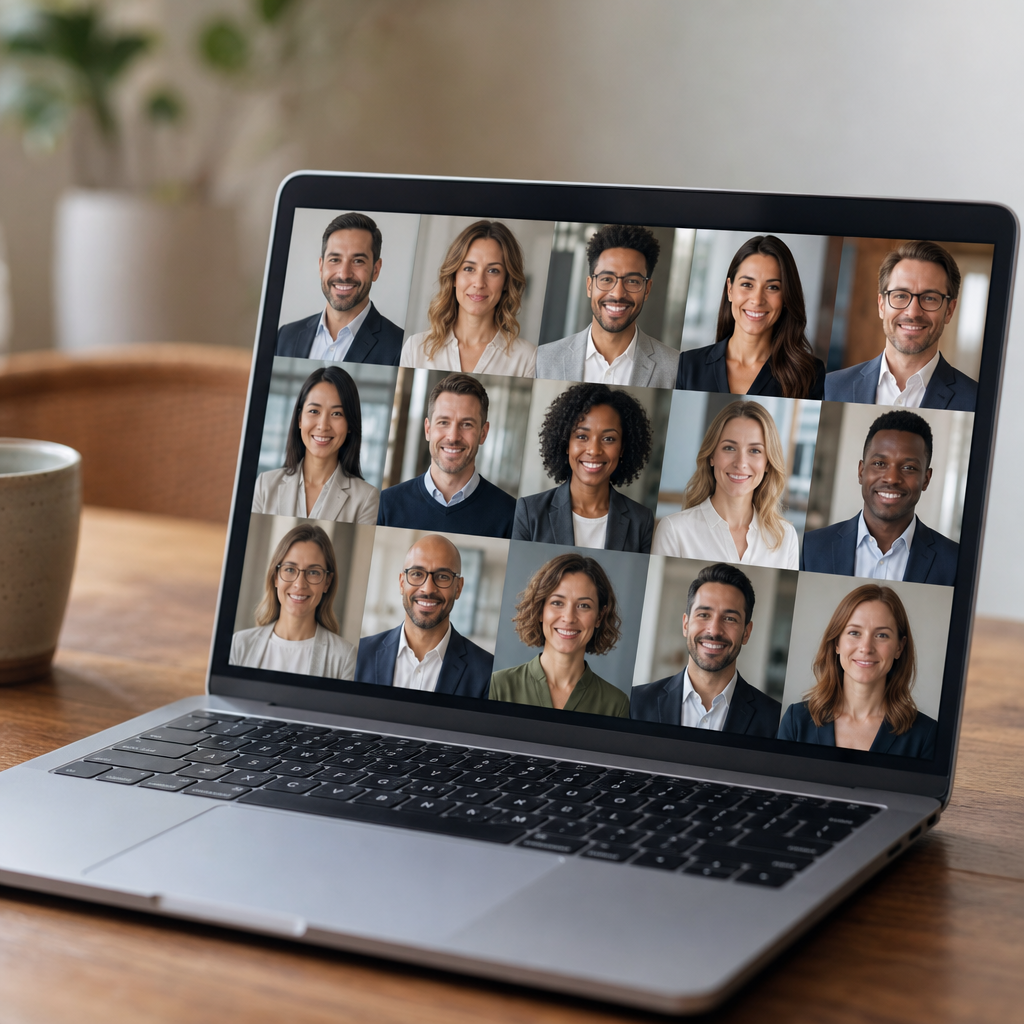
The attire and background customization has become its own small design discipline. Early AI headshot tools were criticized, not unfairly, for producing images with a telltale uncanny gloss — skin rendered too smooth, eyes slightly misaligned, blazers with lapels that didn't quite obey the laws of fabric. The current generation of tools has largely closed that gap, partly through better underlying models and partly through expanded choice: dozens of background options ranging from traditional charcoal studio gradients to softly blurred office interiors, and attire options that span industries, from the structured suiting expected in finance and law to the more relaxed button-downs common in tech and design. A consultant in Chicago and a software engineer in Toronto are, reasonably, not dressing for the same algorithmic audience, and the better platforms now account for that.
The Office That Dresses Alike
Where this shift becomes organizationally interesting — and where it moves from a personal convenience into something closer to a business tool — is in the team package. Any communications director who has tried to coordinate headshots for a twenty-person company knows the particular logistical misery involved: scheduling conflicts, a photographer's day rate multiplied across hours, remote employees scattered across three time zones who cannot reasonably fly in for a photo session, and the inevitable result of a company "About" page where half the team has a matching gray backdrop and the other half has whatever they submitted from a phone two years ago.
AI headshot platforms solve this with a kind of brute administrative efficiency that traditional photography simply cannot match. A company can specify a single background and a loose attire guideline, distribute the request to every employee regardless of location, and receive back a set of headshots that look as though the entire company sat for the same photographer on the same afternoon, even if the twenty people involved span four continents and have never been in the same room. For distributed organizations — and in 2026, that describes a considerable share of mid-sized companies — this is not a cosmetic nicety. It is often the only realistic way to achieve visual consistency across a leadership page, a press kit, or a conference speaker roster.
There is a quieter benefit here too, one that touches on equity within organizations. Traditional corporate photography days tend to favor whoever happens to be in the office that week, which in hybrid workplaces often skews toward more senior staff or those based near headquarters. A distributed AI headshot rollout, by contrast, gives every employee — the junior analyst working from a spare bedroom in Manchester as easily as the regional director with a corner office — access to the same polished presentation. Fast Company has covered how hybrid and remote work have forced companies to rethink basic rituals of corporate identity, and the team headshot, oddly specific as it sounds, turns out to be one of the more visible casualties of distributed work that this technology quietly repairs.
The Return Policy on Self-Presentation
Part of what has allowed AI headshots to move from novelty to norm is the removal of risk from the transaction. A bad traditional headshot session is an expensive mistake — the photographer has been paid, the afternoon has been spent, and the only remedy is booking another session and absorbing the cost twice. The structure of most AI headshot services inverts this risk profile almost entirely. Because the output is dozens of variations rather than a single sitting's worth of frames, and because platforms like Headshot Lab build in retouch credits and money-back guarantees, the experience resembles browsing a well-stocked store rather than committing to a single irreversible appointment. If the gray blazer doesn't suit a person's coloring, there is a navy option already generated. If the smile in the first batch looks strained, there are two dozen others to consider.

This abundance changes the psychology of the whole exercise. Where a studio sitting often produces a kind of performance anxiety — a stiffness that photographers spend half the session trying to coax their subjects out of — the AI process removes the audience entirely. There is no photographer waiting, no clock ticking on a booked hour, no awkwardness about asking for one more take. People report, almost universally, a kind of relaxation in selfies taken with no one watching that rarely survives the presence of a professional photographer and their equipment, however kind that photographer might be. The irony is substantial: the more mechanical the process becomes, the more natural the resulting expression tends to look.
The Face Before the Handshake
It is tempting, writing about any AI-driven shift in how people present themselves, to reach for alarm — to frame this as one more erosion of the authentic self in favor of the algorithmically optimized one. But the more honest reading is less dramatic and more human. A LinkedIn photo was never meant to capture a person in full; it was always a small, curated signal, no more representative of a whole personality than a firm handshake or a well-chosen tie. What has changed is not the sincerity of the signal but the accessibility of sending a good one. The marketing executive in London, the nurse practitioner transitioning into healthcare consulting in Phoenix, the small manufacturing firm in Ohio trying to look credible to a national client base — all of them are, in their own ways, simply trying to be taken seriously before anyone has had the chance to actually meet them.
That is an old and entirely reasonable human desire, and it predates LinkedIn by centuries — it is the same impulse that filled Renaissance portrait commissions and Victorian calling cards, the same instinct that made daguerreotype studios a fixture of every American main street within a decade of the camera's invention. What has arrived with services like Headshot Lab is not a new kind of vanity but a faster, cheaper route to a very old one: the wish to be seen, at least in that first unguarded second of judgment, as exactly the professional you already know yourself to be. The studio light is gone, replaced by whatever the kitchen window happens to offer on a Tuesday afternoon — and somehow, against all expectation, the portrait that comes back from it looks more like the person than the stiff photograph ever did.
Article written by FrontRank