 HEADSHOTLAB
Verdicts Are In: What AI Headshot Generator Reviews Actually Reveal

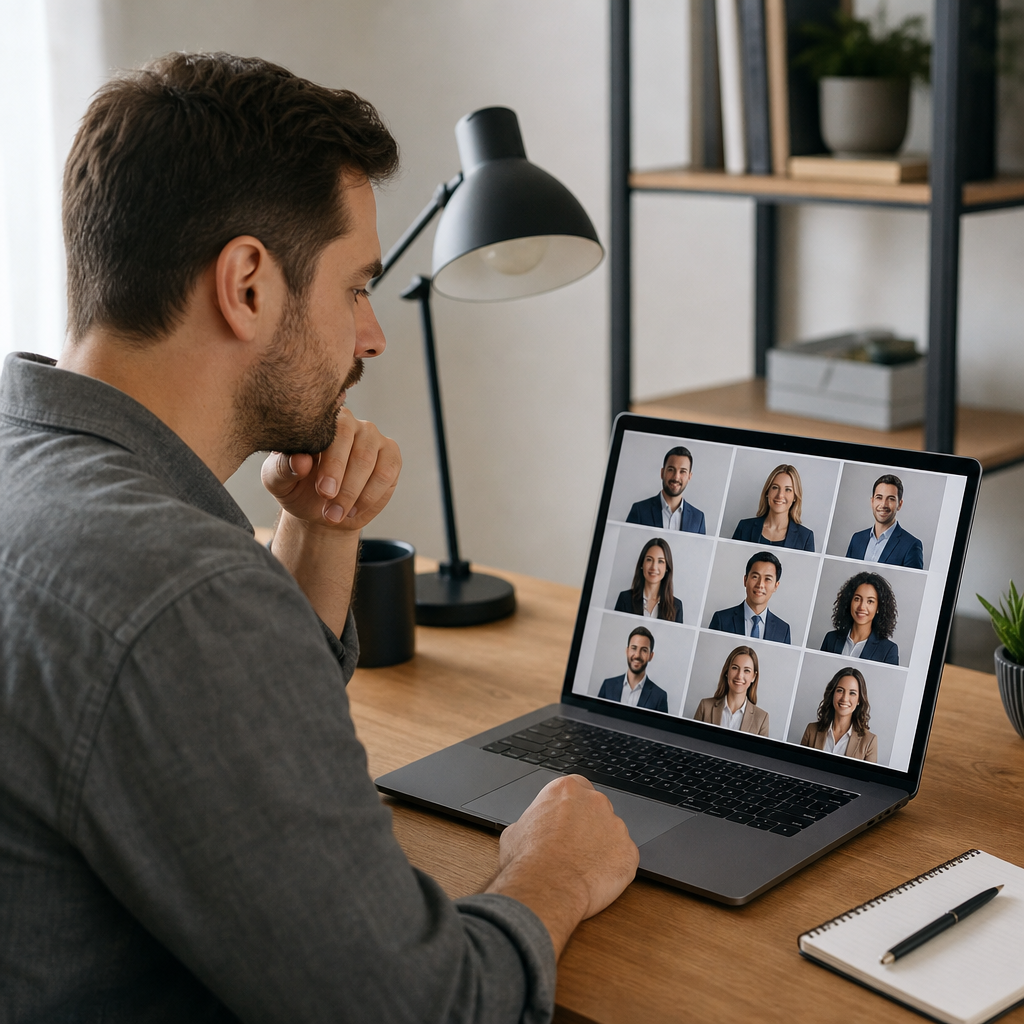
There is a particular kind of scrolling that happens at eleven at night, somewhere between a glass of wine and the next morning's job application deadline. A cursor hovers over a dozen browser tabs, each one promising the same thing in slightly different fonts: upload a selfie, receive a headshot indistinguishable from one taken by a photographer with a Profoto softbox and forty-five minutes to spare. Somewhere in Berlin, a graphic designer is comparing before-and-after grids on Reddit threads with the intensity of someone reading tea leaves. Somewhere in Austin, a laid-off product manager is reading a Trustpilot review written by a stranger named Deb, trying to decide whether Deb's experience will be hers too.
This is the strange new ritual of professional self-presentation in 2026 — not a sitting, but a search. And the search itself has become its own genre of writing: the AI headshot generator review, a form as earnest and as unreliable as a restaurant review written by someone who ordered only the bread basket. The reviews exist because the stakes, though modest in dollar terms, feel disproportionately large. A headshot is not a receipt. It is a face, deployed into a LinkedIn grid or a company "About Us" page, where it will do quiet reputational work for years. Choosing wrong doesn't mean a bad meal. It means a mildly uncanny portrait sitting atop your name for the next three years of networking events.
What's worth examining is not simply which tool wins which review, but what these reviews are actually measuring — and what they consistently miss.
The Grammar of the Review Itself
Most reviews of AI headshot tools follow an unspoken formula, almost liturgical in its repetition. There is the upload moment, often described with a note of skepticism ("I used three blurry selfies from my camera roll"). There is the waiting period, treated as a dramatic beat even though it lasts minutes rather than days. Then comes the reveal: a gallery of options, usually between twenty and a hundred images, rendered in a scroll of near-identical poses with subtly different lighting, attire, and background. The reviewer picks a favorite, holds it up against a real photograph, and renders a verdict.
This formula is useful, but it is also narrow. It treats the headshot generator the way a restaurant critic might treat a vending machine — evaluating the product that comes out, with little regard for the process that shaped it. Few reviews interrogate the training data behind the models, the way a longer-form piece in Wired might when examining generative AI more broadly. Fewer still ask what happens to the original selfies after upload, a question that matters enormously to anyone who has read even a fraction of the data-privacy reporting coming out of outlets like The Markup. A five-star review of image quality says nothing about whether a company retains your face indefinitely on a server in a jurisdiction you've never considered.
The best reviews, the ones worth trusting, tend to be the ones written by people who treat the headshot not as a novelty but as a professional tool with downstream consequences — the sort of scrutiny you'd expect from a piece in Harvard Business Review about personal branding, rather than a TikTok reaction video. These reviewers ask harder questions: Does the final image still look like the person, or like a plausible cousin of the person? Does the retouching introduce a waxy uniformity, the kind critics of beauty filters have been warning about since the early days of FaceTune? Is there a meaningful difference between the free tier and the paid tier, or is the free tier simply a watermarked tease?
Judging the Eye, Not Just the Engine
Anyone who has sat for a real studio portrait knows that the photographer's most valuable skill isn't technical — it's editorial. A good photographer looks at forty frames and discards thirty-eight of them, understanding instinctively which micro-expression reads as "confident" and which reads as "mildly suspicious of the camera." AI headshot tools have, in effect, automated the forty frames. What they have not automated, and what separates a mediocre AI headshot generator from a genuinely good one, is the editorial instinct — the selection, the restraint, the sense of who the sitter actually is.
This is where reviews diverge most sharply, and where reviewers' own taste becomes an unacknowledged variable. A marketing consultant in Toronto testing a batch of options might gravitate toward the warmest, most approachable image, reasoning that her clients want to feel at ease. A litigator in Chicago testing the same tool might select the sternest, most composed option, believing gravitas serves him better. Neither is wrong, but a review that simply says "the results looked professional" obscures how much of the final judgment rests with the user, not the algorithm. The tool provides range; the human still edits.
This is a point Headshot Lab has built much of its design philosophy around — not generating a single "correct" headshot, but producing dozens of variations across attire, background, and expression, so the final editorial decision remains with the person whose career the photo will represent. It is a subtle but important distinction from tools that output a handful of nearly identical images and call the job done. Range, in this sense, is not a luxury feature. It's the entire point.
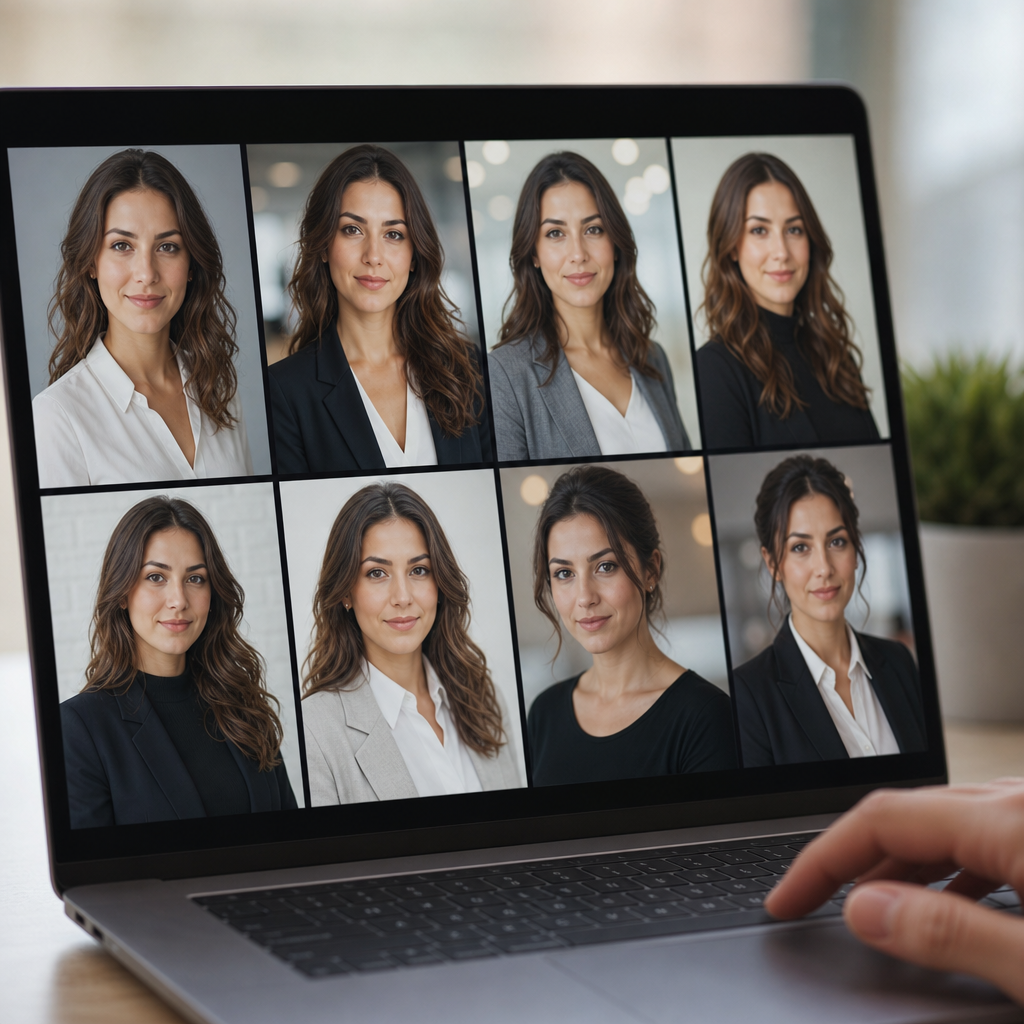
Consider, too, the matter of context. A headshot destined for a fintech startup's "Team" page carries different expectations than one destined for a textile designer's Instagram bio or a university professor's faculty directory. The better reviews acknowledge this plurality rather than crowning one universal "best" result, in the same way a thoughtful piece on workwear in The Cut might resist declaring a single blazer the definitive professional uniform. Context is everything. A headshot that reads as polished for a corporate law firm might read as stiff for a creative agency, and vice versa.
The Uncanny Valley's New Address
No honest conversation about AI headshots can avoid the uncanny valley — that well-documented dip in comfort when a synthetic image gets close to human likeness without quite arriving. Early AI headshot tools, circa 2023, were infamous for it: skin rendered too smooth, eyes slightly too symmetrical, backgrounds that looked like a hotel conference room imagined by someone who had only read about hotel conference rooms. The jokes wrote themselves, and reviewers delighted in screenshotting the most egregious failures — extra fingers holding invisible coffee cups, collars that dissolved into the neck.
By 2026, the technology has matured considerably, and most reviews now acknowledge this shift, though some lag behind, still citing artifacts that newer models have largely resolved. The more rigorous reviews — the kind published by tech-literate outlets like TechRadar — now evaluate less on "does it look human" and more on "does it look like this specific human." That's a harder, more interesting question, because it moves the conversation from novelty to fidelity. A headshot generator can produce a flawless, magazine-ready face and still fail the assignment if the face doesn't resemble the client closely enough that a colleague would recognize them walking into a meeting.
This is also where retouch credits — a feature Headshot Lab includes as standard — start to matter more than they first appear to. The single-pass model, where a user uploads once and receives one static batch of results, assumes the first attempt will be correct. Anyone who has ever sat for a passport photo knows how rarely that's true. The capacity to regenerate, adjust, and refine is less a bonus feature than an acknowledgment of how portraiture actually works: iteratively, with small corrections accumulating into something that finally feels right.
What the Reviews Leave Out
There is a category of consideration that almost never appears in the review ecosystem, perhaps because it doesn't photograph well as a screenshot: the emotional economics of the whole exercise. A traditional headshot session has historically cost anywhere from two hundred to several thousand dollars, depending on the city and the photographer's reputation, a fact well documented in service-industry reporting from outlets like Forbes. It has also required scheduling — a notoriously difficult task for anyone managing a full-time job, let alone a team of forty employees whose calendars rarely align. The emotional toll of a bad traditional sitting is real too: the stiffness in front of an unfamiliar photographer, the awkward direction to "relax your shoulders," the slow dawning realization, three days later when the proofs arrive, that none of the two hundred frames look like how you see yourself.
AI tools have not eliminated that vulnerability so much as relocated it. Now the awkwardness happens in private, in front of a laptop camera, which for many people is a genuine relief — no stranger watching you grimace through your tenth attempt at a "relaxed, approachable" smile. But it also means the stakes of getting a useful final image rest more heavily on the software's ability to interpret ambiguous, often poorly lit source material. A reviewer testing this experience honestly should disclose what they uploaded — professional phone photography under good light, or three grainy screenshots pulled from a group photo at a cousin's wedding. The quality of outcome correlates directly with the quality of input, a detail that flatters almost no headshot tool to admit but that experienced users quickly discover for themselves.
This is also where team packages reveal something the single-user reviews miss entirely. An organization standardizing headshots across forty employees faces a coordination problem that no individual review scenario replicates: ensuring consistent backgrounds, consistent attire logic, and a cohesive visual identity across people who will never actually occupy the same physical room. Traditional solutions to this — flying in a single photographer for a dedicated "headshot day," as many companies did through the early 2020s — are logistically brutal and expensive, often requiring HR to chase down remote employees across time zones for weeks. Headshot Lab's team offering addresses this specific friction, allowing a distributed workforce to arrive at the same aesthetic outcome without ever occupying the same room, let alone the same calendar. It's a use case rarely tested by solo reviewers, because solo reviewers are, definitionally, solo.
Reading the Verdict Correctly
So how should a reasonably skeptical person actually use these reviews? Not as a scoreboard, and not as a substitute for their own ten minutes of testing. The honest function of a review is closer to a trailhead than a destination — it narrows the field from forty tools to three, and after that, judgment has to take over. A review can tell you whether a company's money-back guarantee is honored in practice, a detail worth confirming through independent consumer-protection resources like the Better Business Bureau rather than taking any single company's word for it. It can tell you whether customer service responds within a day or within three weeks. It cannot tell you whether the final image will make a hiring manager in your specific industry nod with recognition.
That last judgment remains stubbornly human, and perhaps that's the quiet comfort in all of this. The technology has gotten remarkably good at producing the raw material of professional presence — the studio lighting, the tailored jacket rendered in a shade that photographs well, the background that reads as "modern office" without being any office in particular. What it has not replaced, and likely won't soon, is the moment of recognition when someone looks at the final image and thinks: yes, that's actually how I want to be seen. The tools have become reliable enough that the better review, going forward, might stop asking "does this look real?" and start asking something closer to "does this look like someone I'd trust?" That's a subtler question, and a better one — and it's the question, ultimately, that no star rating can answer for you.
There's a kind of relief in accepting that. The eleven-o'clock scroll through comparison threads and star ratings will probably never fully disappear, but it can be put down a little earlier each time, once the real criterion comes into focus: not which tool wins the review, but which result, held up to the light of your own face, finally looks like Monday morning instead of midnight doubt. Somewhere in that recognition — quiet, specific, entirely personal — the search ends, and the actual portrait, however it was made, finally gets to do its job.
Article written by FrontRank