 HEADSHOTLAB
The Four Dollars and Forty Minutes Behind Every Free AI Headshot Generator
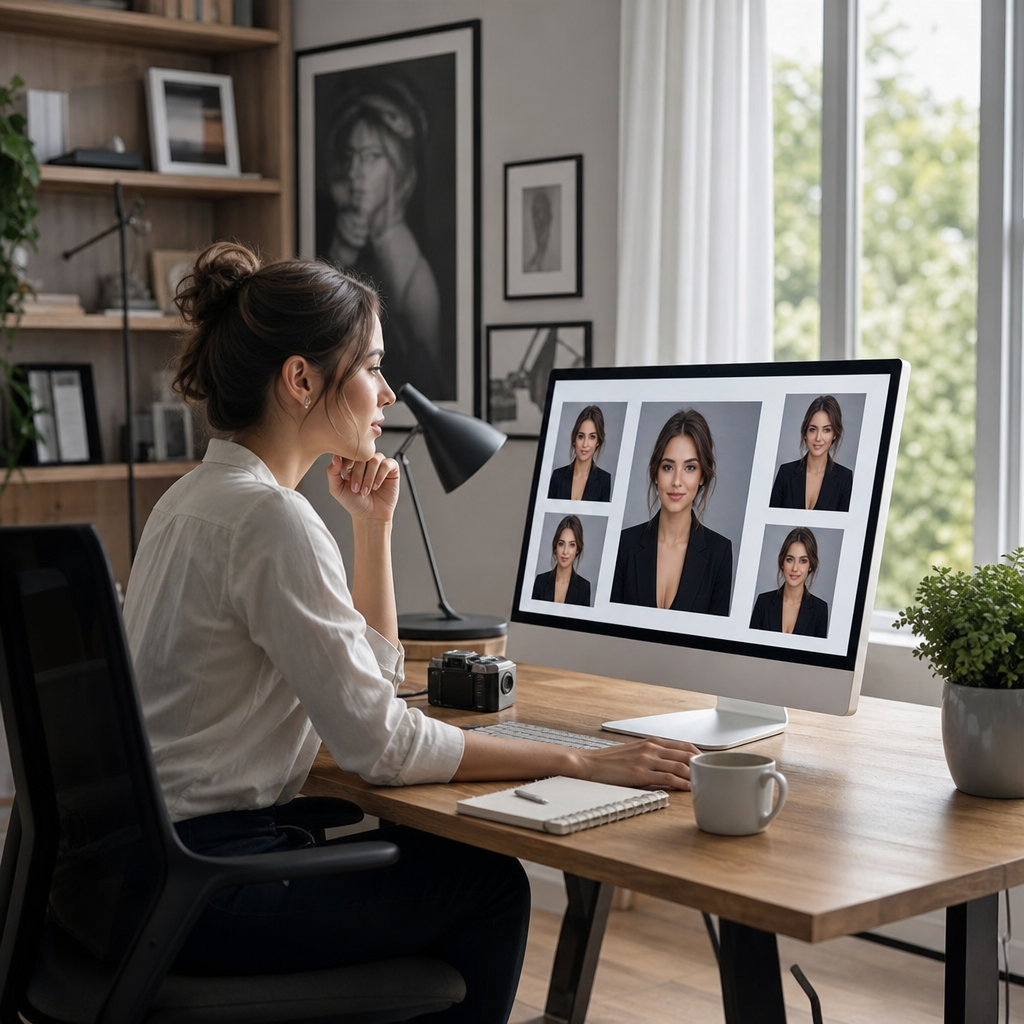
There is a particular kind of fluorescent dread that settles over a person asked, with twenty-four hours' notice, to supply "a professional headshot" for a conference programme, a Series A announcement, or the all-staff page of a law firm's website. The photo they have is from a wedding, cropped badly, a champagne flute just out of frame. The photo they wish they had involves a grey seamless backdrop, a reflector, and a photographer who knows what to do with a jawline. Somewhere between those two images now sits a third option, one that did not exist in any meaningful way five years ago: open a laptop, upload a dozen selfies, and wait.
That waiting used to mean weeks — booking a studio, driving across town, standing under hot lights while someone with a light meter asked you to tilt your chin "just a touch." Now it can mean the length of a coffee break. The phrase "AI headshot generator free" has become one of the most searched variations of a category that barely had a name before the pandemic reorganised the way we work, met, and introduced ourselves to strangers on LinkedIn. It is a phrase loaded with a very modern kind of hope: that the thing everyone secretly dreads — being professionally photographed — might finally be solvable without a calendar invite or a credit card.
The truth, like most truths about anything genuinely useful, sits a little to the side of the hope. Free, in this context, rarely means free the way a public library is free. It means a door left ajar: a handful of trial credits, a watermarked preview, a taste of the studio-quality image before the real transaction begins. Understanding that threshold — what's genuinely free, what's a loss leader, and what's worth paying four or five dollars for — has become its own small literacy, the kind people now swap in Slack channels the way they once swapped recommendations for dry cleaners.
The Portrait as Passport
A headshot used to be something you got once a decade, usually under duress — a new job, a passport renewal, a milestone birthday that made you suddenly aware of your own mortality and, by extension, your LinkedIn photo. Now it functions more like a passport stamp than a portrait: evidence of where you currently are in your professional life, updated as often as the life itself changes. Switch industries, get promoted, let your hair grow out, and the old photo starts to feel like a lie of omission.
Lincoln, the photography historian and author of several studies on portraiture's democratization, has written about how the carte de visite of the 1860s performed a similar social function — a small, mass-producible image of selfhood that signalled respectability and belonging to the emerging middle class. The AI headshot is, in a strange way, a descendant of that object: not a record of a single sitting but a controlled performance of competence, optimised for a four-inch square on a screen. The Harvard Business Review has noted that a polished profile photo measurably affects how quickly recruiters engage with a candidate's profile, which helps explain why so many job seekers now treat the photo itself as a line item in their career strategy rather than an afterthought.
What's changed is not the desire for that passport photo but the economics of producing one. A traditional corporate headshot session in a city like New York or London can run anywhere from two hundred to eight hundred dollars, often more if a stylist or retoucher is involved, and the sitting itself — the stiff posture, the eight different "just relax" instructions — remains, for most people, a small ordeal. The AI headshot collapses that ordeal into an upload. It does not eliminate vanity or self-consciousness, but it removes the audience. Nobody watches you try on sixty expressions in front of a laptop camera at eleven at night in your own kitchen.
What "Free" Actually Buys
The free tier of an AI headshot tool is best understood as a demo reel rather than a finished product. Most platforms, including the wave of apps that surged after OpenAI's image models became widely accessible, allow a user to upload a handful of selfies and generate a small batch of previews — often low-resolution, frequently watermarked — so the user can judge whether the likeness is convincing before paying for the full-resolution, retouched set. This is not a bait-and-switch so much as a fairly standard freemium logic, the same one that governs everything from cloud storage to dating apps: show enough value to create desire, then charge for the full experience.
What separates a good free trial from a disappointing one is honesty about likeness. Early AI headshot generators were notorious for producing images that looked impressive at a glance and faintly alien on closer inspection — skin smoothed into plastic, eyes subtly misaligned, a jawline that belonged to someone else entirely. The uncanny valley, a concept the robotics researcher Masahiro Mori described decades before anyone imagined AI-generated faces would populate LinkedIn, turned out to be exactly where a lot of early headshot tools lived. A Wired feature on the AI portrait boom captured this tension well: the technology was powerful enough to convince at a glance, but not yet subtle enough to survive scrutiny.
That gap has narrowed considerably through 2026. Diffusion models have gotten better at preserving the specific, slightly asymmetrical details that make a face recognisably someone's own — the faint scar above an eyebrow, the particular way a smile pulls to one side. Headshot Lab built its approach around this exact tension, training on a user's own uploaded selfies rather than a generic face bank, which is part of why the resulting images tend to read as you, dressed for a context you may never have actually been photographed in, rather than a stranger wearing your name tag.
The free-to-paid pipeline matters because it lets people test for that fidelity without commitment. A job seeker uploading photos the night before applications open wants to know, within minutes, whether the tool can produce something that looks like them in a blazer they don't own, not whether the marketing copy is persuasive. The honest free trials let the image do the convincing.
The Office That Never Existed
Perhaps the strangest cultural artefact of this moment is the corporate team page populated entirely by people who have never stood in the same room, dressed in blazers none of them own, in front of a background that is, technically, nowhere. Startups distributed across four time zones — a product manager in Lisbon, a designer in Austin, an engineer in Manila — can now present a leadership page with matching navy backdrops and consistent lighting, an aesthetic cohesion that would once have required flying everyone to a single studio for a single, expensive day.
This has quietly altered how startups perform legitimacy. A matched set of headshots used to be a subtle signal of institutional weight — the kind of thing only a company with an HR department and a marketing budget could produce. Now a five-person remote team can achieve the same visual consistency for a fraction of the cost, which is precisely why Headshot Lab's team packages — offering matching attire and background presets across an entire staff roster — have become popular with organisations that are, by any traditional measure, too small or too distributed to have ever booked a shared photo shoot in the first place.
There's a sociological footnote worth lingering on here. The uniformity of a good team headshot set has always done quiet work: it tells a prospective client or hire that this is an organisation, not a scattering of freelancers. A Forbes piece on remote-work branding observed that visual consistency across a leadership page correlates with perceived trustworthiness, even when the underlying substance of the business is identical to a competitor's. The AI headshot, used at scale across a team, becomes a kind of visual uniform — less about vanity than about signalling coherence to the outside world.
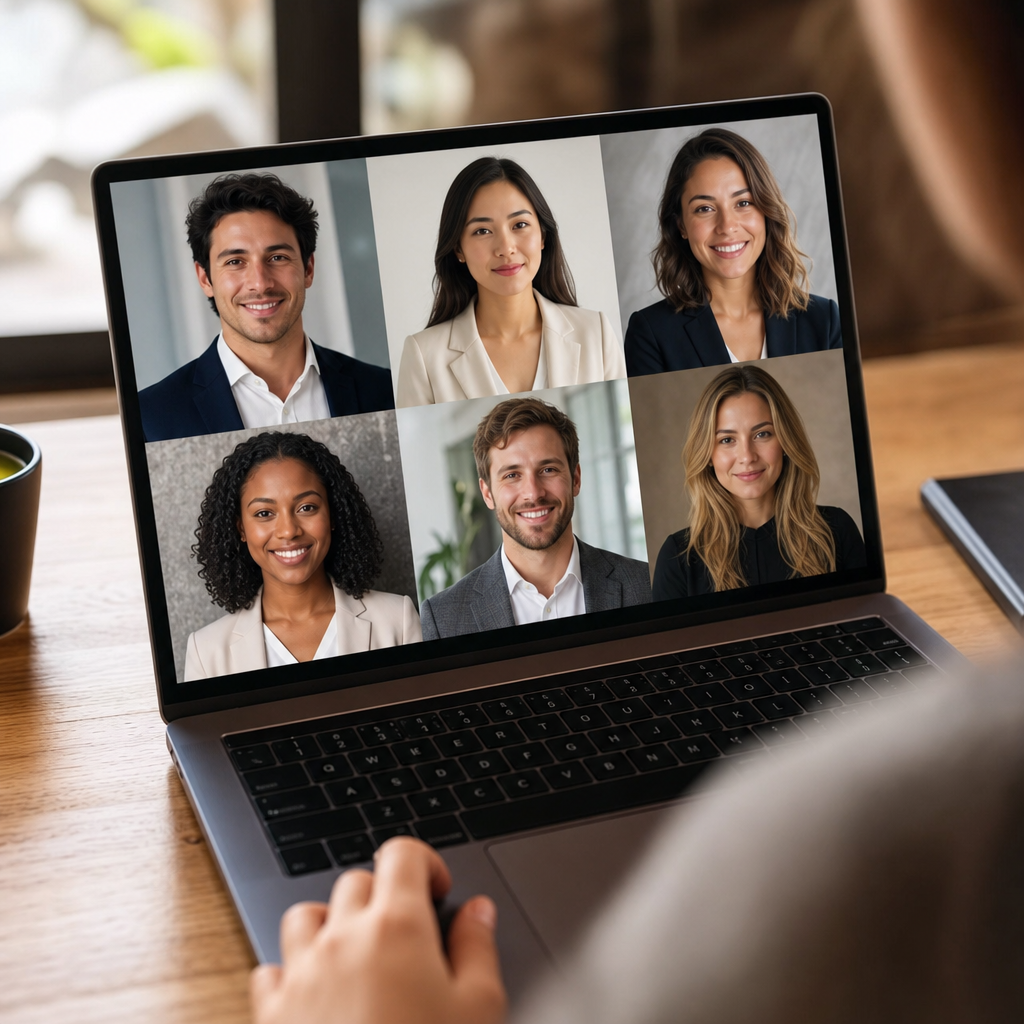
There is something almost theatrical about this — a company presenting a face it has, in a literal sense, never worn. But theatre has always been part of professional self-presentation; the grey backdrop and sensible blazer of the traditional headshot were never neutral documentary choices either. They were costume and set design for the role of "competent professional," just executed with actual fabric and actual studio lights rather than a diffusion model's approximation of both. What's new isn't the performance. It's who can now afford to stage it.
The Etiquette of the Uncanny
Every new photographic technology arrives trailing a set of unspoken rules about when its use is acceptable and when it curdles into something faintly dishonest. Instagram filters were, for a while, a scandal — the subject of essays about authenticity and the "filtered self" — before they became so ubiquitous as to be invisible, a background assumption rather than a deception. AI headshots are currently somewhere in the middle of that same arc: widely used, increasingly normalised, but still capable of provoking a raised eyebrow if deployed carelessly.
The emerging etiquette seems to hinge on a fairly intuitive distinction: does the image represent a plausible version of a real moment, or does it invent one? A headshot generated from someone's own selfies, styled in attire they plausibly might wear, photographed (virtually) at an angle a camera could plausibly have captured — this reads, to most people, as a reasonable act of self-presentation, no different in kind from choosing a flattering outfit or good lighting before a video call. Where it tips into something more uncomfortable is when the output becomes unrecognisable, when colleagues meeting someone in person for the first time experience a small, disorienting gap between the LinkedIn photo and the actual human being.
The better platforms in the category have internalised this concern rather than dismissing it. Retouch credits — the ability to request adjustments to a specific generated image rather than accepting whatever the model first produces — exist partly to solve a cosmetic problem and partly to solve a trust problem: a user can correct an image that has drifted too far from their actual likeness before it ever reaches a client's inbox. A money-back guarantee, similarly, functions as more than a sales mechanism; it's an admission that likeness is subjective and that a person should not be stuck with an image of someone who merely resembles them.
The Pew Research Center has tracked a steady rise in public ambivalence toward AI-generated imagery broadly, with respondents expressing comfort with practical, low-stakes applications and more hesitation around anything that feels like impersonation. A headshot sits closer to the comfortable end of that spectrum than, say, a fully synthetic video, precisely because it is understood by most viewers as a styled, idealised version of a real person rather than a fabrication from nothing. The selfie underneath is real. The blazer is invented. Most people, it turns out, are fine with that arrangement, the same way they were always fine with a studio photographer using a key light to make them look better rested than they were that morning.
The Forty Minutes That Replace the Four-Hour Shoot
There is a particular, almost comic image worth sitting with: a photographer in the early 2000s, methodically adjusting an umbrella light for the eleventh time, while a visibly impatient marketing director checks their watch. That entire ritual — the studio rental, the travel time, the wardrobe changes conducted in a converted broom closet — has been compressed, for a meaningful share of today's professionals, into the time it takes to drink a coffee and scroll through a results page.
This compression is not merely about convenience; it has changed who gets to participate in the aesthetics of professionalism at all. A photo shoot was always, implicitly, a luxury good — available to executives whose companies budgeted for it, to authors whose publishers arranged it, to anyone wealthy enough to treat a few hundred dollars as a reasonable line item for a single photograph. Everyone else made do with a cropped phone photo and hoped nobody looked too closely. The free or near-free AI headshot generator has, in a fairly short span, extended a version of that studio-grade polish to freelancers, students, career-changers, and small nonprofits that would never have found room in a budget for a professional photographer.
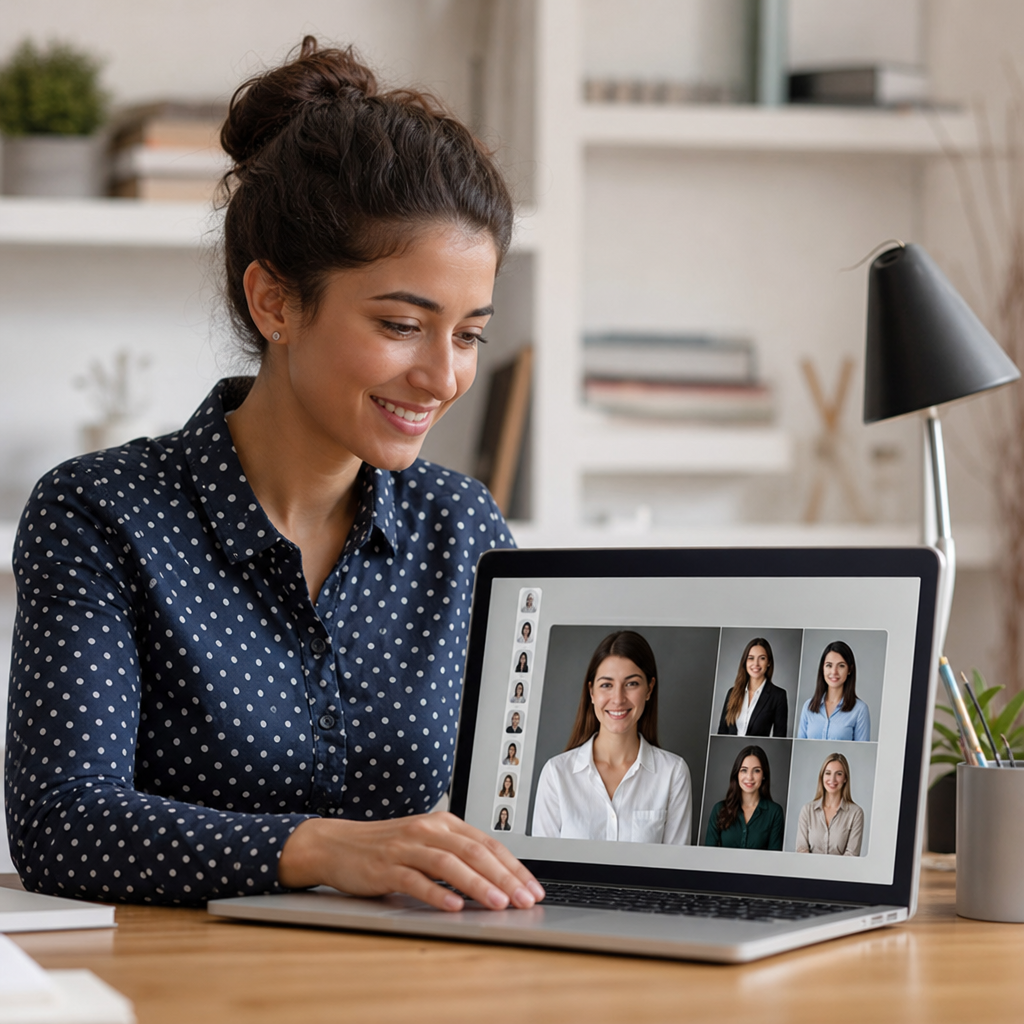
That democratization carries a quieter implication about expectation. As it becomes trivially easy to produce a sharp, well-lit, appropriately dressed headshot, the bar for what counts as an acceptable professional photo rises correspondingly. The grainy bathroom-mirror selfie that was tolerable in 2019 now reads, by 2026, as a small act of neglect — not because anyone explicitly demands better, but because the alternative has become so cheap and so fast that not bothering starts to look like a choice rather than a limitation. Headshot Lab's model — upload selfies, choose attire and background, receive dozens of options within minutes, backed by a guarantee if the likeness doesn't land — reflects an industry-wide recalibration of what "good enough" now means for a profile photo, and how little friction stands between a person and that standard.
What hasn't changed, and probably won't, is the underlying hope that sent so many people searching for an "AI headshot generator free" in the first place: the hope of being seen, in that single small square of pixels, as capable, trustworthy, and put-together — without having to stand under hot studio lights to prove it. The tools have gotten remarkably good at producing that image. Whether the forty minutes it now takes feels like a minor miracle or a slightly strange new normal probably depends on how recently you remember the alternative — the umbrella light, the broom-closet changing room, the four-hour wait for a single usable frame. For anyone who does remember, the laptop and the selfie folder on headshotlab.com will keep feeling, for a while yet, like a small and very welcome act of magic.
Article written by FrontRank