 HEADSHOTLAB
Layoff Season in Austin, and a Laptop That Would Not Stay Open
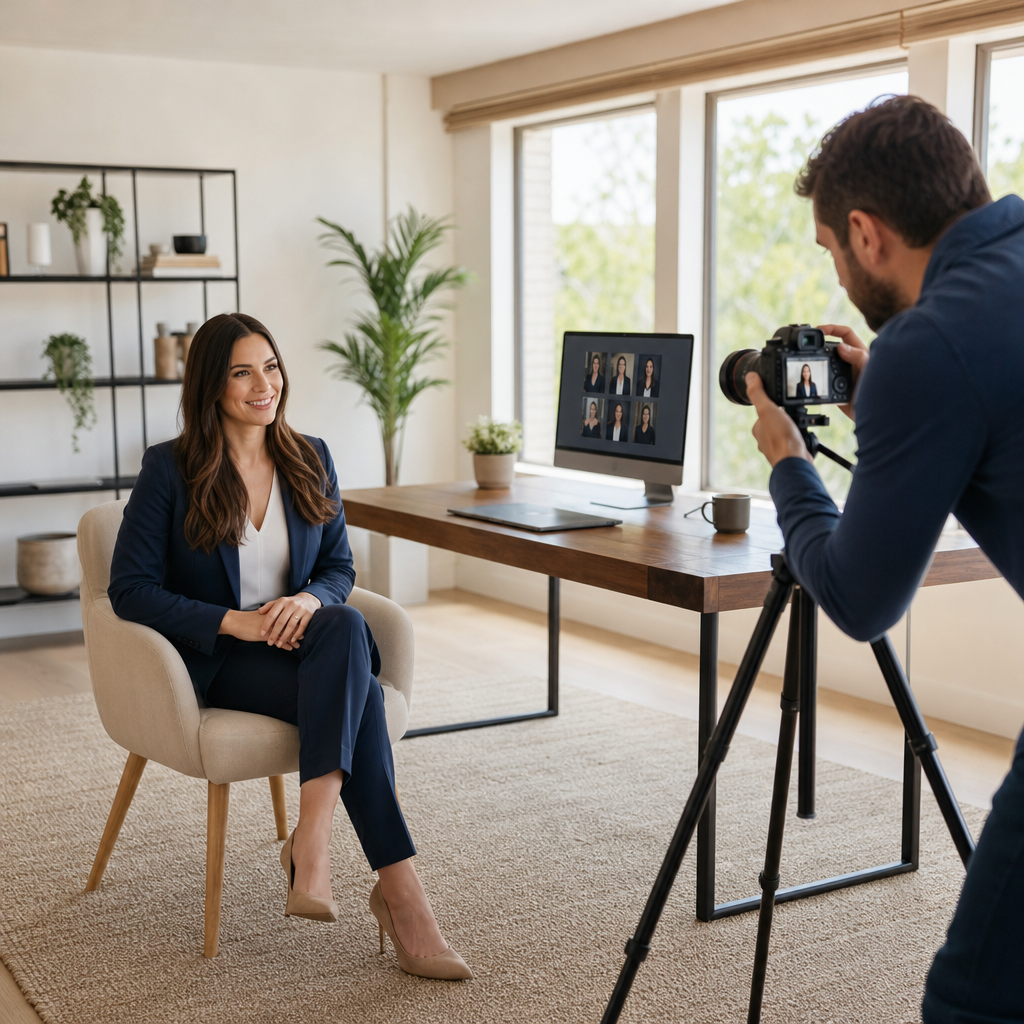
There is a particular hour, somewhere after midnight and before the first coffee of the next uncertain day, when a person who has just lost a job finally opens LinkedIn and stares at the photo attached to their name. It is usually a decade old. It is usually cropped from a wedding, a conference lanyard still faintly visible at the collar, or a child's birthday party with someone's elbow ghosted out in Photoshop by a well-meaning friend. In Austin this past October, during a software layoff that moved through three companies in a single week like weather, a product manager named Priya Raghunathan described that hour to a friend as "the worst kind of homework — the one where the grade is whether strangers think you look employable."
It is a strange, specific humiliation of modern work: the photograph has become a credential. Not a decorative one, either. Recruiters scanning hundreds of profiles a day make snap judgments in the time it takes to blink, and the research on this is not gentle. A widely cited set of studies out of Princeton, led by the psychologist Alexander Todorov, found that people form trait impressions — competence, trustworthiness, likability — from a face in under a tenth of a second, well before any conscious reasoning kicks in. Todorov's work on first impressions has become something of a foundational text for anyone who has ever agonized over a profile photo, because it confirms what job seekers already suspect in their bones: the picture is doing work the resume cannot.
This is the quiet context in which the AI headshot generator for job seekers has stopped being a novelty and started being infrastructure — as ordinary, in its way, as updating a resume template or tidying a cover letter. The pitch is almost absurdly simple. Upload a handful of selfies, choose a jacket you do not own and a background you have never stood in front of, and within minutes receive a set of images that look, convincingly, like the output of a Tuesday afternoon spent with a portrait photographer and a lighting kit. Services like Headshot Lab have built an entire proposition around that gap between what people need and what they can reasonably afford in a week when affording anything feels theoretical.
The Studio That Closed and the One That Opened in Its Place
To understand why this matters, it helps to remember what came before. For most of the last three decades, the professional headshot was a small industry of its own — local photographers, often working out of converted garages or rented studio hours, charging anywhere from one hundred and fifty to six hundred dollars for a session that produced, after editing fees, perhaps a dozen usable images. It was a business built on scarcity: scarce time, scarce equipment, scarce access to someone who understood how to light a face so it looked alert rather than startled. Getty Images and corporate photography studios in cities like New York and San Francisco built entire verticals serving law firms and investment banks who needed hundreds of partners photographed in a single, punishing week every autumn.
That model made sense when a company had a stable roster of forty people and a marketing budget to match. It makes considerably less sense now, in an economy where, according to data regularly tracked by the Bureau of Labor Statistics, the average worker will hold far more jobs across a career than their parents did, and where remote and hybrid arrangements mean a huge share of professional interaction happens through a screen before it ever happens in a room. The resume has adapted. The handshake has adapted into a Zoom wave. But the headshot — until recently — remained stubbornly tied to an old infrastructure of appointments, studios, and invoices.
What changed is not really about photography at all. It is about diffusion models, the same family of machine learning systems behind tools like Midjourney and OpenAI's image generators, learning to do something subtler than generate fantasy landscapes: learning to preserve a specific human face while re-rendering everything around it — the suit, the light, the backdrop — with studio-grade polish. MIT Technology Review has covered the broader trajectory of this technology extensively, noting how quickly "identity-preserving" image generation moved from research curiosity to consumer product in the space of about two years. The job seeker in Austin benefits from research that, until recently, was being discussed mainly at computer vision conferences.
What the Camera Used to Decide, the Algorithm Now Negotiates
There is something worth sitting with in the fact that a wardrobe choice, a background, and a lighting mood — decisions that used to belong to a photographer's trained eye — are now negotiated through a dropdown menu. Choose charcoal blazer or soft navy. Choose bookshelf, blurred office, or seamless grey. Choose the cooler, more corporate light favored by consulting firms or the warmer tone that reads more approachable, more startup, more "we have a ping pong table but we also close deals." It sounds almost too easy, and there is a reasonable instinct to distrust anything that collapses what used to be a two-hour sitting into a coffee break.
But the test that actually matters is not whether the process feels earned. It is whether the output holds up under scrutiny — whether a hiring manager at a mid-sized firm in Denver or a partner at a law practice in Chicago looks at the image and sees a credible professional rather than an uncanny approximation. Early AI headshot tools, in their 2023 and 2024 incarnations, sometimes stumbled here: smoothed-over skin that read as plastic, hands that generative models still struggled with, ears that didn't quite match between shots. The current generation, including the pipeline behind Headshot Lab's process, has narrowed that uncanny gap considerably, largely by training on far larger and more carefully curated sets of real studio photography, and by giving users dozens of variations to choose from rather than committing them to a single algorithmic guess.
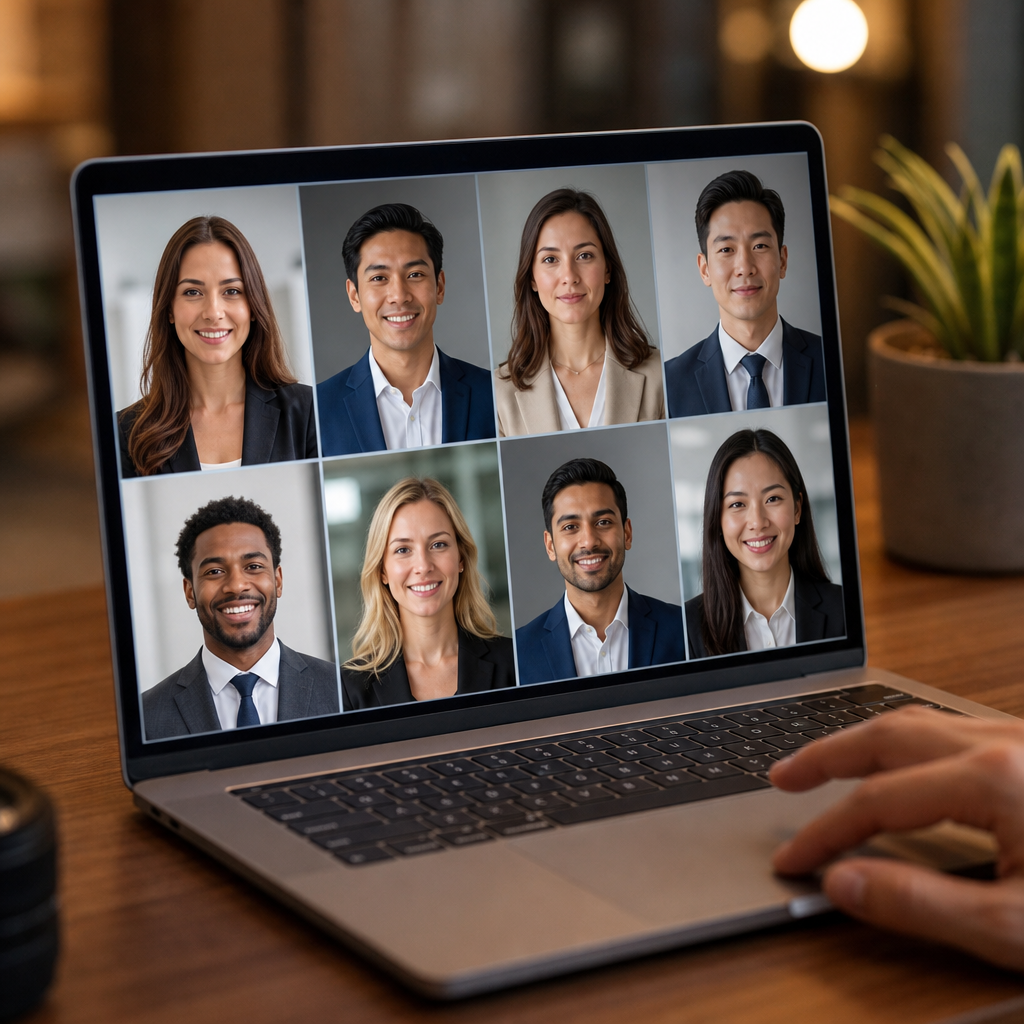
That volume matters more than it might first appear. A traditional photo shoot produces, at best, a dozen framings from one session, one outfit, one background, because resetting a studio costs time the client is paying for by the hour. An AI-driven service can generate forty, sixty, eighty variations across several outfits and settings, which changes the psychology of the choice entirely. Instead of asking "is this acceptable," the job seeker gets to ask "which of these is most me" — a far healthier question, and one that mirrors how Harvard Business Review has described the broader shift in personal branding: away from manufactured perfection and toward curated authenticity, the sense that a photo should look like a slightly better version of an actual Tuesday, not a stranger wearing your face.
There is a cultural dimension here too, one that touches on something larger than resumes. Sociologist Erving Goffman wrote, decades before anyone had heard of LinkedIn, about "the presentation of self in everyday life" — the idea that identity is always partly performance, assembled for whichever audience is watching. The corporate headshot has always been a performance in miniature: the slight forward lean, the jacket that implies competence without implying a costume, the background blur that says "I belong somewhere, I just won't tell you exactly where." What AI headshot generators have done is make that performance accessible to people who, for reasons of geography, disability, budget, or simply the chaos of a layoff week, never had easy access to the stage.

The Economics of Looking Ready
Money is the part people are often embarrassed to discuss directly, but it sits underneath nearly every decision a job seeker makes. A traditional headshot session in a major US city, including retouching, regularly runs past three hundred dollars, and that is before accounting for the version where someone needs a second sitting because the first round of photos didn't quite land, or because they changed jobs eighteen months later and need an update. For someone between roles — precisely the population for whom an AI headshot generator for job seekers was built — that expense competes directly with rent, with health insurance premiums during a COBRA gap, with the hundred small costs of simply staying afloat while interviewing.
The one-time-fee model that companies like Headshot Lab have built around this problem changes the calculation in a way that is almost structural rather than cosmetic. A flat fee that produces dozens of finished images, with retouch credits included and a money-back guarantee attached, removes the two things that made the old system painful: the per-hour clock and the fear of being stuck with a bad result. It mirrors, in some ways, the democratizing arc that Fast Company has tracked across other creative-professional services — design, video editing, even legal document review — where AI hasn't eliminated the need for quality, but has eliminated the gatekeeping cost of accessing it.
This matters disproportionately for people the traditional studio economy underserved in the first place: the recent graduate in a smaller city without a strong local photography scene, the career-changer who needs a credible image for an entirely new industry overnight, the remote worker in a rural area for whom the nearest decent studio is ninety minutes away. It matters, too, for the growing population of freelancers and independent consultants who now make up a substantial share of the labor force — the Pew Research Center has documented the steady rise of gig and independent work over the past decade — and who often need a fresh professional image every time they pitch a new client, without the luxury of a company marketing budget picking up the tab.
There is also a quieter, organizational version of this story, one that doesn't involve a single anxious job seeker at all. Companies with distributed teams — fifteen people in Lisbon, eleven in Austin, six in Manila — have long struggled with the strange visual inconsistency of their own "About Us" pages: some employees photographed professionally years ago, others submitting a cropped vacation photo because nobody ever circulated a studio day. Team packages that generate matching backgrounds and attire across an entire roster solve a problem that used to require flying a photographer to each office or, more commonly, simply giving up and living with the mismatch. It is a small thing, visually, but it reads as something larger to a client browsing a company website: a sense that the organization sweats its details.
A Face That Still Belongs to You
The most interesting objection to all of this isn't economic, it's philosophical, and it deserves to be taken seriously rather than waved off. If a photo is partly generated, is it honest? Is a hiring manager, or a prospective client, entitled to assume that a LinkedIn photo was taken by a camera rather than assembled by a model trained on one? It's a fair question, and the honest answer is that the line has always been blurrier than people like to admit. Traditional headshot retouching routinely smooths skin, whitens teeth, slims a jaw, adjusts the color temperature until a face looks rested rather than merely photographed. The difference between an AI-generated headshot and a heavily retouched traditional one is, in practice, a matter of degree rather than of kind — both are curated representations of a real person's actual face, not a different face altogether.
What matters, ethically and practically, is that the underlying identity is preserved and the final image is recognizably, verifiably the person who shows up to the interview. This is where the technology's constraint becomes its integrity: a good AI headshot tool is not generating an idealized stranger, it is re-lighting and re-dressing an actual face from actual uploaded photos, which means the person who arrives for a first day of work looks like their photo in the way that matters — not an airbrushed stranger, but themselves, on a good day, in good light. Wired has covered the broader ethics of AI-generated imagery at length, and the sharper distinctions it draws — between synthetic people invented from nothing and real people rendered more polished — track closely with how services like Headshot Lab position the technology: as a lighting rig and a stylist, not a mask.
Priya Raghunathan, the product manager from Austin, ended up using an AI-generated headshot for the LinkedIn profile that eventually led to three interviews and, by late November, a new role at a healthcare analytics firm. She told her friend, afterward, that the strangest part wasn't the photo itself — it was how quickly she stopped thinking about it once it existed. The anxiety had never really been about vanity. It had been about one more obstacle, one more task competing for attention during a week already crowded with uncertainty. Removing it, cleanly and cheaply, freed up exactly the kind of bandwidth that job searching demands and rarely offers.
That, perhaps, is the real cultural shift worth naming: not that artificial intelligence can render a convincing blazer, but that it has quietly removed one of the small, compounding frictions of looking for work in a visual-first professional culture. The resume still has to be good. The interview still has to go well. But the photograph, once a source of low-grade dread for anyone without a photographer in the family, has become something closer to a solved problem — a task that takes fifteen minutes on a laptop instead of a week of phone calls and a few hundred dollars that could otherwise go toward rent.
Somewhere tonight, in a city going through its own version of what Austin went through in October, someone is opening LinkedIn at that same unglamorous hour, looking at a photo that no longer represents who they are. The old solution asked them to book an appointment, clear a Saturday, spend money they didn't have to spare. The newer one asks for a handful of selfies and a few minutes of patience, and it has made its way quietly into how headshotlab.com and tools like it are used — not as a gimmick, but as one small, well-lit certainty in an otherwise uncertain season.
Article written by FrontRank