 HEADSHOT LAB
Inside the Quiet Rise of the AI Headshot Generator
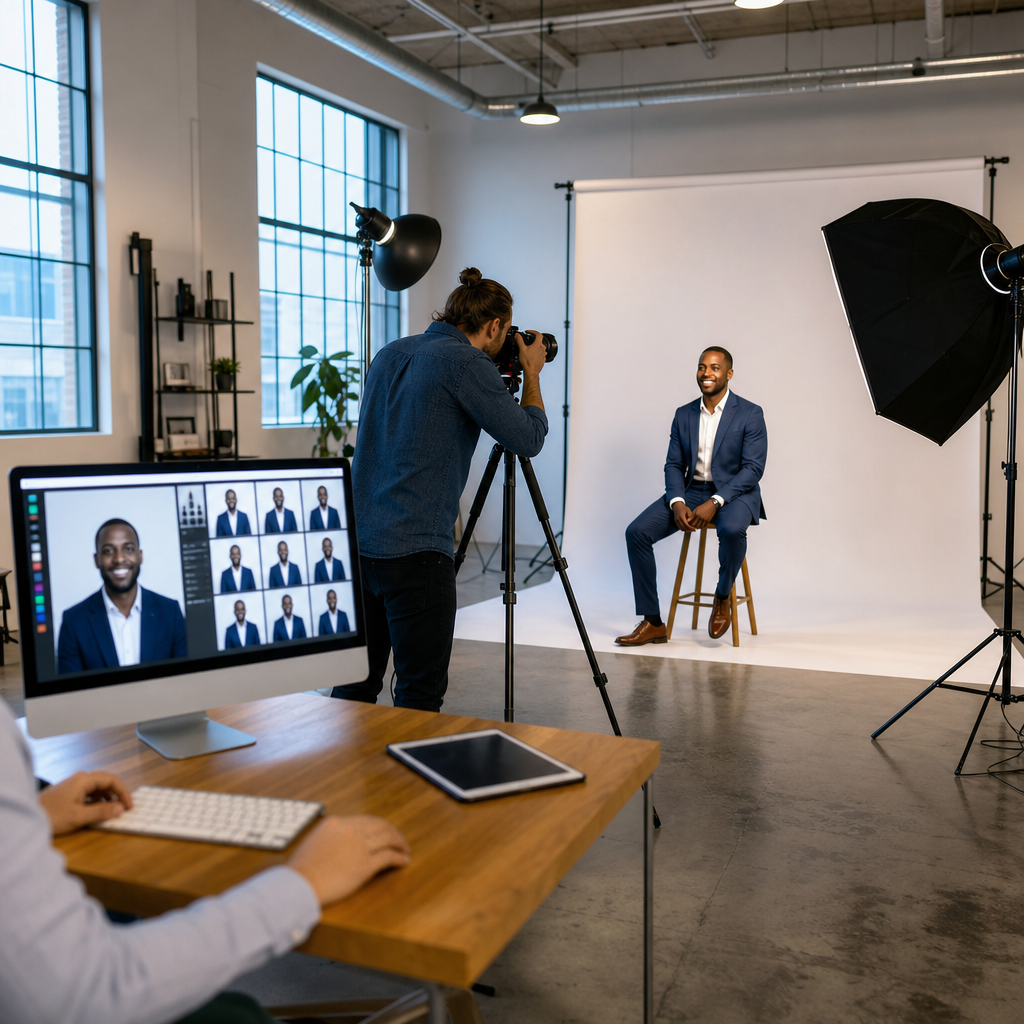
There is a particular kind of light that photographers used to chase for corporate portraits — a soft, directionless glow, bounced off a white umbrella, calibrated to flatter without flattering too obviously. It took an afternoon to set up, a studio to rent, and a subject willing to sit very still while someone adjusted a collar for the ninth time. That light still exists. But increasingly, it exists only as data: a pattern learned by a neural network from millions of professional portraits, then reproduced, instantly, on a laptop in someone's kitchen at eleven at night, the day before a job application is due.
This is the quiet premise behind the AI headshot generator, a category of software that has moved, in the span of a few years, from novelty to near-necessity. What began as a curiosity — upload a selfie, receive something uncanny in return — has matured into infrastructure. LinkedIn profiles, company "About Us" pages, press kits, Slack avatars: the visual grammar of professional identity is being quietly rewritten by tools that never owned a camera.
It would be easy to tell this story as a simple tale of convenience triumphing over craft. But that misses what's actually interesting here, which is not that the technology works — plenty of technology works — but that it has become entangled with something much older and stranger: our anxiety about how we are perceived, and our growing comfort with image as a negotiable, editable thing.
The Portrait as Performance, Rewritten
Portraiture has always been a performance of status. The Dutch burghers who commissioned Rembrandt wanted to look solvent and serious. Victorian cartes de visite flattened class anxieties into a standardised studio pose — velvet curtain, Corinthian column, a hand resting just so on a chair back. By the twentieth century, the corporate headshot had become its own minor genre: the grey backdrop, the slight head tilt, the suit that was almost certainly borrowed for the occasion. According to the Library of Congress, the standardisation of studio portraiture in America tracked closely with the rise of the professional class itself — the photograph as credential, not just likeness.
What's changed is not the desire behind the photograph but the economics of producing it. A traditional headshot session, booked through a local studio, might run anywhere from $150 to $500 in most American or British cities, before retouching fees, before the cost of professional hair and makeup, before the inevitable second session because the first one caught you mid-blink in every usable frame. For a freelancer, a job seeker between contracts, or a small nonprofit trying to put faces to its staff page, that cost is not nothing. It is, often, the reason the staff page stays faceless, or the reason a LinkedIn profile limps along for years with a cropped wedding photo standing in for professionalism.
Services like Headshot Lab exist in the gap that cost and inconvenience created. The premise is almost disarmingly simple: upload a set of ordinary selfies, specify a preferred attire and background, and receive, within minutes, a set of studio-grade portraits that never involved a studio. There is no appointment, no commute, no stylist murmuring about which blazer photographs better. There is only the photograph — or rather, several dozen candidate photographs, rendered in a range of settings from corporate grey to sunlit office to the kind of moody, editorial backdrop usually reserved for magazine contributor pages.
The technical machinery behind this is, by now, reasonably well understood. Diffusion-based image models, trained on vast datasets of photographs, can be fine-tuned on a small number of images of a specific face — a process sometimes called personalisation — and then used to generate new images of that same face in entirely different contexts. MIT Technology Review has covered the broader trajectory of these generative systems extensively, noting how quickly the uncanny valley has narrowed for human faces specifically, even as it remains stubbornly present for hands, teeth, and backgrounds with fine architectural detail.
What the Camera Used to Decide, Software Now Negotiates
There's a reason the word "generator" sits a little oddly next to "headshot." A headshot, traditionally, documents something — a specific person, on a specific day, under specific light. A generator, by contrast, produces something: not a record but a synthesis, an average pulled from thousands of unseen examples and bent toward your particular face. The two words describe fundamentally different relationships to truth, and sitting them next to each other produces a small, productive friction that's worth dwelling on.
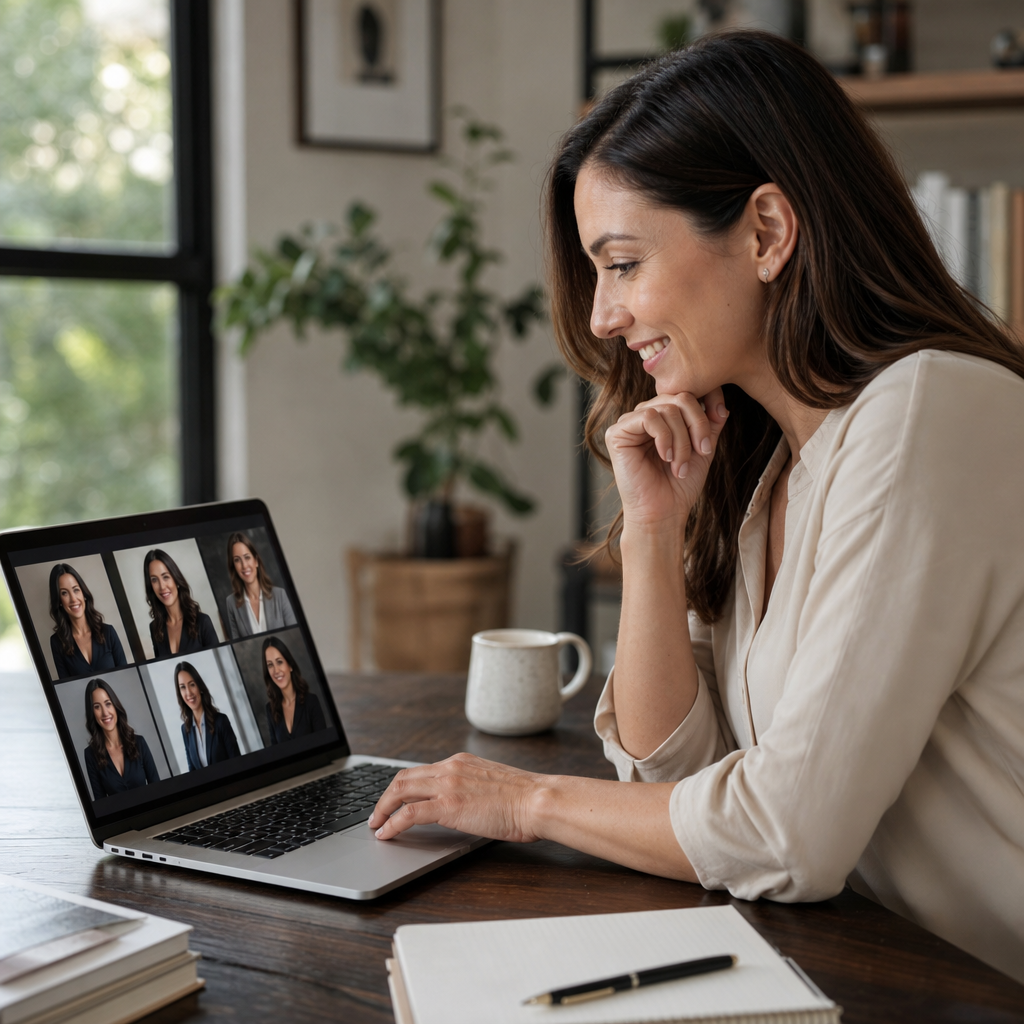
Ask anyone who has used one of these tools what surprised them most, and the answer is rarely the technology itself — we are, by 2026, thoroughly accustomed to software that can do startling things with images. What surprises people is the editorial process that follows: scrolling through forty or fifty generated options and having to choose, with real deliberation, which version of their own face they want the world to see. Should the jaw be caught at this angle or that one? Does the navy blazer read as more trustworthy than the charcoal one? Is the slight, close-lipped smile more "senior partner" or more "guarded"? These are questions that a traditional photo shoot resolves somewhat passively — you get what the camera caught, perhaps from a choice of a dozen frames. An AI headshot generator turns the sitter into something closer to an art director, reviewing a contact sheet of possible selves.
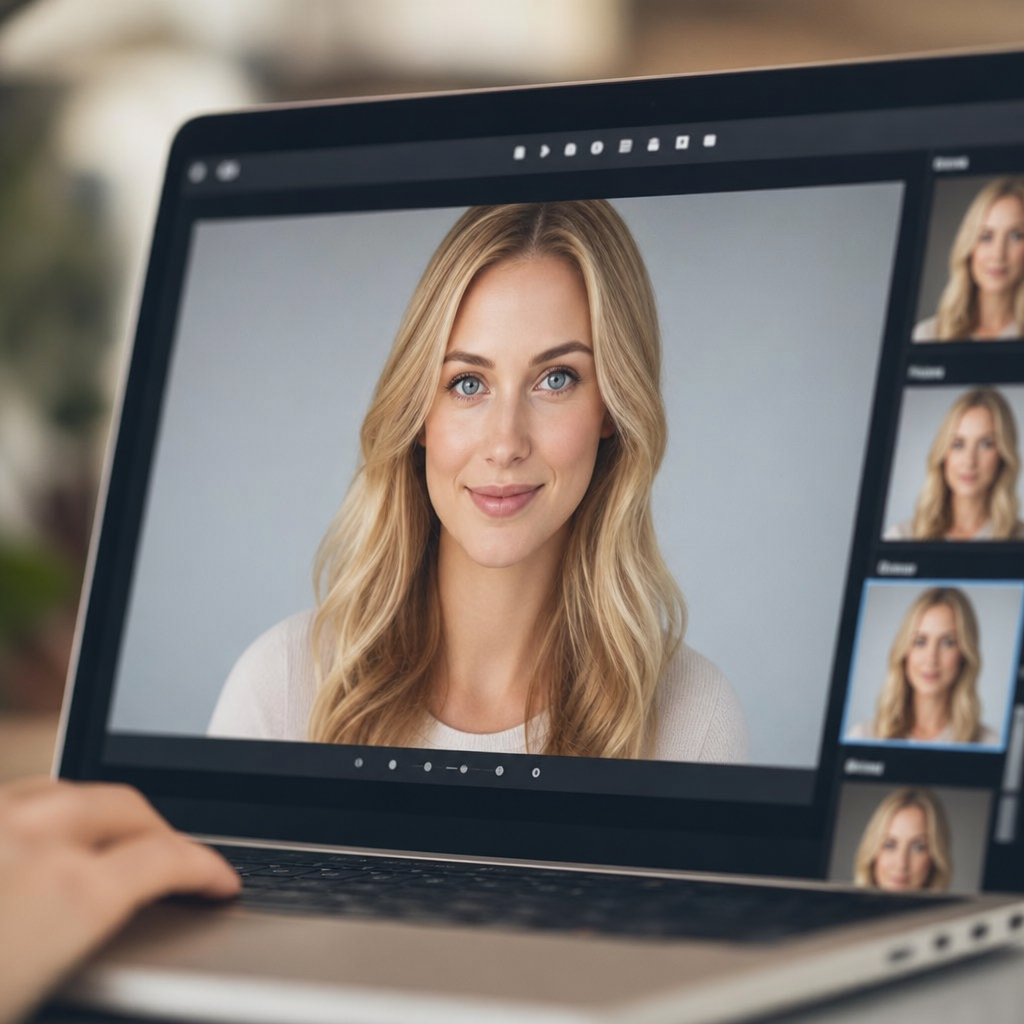
This shift has implications worth taking seriously. Harvard Business Review has written at length about the outsized role a single photograph plays in hiring decisions and professional credibility — the much-cited research on "thin-slicing," where observers form lasting judgments about competence and trustworthiness within a tenth of a second of seeing a face. If a photograph genuinely does that much work, then the decision to generate rather than capture one is not a frivolous shortcut. It's a recalibration of a tool that was already, in some sense, a performance — just one previously mediated by a photographer's eye rather than a model's statistical priors.
Platforms such as Headshot Lab have built their offering around this negotiation rather than hiding from it, which is part of what separates the more credible tools in this space from the merely gimmicky ones. Users select attire and setting deliberately, rather than receiving a single algorithmic guess at "professional." The service's retouch credits — allowing a user to request adjustments to a specific generated image rather than starting the whole process over — acknowledge something true about portraiture generally: that getting it right is iterative, a conversation rather than a single transaction, whether the party on the other end of that conversation is a photographer with a loupe or a model fine-tuned on your own face.
The Office Without a Photographer
Perhaps the most consequential use case for AI headshot generation isn't the individual job seeker at all — it's the organisation trying to look coherent. Any brand designer will tell you that visual consistency is one of the hardest things to enforce across a growing company. Staff photos, in particular, are notoriously difficult to standardise: new hires join throughout the year, remote teams are scattered across time zones, and flying a photographer to five different offices for a half-day shoot is a logistical and financial undertaking that many mid-sized companies simply never get around to. The result, familiar to anyone who has browsed a "Meet the Team" page, is a grid of mismatched photos — some against brick walls, some in badly lit kitchens, one or two clearly taken a decade earlier, judging by the haircut.
Team packages that generate matching backgrounds and attire across an entire staff roster solve a problem that has quietly irritated marketing departments for years. A thirty-person company can, in principle, achieve the kind of visual uniformity once reserved for organisations wealthy enough to fly in a dedicated photographer, without asking a single employee to leave their desk. For remote-first companies — a category that has only grown more entrenched since the pandemic reorganised assumptions about where work happens — this isn't a minor convenience. It may be the only realistic route to a coherent visual identity at all. Nielsen Norman Group, the user-experience research firm, has published extensively on how visual consistency affects perceived trustworthiness on corporate websites; a scattered, mismatched team page reads, even subconsciously, as a scattered, mismatched organisation.
There's a cultural dimension here too, one that touches on how distributed, increasingly asynchronous workplaces construct a sense of shared identity without shared physical space. The company photo wall — once a literal wall near reception, lined with framed portraits — has migrated entirely online, and in doing so has become something that must be actively designed rather than simply hung. An AI-generated, consistently styled team grid is, in its way, the modern equivalent of that wall: a small, deliberate act of visual culture-building for organisations that may never occupy a shared office at all.
Trust, Disclosure, and the Ethics of a Synthetic Smile
None of this unfolds without friction, and it would be a disservice to the subject to pretend otherwise. The rapid normalisation of synthetic imagery has prompted serious, ongoing conversation about disclosure, authenticity, and the subtle erosion of a photograph's evidentiary weight. The Wall Street Journal and other major outlets have reported on instances where AI-generated profile photos were used deceptively — most notably in cases of entirely fabricated LinkedIn identities used for social engineering or fraud, a problem distinct from, but adjacent to, the legitimate use case of a real person generating a polished image of themselves.
That distinction matters enormously, and reputable services in this space have generally been careful to maintain it. An AI headshot generator worth using is working from genuine photographs of a genuine person, refining and restyling an existing likeness rather than fabricating a person who doesn't exist. The output is still, in a meaningful sense, a photograph of you — just one where the lighting, background, and wardrobe have been imagined rather than physically arranged. This is closer, conceptually, to retouching than to deepfaking, though the two have occasionally been conflated in public conversation. The Federal Trade Commission has begun issuing broader guidance on AI-generated content and consumer disclosure, a sign that regulatory clarity, while still emerging, is being taken seriously at the policy level — a reassuring signal for an industry still establishing its own norms.
For the individual user, the ethical terrain is, in practice, fairly narrow. A LinkedIn photo has always been a curated artifact — nobody expects it to capture you mid-sentence, unguarded, exactly as a stranger might encounter you at a bus stop. It is understood, culturally, as a presentation, in the same way a wedding photograph or a yearbook portrait is understood as a presentation rather than candid documentary evidence. What an AI headshot generator changes is not whether the photo is curated — it always was — but who does the curating, and how quickly, and at what cost. Money-back guarantees, offered by services including Headshot Lab, function as a kind of trust infrastructure for a category of product that is still, for many users, their first encounter with generative image tools in a professional context.
The Selfie as Raw Material
There's something quietly poignant about the humble selfie's new role in all this. For over a decade, the selfie has been a subject of minor cultural anxiety — dismissed as vain, narcissistic, a symptom of a culture overly preoccupied with self-image. The Atlantic has run several essays over the years tracing the selfie's journey from object of ridicule to a nearly universal form of self-documentation, one now so embedded in daily life that its novelty has entirely worn off.
What's striking is that the AI headshot generator doesn't ask users to abandon the selfie in favour of something more "serious." It asks them to feed it more selfies — a dozen or so, taken casually, in different light, from different angles, no makeup artist required. The raw material of professional self-presentation has, in effect, become identical to the raw material of the most casual, everyday form of self-documentation there is. The distance between a Tuesday-morning bathroom-mirror photo and a polished, boardroom-ready portrait has collapsed into the span of a few minutes of processing time.
This collapse says something about where professional culture has arrived in 2026, four years or so after remote and hybrid work permanently reshaped expectations around office presentation. We no longer assume a professional headshot requires visiting a professional space. We no longer assume polish requires proximity to the tools of polish — studio lighting, a stylist, a graphic designer cropping the final image to spec. What we assume instead is that a good photograph is something closer to an editable document: adjustable, correctable, improvable on the second or third pass, exactly like the retouch credit model that companies in this space have built their offering around.
A Closing Frame
Walk through any city at dusk and you'll still find the old studio signs — the ones advertising passport photos and "professional portraits while you wait," faded a little, their fluorescent lighting visible through the window even after the shop has closed for the night. They haven't disappeared; they've simply been joined by something less visible, a process happening on servers rather than behind a velvet curtain, producing the same basic cultural artifact — the trustworthy, approachable, competent-looking face — through entirely different means. The light that photographers once spent afternoons arranging has become, in a sense, a pattern the software already knows by heart.
What remains unchanged is the reason anyone bothers at all: the quiet hope that a single photograph might say, convincingly and without exaggeration, here is someone worth trusting. Whether that image comes from a studio on Tuesday afternoon or from a laptop at Headshot Lab on a Sunday night, the hope behind it is exactly as old as portraiture itself — only now, it develops a little faster.
Article written by FrontRank